You have no items in your shopping cart.
Gun Dog Health & Care
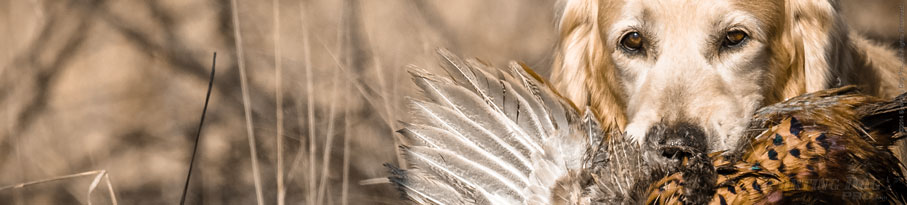
A hunting dog’s year doesn’t start on opening day. It starts in January when the last season ends and the next one begins to take shape. What you do — or don’t do — in the months between seasons determines what kind of dog shows up when it matters. Here’s what ...
Read More
A dog that tears apart the couch, barks for hours, or injures himself trying to get out of a crate while you’re gone isn’t being bad. He’s in distress. Separation anxiety is one of the more common behavioral problems in dogs and one of the more misunderstood — because from...
Read More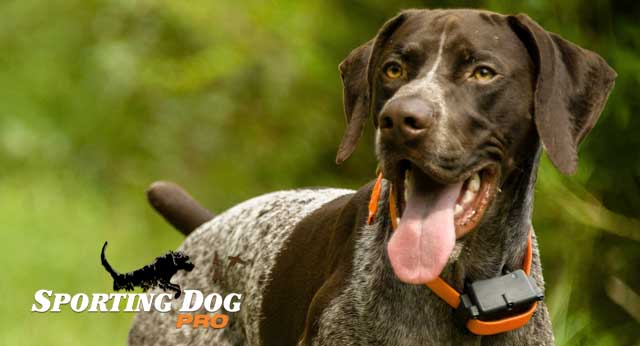
If you’ve found a sore, rash, or raw patch on your dog’s neck where an e-collar, bark collar, or containment collar sits, the first thing to understand is what you’re looking at. These sores are not burns from the collar’s stimulation. A common misconception is that the st...
Read More
Whether to spay or neuter your hunting dog is one of those decisions that gets more complicated the more you look into it. The standard advice — spay and neuter for health benefits, do it early — has been complicated in recent years by research showing that timing matters significantl...
Read More
The training relationship between a hunter and a gun dog is a communication relationship. The dog is constantly sending information — through posture, movement, tail carriage, ear position, pace, and vocalization. The hunter is constantly sending information back — through body positi...
Read More
A well-trained dog that suddenly starts having accidents in the house, asks to go out far more frequently than usual, or strains and produces little urine when he does go is almost certainly dealing with a urinary tract problem. In most cases that problem is a urinary tract infection (UTI) &mdash...
Read More
Socialization is one of those training concepts that gets mentioned constantly but rarely explained precisely enough to be useful. In simple terms, it’s the process of exposing your dog to the people, animals, environments, and situations he’ll encounter in life — in a way that ...
Read More
Bad breath in dogs is one of the most commonly ignored health signals there is. Most owners assume it’s normal — dogs have bad breath, that’s just how it is — and move on. Sometimes that’s true. A dog that just finished eating something unpleasant has bad breath for ...
Read More
More than half of dogs in the United States are overweight or obese. That number has been reported consistently by the Association for Pet Obesity Prevention for years, and it hasn’t improved. For the average house dog, excess weight shortens life and degrades quality of life. For a working...
Read More
Heat stroke is one of the most preventable emergencies in dogs and one of the fastest-moving. A dog that is fine at noon can be in serious danger by 12:30 if conditions are right and nobody is watching closely enough. For hunters and sporting dog owners who work dogs hard in warm weather — ...
Read More
Mosquitoes are annoying to people. To dogs, they’re a genuine medical threat. The reason is heartworms — a parasite that can only be transmitted through a mosquito bite, that grows in the heart and pulmonary arteries of an infected dog, and that causes progressive, potentially fatal d...
Read More
Deciding what to do with your dog when you travel is one of the more consequential decisions in dog ownership, and it doesn’t get easier to figure out on short notice. The right answer depends on your dog — his age, temperament, training, and what he’s used to — and on how...
Read More
Most hunters don’t think of themselves as groomers. But the post-hunt inspection, the ear check, the pad examination after a day in rough cover — that’s grooming, and a hunter who does it consistently is doing more for his dog’s health and longevity than any amount of prem...
Read More
Housebreaking is the first real training task most dog owners face, and it sets a tone for everything that follows. A puppy that learns quickly that outside is where elimination happens — because the rules were clear, consistent, and applied from day one — is a puppy building the foun...
Read More
A puppy’s first year covers more developmental ground than any other period in his life. The dog he becomes — his confidence, his trainability, his social behavior, his relationship with people and other animals — is largely shaped by what happens during these early months. For ...
Read More
Diarrhea is one of the most common health issues dog owners deal with, and most of the time it resolves on its own within a day or two with basic home management. But diarrhea can also be a symptom of something that requires immediate veterinary attention, and knowing the difference between the t...
Read More
A dog exposed to a toxic substance is a genuine emergency, and the decisions made in the first few minutes matter significantly. Hunting dogs face elevated exposure risk compared to house dogs — they work in environments treated with agricultural chemicals, drink from standing water and dit...
Read More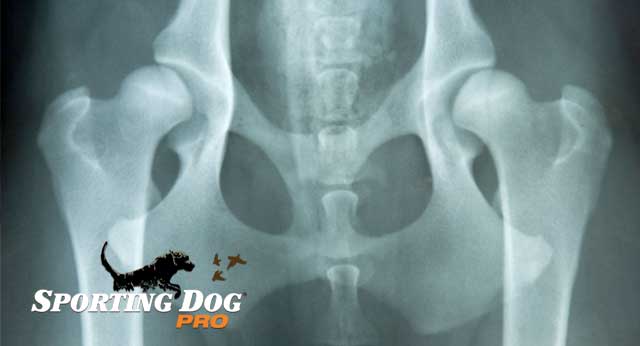
Hip dysplasia is the orthopedic condition that hunting dog owners worry about most, and with good reason. It affects some of the most popular sporting breeds at significant rates — Labrador Retrievers, Golden Retrievers, German Shorthaired Pointers, Chesapeake Bay Retrievers — and whe...
Read More
Canine influenza is a highly contagious respiratory disease that most dog owners are aware of in a general way but don’t know much about specifically. For hunting dog owners, the risk profile is higher than it is for a dog that rarely leaves the house — dogs that board at kennels, att...
Read More
With the rising summer temperatures here in the South come the humidity — and unfortunately, with that combination also come fleas. These hateful little parasites who spend their time eating our dog’s blood are one of the most common health issues dog owners deal with, and one of the ...
Read More
Limber tail syndrome goes by several names — limp tail, cold water tail, dead tail, broken wag, rudder tail, sprung tail — and if you’ve had a retriever, you’ve probably dealt with it. You finish a hard day of hunting or a long swim session, and the next morning your dog&r...
Read More
After I lost my first chocolate Lab, Bogie, I declared I would never fall in love with another dog. Have any of you ever made that declaration? Of course, within months we had a yellow Lab, and I fell in love immediately despite myself. The saga continues with each loss, and I suspect it always w...
Read More
Walk down the dog food aisle of any pet supply store and the grain-free options have multiplied significantly over the past decade. This reflects genuine demand from owners whose dogs have real food sensitivities — but it also reflects marketing that has moved well ahead of the science. Und...
Read More
Heartworm disease is one of the most serious and most preventable conditions that hunting dogs face. Dogs that spend time near standing water, in marshes, in fields, and in the kind of terrain that holds game are exactly the dogs with the highest mosquito exposure — and the mosquito is the ...
Read More