You have no items in your shopping cart.
Dog Training Collars ![Dog Training Collars]() Remote training collars give you reliable communication with your dog — in the yard and in the field.
Remote training collars give you reliable communication with your dog — in the yard and in the field.
Dog Training Collars
Remote training collars give you reliable communication with your dog — in the yard and in the field.
What do you want your dog to achieve?
 Remote training collars — sometimes called e-collars, shock collars, or electronic dog training collars — are not one-size-fits-all tools. A collar built for a family dog learning basic obedience in the backyard has different range, waterproofing, and stimulation requirements than one for a Labrador working a duck blind. Use the guide below to find the right system for your dog and your situation.


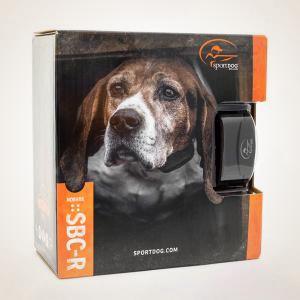
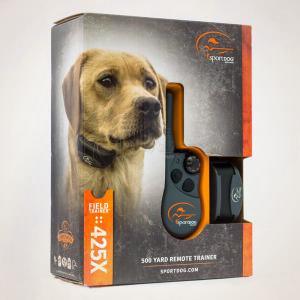
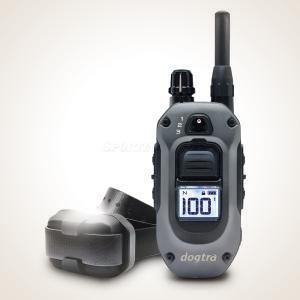
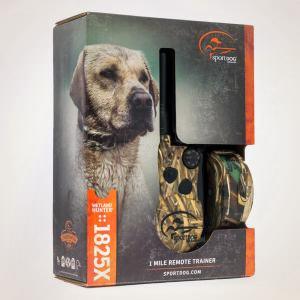
Our 5 Best Training Collars for 2026

![]() The Top Dog Training Collar Brands
The Top Dog Training Collar Brands
We carry SportDOG, Dogtra, Garmin, D.T. Systems, and PetSafe — five brands that have earned their place on working dogs in real conditions. Each one does something better than the others, and the right brand for your dog depends more on your use case than on brand loyalty. Here’s what you need to know about each.

SportDOG is the brand most hunters reach for first, and for good reason. Their collars are built to take abuse — submersion, mud, the back of a truck — and the price-to-performance ratio is hard to beat at any level of the lineup. The FieldTrainer 425X is the best-selling training collar we carry for a reason: it covers the range and stimulation needs of most dogs without overcomplicating the remote. SportDOG’s multi-dog systems also scale cleanly, letting you add collars without buying a new handheld.

D.T. Systems has been building electronic training collars since 1983 — longer than most of their competitors have existed. Their collars run lighter than comparable SportDOG or Dogtra units, which makes a difference on smaller dogs or dogs that work all day. D.T. Systems is a solid pick for trainers who want a no-frills remote with reliable stimulation and don’t need GPS integration or multi-dog expansion.
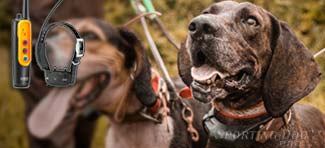
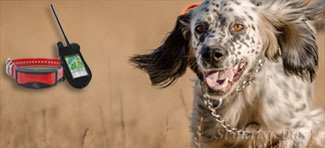
Garmin acquired Tri-Tronics and brought GPS mapping into the training collar category. If you hunt with dogs that range far — hounds, hard-running pointers, dogs in big country — the Alpha series gives you training capability and real-time GPS tracking on the same handheld. The Alpha 300 is the most capable system we carry. It’s the most expensive too, and if you don’t need GPS tracking, you don’t need to spend Garmin money.

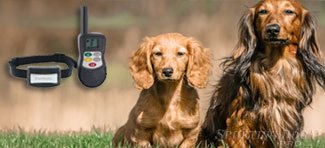
Dogtra is the collar brand most professional trainers land on when they’ve used everything else. The stimulation dial runs in finer increments than SportDOG — 127 levels on most models compared to SportDOG’s 21 — which matters when you’re dialing in sensitive dogs or working at the low end. The 280X is our top pick for small dogs under 35 lbs. Dogtra’s build quality runs tight, and their warranty service is responsive.

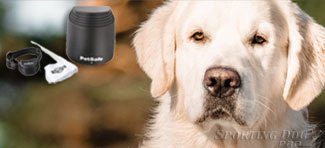
PetSafe builds for the family dog market: simpler remotes, lower stimulation ranges, and bark collars that don’t require a manual to operate. Their products won’t suit a field dog with a big range or a stubborn dog that needs a firm correction, but for a family pet learning basic manners, PetSafe keeps things accessible. Their bark collars and containment systems are among the most widely used in the category.
![E-collar Mode and Options]() E-collar Stimulation Modes
E-collar Stimulation Modes
 E-collar Stimulation Modes
Not every collar offers every mode, and the modes available on a system directly affect what it can do in training. Here’s what each stimulation type does and when it’s actually useful — so you know what to look for before you buy.

Continuous
Stimulation is delivered for as long as you hold the button, at whatever intensity level you’ve set. Most systems cut off automatically around 8 seconds as a safety measure. Continuous is the primary mode for teaching new commands — the dog can connect the sensation directly to the behavior you’re asking for, and you control exactly how long the correction lasts. Use it at the lowest level that gets a response, not the highest level available.
Momentary
A brief, fixed-duration pulse — a fraction of a second regardless of how long you hold the button. Momentary works best with dogs that already know a command and need a reminder rather than a correction. It’s also useful for getting a dog’s attention at a distance without delivering a full correction. Once a dog is reliably trained, most handlers shift to momentary for day-to-day use.
Vibration
A physical buzz delivered by the collar receiver, with no static stimulation. In training, vibration is typically paired with static correction first — the dog learns that the vibration predicts the correction — and then used independently once that association is established. Useful for dogs with higher sensitivity, for deaf dogs, or as a communication signal in situations where you want to mark a behavior without a correction.
Tone
An audible beep from the collar receiver. Like vibration, tone is conditioned alongside static correction during early training and then used alone once the dog understands its meaning. Worth noting for hunters: tone is not the right choice in upland or waterfowl situations where silence matters. In the field, vibration accomplishes the same communication without alerting birds.
Jump
Two intensity levels preset on the remote — your working level and a higher level you can access instantly with a dedicated button. If your dog is tuned to corrections at level 3 but occasionally ignores them in high-distraction situations, the jump button delivers level 8 without fumbling with a dial. Primarily useful in hunting situations where a dog may be more excited than usual and temporarily less responsive.
Jump & Rise
Similar to Jump, but instead of jumping immediately to the higher level, stimulation ramps up gradually from your working level until the dog responds. Once you release the button, it drops back to the normal working level. This graduated escalation can be more effective than an abrupt jump for dogs that respond better to increasing pressure than to sudden corrections.
Beeper Locate
Found on upland beeper collars, the locate function lets you trigger an audible signal from the collar receiver on demand. When your dog disappears into tall grass or a brushy draw and you need to know roughly where they are, one button press gives you a directional sound to work toward. Essential on any collar you’re running in cover thick enough to lose a dog.
Run & Point
Available on beeper collar systems. In Run & Point mode, the collar beeps at a steady interval — every 5 to 10 seconds — while the dog is moving. When the dog stops and goes on point, the beep rate increases to once per second. You don’t have to see the dog to know they’re locked up. For upland hunters running dogs in pheasant fields or grouse cover, this is a significant advantage over GPS alone because the feedback is immediate and continuous.
Point Only
The collar stays silent while the dog is moving, then signals once per second when the dog locks up on point. No constant beeping while the dog is running — only the alert that matters. Preferred by hunters who find the continuous run beep distracting or who are in situations where minimizing noise is important until a bird is located.![Faq icon]() Dog Training Collars — Questions & Answers
Dog Training Collars — Questions & Answers
 Dog Training Collars — Questions & Answers
Whether you’re picking up your first remote collar or adding a system for a new dog, these are the questions we hear most from buyers. Read through before you call — most of what you need is here.
What’s the difference between an e-collar, a shock collar, and a remote training collar?
They’re all the same thing. “Shock collar” is the older consumer term, “e-collar” and “electronic collar” are what the training community settled on, and “remote training collar” is what manufacturers print on the box. The static stimulation these collars deliver is low-level — comparable to the static you feel touching a doorknob after walking across carpet — and is adjustable across a range of levels. The terminology shifted because “shock” implies a level of correction the modern devices don’t deliver. If you’re shopping for any of these terms, you’re looking for the same category of product.
How do remote training collars work?
A remote training collar system has two components: a handheld transmitter and a receiver collar worn by the dog. The transmitter sends a radio signal to the receiver when you press a button, delivering stimulation at the intensity level you’ve dialed in. The receiver has two contact points that rest against the dog’s neck when the collar is properly fitted. Range varies by system — from a few hundred yards for basic pet collars up to 10 miles for long-range hound systems. The result is reliable communication with your dog at whatever distance the system supports, without a leash or physical proximity.
Will the static correction hurt my dog?
No. The static stimulation from an e-collar is not designed to cause pain — it’s designed to be noticeable and mildly unpleasant so the dog learns to associate it with a command or a behavior to avoid. At working levels, it produces a muscle twitch or an ear perk, not a pain response. The Electronic Collar Manufacturers Association (ECMA), an organization overseeing safe and humane electronic training device manufacturing under the Animal Welfare Act, states that characterizing these devices as painful reflects a misunderstanding of how modern e-collars are engineered and used. For the full breakdown, read the ECMA’s report: The Facts About Modern Electronic Training Devices. If you’re uncertain about the sensation, hold the collar receiver against the back of your hand and work up from the lowest level — that’s what your dog feels.
How do I find the right stimulation level for my dog?
Start at the lowest level and work up slowly. You’re looking for the faintest visible response — a twitch in the neck muscles, a shift of the ears, a slight head turn. That’s your working level. You don’t want a yelp or a flinch; you want acknowledgment. Find this level during a calm, low-distraction session before you begin training — not mid-correction when the dog is already excited. Dogs that push through the highest level without reacting are usually candidates for a stubborn-dog variant like the SportDOG 425XS, which runs the same system at a higher stimulation ceiling.
How much range do I actually need?
Match range to how far your dog actually works. A family dog training in the yard or a park rarely needs more than 500 yards, and most basic systems cover that comfortably. Upland hunters running pointing dogs in fields typically work within a quarter to half mile, so a system rated to 500–1,000 yards is sufficient. Waterfowl dogs generally stay close, so range matters less than waterproofing. Hound hunters are the exception — dogs that run deer, bear, or big game can cover miles, and those applications need systems rated to 3, 5, or 10 miles. Don’t pay for range you don’t use, but don’t cut it close either — rated range is under ideal conditions.
What age should a dog be before starting e-collar training?
Most trainers put the minimum at 5 to 6 months, and that’s a reasonable floor for physical readiness — the dog needs to be large enough to support the collar receiver comfortably. But physical size isn’t the only consideration. A dog that doesn’t understand a command can’t connect a correction to that command, so e-collar introduction should follow basic obedience, not precede it. A dog that sits and comes reliably on command with a leash and voice is ready to transfer those commands to the e-collar. A dog that’s still figuring out what “sit” means isn’t.
What is the minimum dog weight for an e-collar?
The smallest dogs can safely wear purpose-built small dog training collars starting around 8 lbs. Standard e-collar receivers are too heavy and bulky for dogs under 15–20 lbs and can cause neck strain over time. Small dog collars — like the Dogtra 280X — are engineered with lighter receivers and lower stimulation ceilings appropriate for smaller, more sensitive dogs. If your dog is under 35 lbs, check the manufacturer’s minimum weight specification carefully before buying.
Can my dog wear the collar receiver all day?
No. The collar receiver should not be worn for more than 12 hours continuously. The contact points press against the skin on the neck, and extended wear can cause pressure sores — a condition known as pressure necrosis — even without any stimulation being delivered. Take the collar off after training sessions and at the end of each hunting day. Check the contact area regularly for any redness or irritation, and rotate the collar’s position on the neck if the dog is wearing it for extended periods during the day.
Are there alternatives to static stimulation?
Yes. Vibration-only collars deliver a buzz without static correction and work well for dogs that are too sensitive for standard stimulation, or for communicating with deaf dogs. Tone-only collars use an audible beep signal. Both can be effective with proper conditioning. Some collars include all three modes and let you choose what to use in a given situation. Citronella spray collars exist for bark suppression but aren’t a practical option for remote training — the spray interrupts the dog rather than delivering a precise, controllable signal tied to a command.
What warranty comes with the collars you sell?
Manufacturer warranties vary by brand and product — most run 1 to 2 years on the electronics. In addition to the manufacturer warranty, Sporting Dog Pro offers a 30-day money-back guarantee on all non-perishable purchases. If the collar isn’t right for your dog within the first 30 days, contact us and we’ll make it right. Call us at 1 (800) 524-2428 if you have questions about a specific product’s warranty terms before you buy.
Ducks and Retrievers: Hunting with Dog Training Collars
A look into the world of waterfowlers, their dogs, and the great outdoors.