You have no items in your shopping cart.
Protecting Your Dog From A Heat Stroke
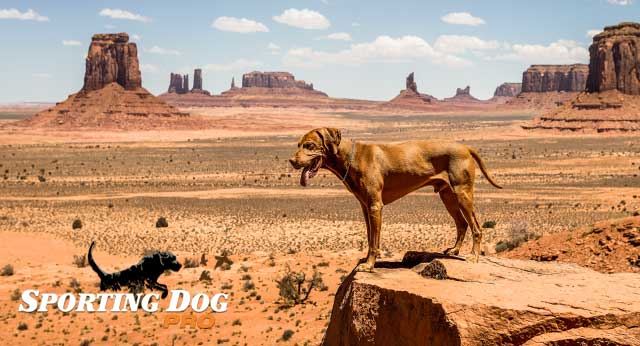
Heat stroke is one of the most preventable emergencies in dogs and one of the fastest-moving. A dog that is fine at noon can be in serious danger by 12:30 if conditions are right and nobody is watching closely enough. For hunters and sporting dog owners who work dogs hard in warm weather — early dove season, September conditioning, late-summer training sessions — understanding heat stroke isn’t optional. It’s a basic competency.
Why dogs are more vulnerable than people
Dogs cool themselves almost entirely through panting. Unlike people, who sweat across the full surface of their skin, dogs have sweat glands only in their paw pads — a tiny fraction of the cooling capacity that humans have. Panting moves air rapidly over the moist surfaces of the mouth and throat, which allows heat to dissipate through evaporation. It works reasonably well under normal conditions. When ambient temperature and humidity are high, when the dog is working hard, or when panting can’t keep up with the heat load the body is generating, core temperature rises.
A dog’s normal body temperature ranges from 101 to 102.5 degrees Fahrenheit. Heat exhaustion begins around 103 to 104 degrees. Heat stroke — a medical emergency — is generally defined as a body temperature above 104 degrees, and temperatures above 106 can cause organ damage, brain swelling, blood clotting disorders, and death. The window between uncomfortable and dangerous is narrower than most people expect.
High-energy working breeds like Labrador Retrievers, Brittanys, and German Shorthairs are at elevated risk because they’re bred to work hard and keep going regardless of how they feel. A Lab that’s been running retrieves for an hour in 85-degree heat is not going to stop on his own when he’s tired — he’s going to keep going until you stop him. That drive is exactly what makes them great working dogs and exactly what makes their owners responsible for monitoring them.
Brachycephalic breeds — flat-faced dogs like Bulldogs and Boxers — are at particularly high risk because their restricted airway limits their ability to pant effectively. Older dogs, overweight dogs, and dogs with cardiovascular or respiratory conditions are also more vulnerable than healthy adult dogs at ideal weight.
Recognizing the signs
The early signs of heat stress are easy to miss if you’re not watching for them. A dog that slows his pace, seeks shade on his own, or shows decreased enthusiasm for work is telling you something. Those behavioral changes come before the obvious physical symptoms and give you the best window to intervene.
As heat stress progresses, watch for: panting that becomes labored or frantic rather than smooth — the dog looks like he can’t quite get enough air; excessive drooling with thick, ropy saliva; gums that are bright red or unusually pale rather than normal pink; a rapid, pounding heart rate; weakness in the hindquarters or an unsteady gait; glassy or unfocused eyes; and vomiting or diarrhea, which typically appear in more advanced cases. If a dog is stumbling, unresponsive, or collapses, he is in a critical emergency.
Check your dog’s gums regularly during hot-weather work. Normal gum color is bubble-gum pink. Bright red gums indicate the body is working to move blood to the surface to cool; pale or white gums indicate circulatory compromise. Either is a reason to stop immediately.
Immediate treatment
If your dog shows signs of heat stroke, begin cooling immediately — do not wait to get to a vet first. Every minute of elevated core temperature causes additional damage.
Move the dog to shade or air conditioning immediately. Apply cool water — not ice water — to his body, focusing on the neck, groin, armpits, and paw pads where blood vessels are close to the surface. A garden hose at ambient temperature works well; ice water can cause the surface blood vessels to constrict and actually slow cooling. If you have a fan available, use it — airflow over wet skin accelerates cooling significantly.
Massage his legs gently to encourage circulation. Allow him to drink cool water if he’s conscious and able to swallow — don’t force it. Take his temperature if you have a thermometer; you’re aiming to bring him to around 103 degrees before stopping active cooling, at which point you risk overcooling.
Get him to a veterinarian as soon as possible even if he appears to recover quickly. Many of the serious consequences of heat stroke — kidney failure, blood clotting disorders, brain swelling — are not immediately visible and develop in the hours after the event. A dog that seems fine after cooling may have organ damage that won’t become apparent without bloodwork. Don’t skip the vet visit.
Vehicles are the most dangerous environment
A car parked in sun with windows cracked can reach 120 to 130 degrees Fahrenheit within 20 minutes on an 85-degree day. A dog left in that environment will be in serious danger faster than almost any other heat scenario. There is no safe amount of time to leave a dog in a parked vehicle in warm weather. Not five minutes. Not with the windows cracked. Not in the shade. The interior temperature of a vehicle rises faster than people expect and the margin for error is zero.
If you travel with your dog to hunting locations, keep the vehicle running with air conditioning when the dog is inside, or use a ventilated aluminum crate that allows airflow.
Prevention
The best heat stroke treatment is prevention, and most heat stroke in working dogs is preventable with straightforward management.
Schedule hard work in the early morning or evening when temperatures are lower. On days above 85 degrees, shorten sessions significantly and build in frequent rest and water breaks. Watch your dog’s pace and behavior rather than sticking to a planned session length — if he’s slowing down or seeking shade, that’s more reliable information than the clock. Keep fresh, cool water available throughout any field work and offer it regularly rather than waiting for the dog to signal thirst — by the time he’s visibly thirsty, he’s already behind on hydration. Wet the dog down before and during sessions in hot conditions. Access to shade during rest periods is not optional.
For dogs kenneled or housed outdoors, automatic waterers that maintain a continuous supply of fresh water are worth the investment — a standard bucket in direct sun can become warm and unappealing, and a dog that stops drinking in heat is a dog moving toward trouble. Ventilated kennels with shade cover are significantly safer than enclosed structures that trap heat.
The rule of thumb: if it’s too hot for you to run comfortably, it’s too hot for your dog to work hard. Dogs cover three to four times your distance in the field and can’t tell you when they’ve had enough. The responsibility for making that call is yours.