You have no items in your shopping cart.
How to Handle the Loss of Your Dog
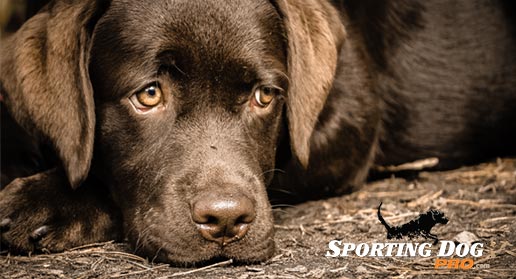
After I lost my first chocolate Lab, Bogie, I declared I would never fall in love with another dog. Have any of you ever made that declaration? Of course, within months we had a yellow Lab, and I fell in love immediately despite myself. The saga continues with each loss, and I suspect it always will. Our dogs are our family — the first to greet you in the morning, the happiest to see you come home, the constant in a routine that you don’t realize you’ve built around them until it’s gone. When that companionship is disrupted, the variety of emotions that follow — emptiness, sadness, sometimes anger — are real and they deserve to be treated as real.
The loss of a dog is something most families face at some point, and the grief it brings is not diminished by the fact that the loss was “only a pet.” The people who reach out to each other on social media when their dog dies — and there are a lot of them — are telling you that this kind of loss is a global human experience not bound by age, background, or circumstance. If you or someone in your family is struggling with the loss of a dog, what you’re feeling is appropriate.
Giving grief a form — memorials and closure
One of the things that makes losing a dog difficult is that there isn’t always a recognized social ritual around it in the way there is with the loss of a person. Creating your own form of farewell — however small — can provide a real sense of closure that simply moving on without acknowledgment doesn’t.
A burial with a moment of reflection, a prayer, or a chance for family members to say something gives the loss a proper ending. Writing a final letter and placing it in the grave is something that sounds small and turns out to mean a great deal. Planting a tree or a shrub where the dog is buried creates a living marker that grows over time — a visual reminder that he was here and that his presence mattered. My husband once attended the burial of a good friend’s Lab, and he thought to bring marsh grass for the grave because that would have been flowers to her. That gesture said everything about what that dog had meant to that family and what she had loved.
There is nothing wrong with treating the loss of a dog as a real loss and mourning accordingly. The alternative — minimizing the grief because “it was just a dog” — rarely helps anyone and often makes recovery longer and harder.
Helping children through the loss
For children, the loss of a dog is often the first real experience with death, and how it’s handled shapes how they approach loss for years afterward. Taking it seriously rather than minimizing it, allowing them to grieve rather than rushing them to “get over it,” and including them in whatever memorial the family creates gives children tools they’ll use their whole lives.
Funny stories and odd photographs can ease grief without dismissing it — humor is a natural healer and it communicates that things will be okay without requiring anyone to pretend they’re already okay. Drawing pictures of the dog, creating a scrapbook or small photo book, or writing down memories are activities that give children something concrete to do with their feelings and something to keep as a memento. These things also become the stories they tell later — the way a dog becomes part of the family mythology that gets passed down.
Every child grieves at a different pace. Some are over it quickly; others carry it for weeks or months. Both are normal. Don’t set a timeline, and don’t judge the depth of the grief by the duration of it.
Focusing on what was good
Grief should be honored, but it shouldn’t be allowed to crowd out the whole relationship. The dog who is gone was a life fully lived alongside yours — seasons in the field, mornings on the porch, hunts that will always be among your best memories, a personality that was entirely its own. Those things don’t diminish with the loss; they exist alongside it. Gradually shifting from the pain of the loss to gratitude for the life shared with that dog is what recovery looks like, and it happens at its own pace.
The question of whether to get another dog is one only you can answer and only on your own timeline. There is no right interval. Some people are ready within weeks; others need a year or more. What’s worth knowing is that the love you put into a dog doesn’t leave when he does — it’s available to give again when you’re ready.
Helpful books
The Loss of a Pet: A Guide to Coping with the Grieving Process When a Pet Dies
Goodbye, Friend: Healing Wisdom for Anyone Who Has Ever Lost a Pet
The Pet Loss Companion: Healing Advice from Family Therapists Who Lead Pet Loss Groups
Humphrey Was Here: A Dog Owner’s Story of Love, Loss, and Letting Go
Marley & Me: Life and Love with the World’s Worst Dog