You have no items in your shopping cart.
The Importance of Caring for a Dog Throughout the Year
A hunting dog’s year doesn’t start on opening day. It starts in January when the last season ends and the next one begins to take shape. What you do — or don’t do — in the months between seasons determines what kind of dog shows up when it matters. Here’s what year-round care actually looks like for a working sporting dog.
Winter — recovery and honest assessment
The end of hunting season is when most dogs get a break, and they’ve earned it. A dog that worked hard through November and December is carrying accumulated fatigue, and giving him genuine downtime in January is not neglect — it’s sensible management. Reduce intensity, keep him moving with lighter exercise, and let him recover fully before you start building toward next season.
Winter is also the right time for honest assessment. How did he hold up physically? Are there recurring issues — a shoulder that stiffened up on cold mornings, a hip that seemed off by late season, a pad that kept splitting? Schedule a vet appointment now rather than waiting until April. Problems caught in January are easier and cheaper to address than problems that get 90 more days to develop.
If you hunt in cold weather, check for any lingering effects. Dogs that worked icy water repeatedly can develop chronic joint inflammation that doesn’t show up obviously until you push them again. A thorough post-season checkup is worth the cost.
Spring — the off-season is when you build the next season
Spring is where next season is won or lost. A dog that gets consistent training work from March through May arrives at summer heat in good condition, with skills that haven’t atrophied and a body that’s ready to be pushed harder as the weather cools.
Obedience work, retrieves, and steadiness drills don’t require hunting season to be productive. If you run bird dogs, spring is when you introduce young dogs to birds, reinforce flush and point mechanics, and address problems you noticed in the field last fall. If you run retrievers, spring water work builds water confidence and keeps marking skills sharp.
Spring is also flea and tick season. Get your parasite prevention protocol in place before the first warm weekend, not after you find the first tick. Lyme disease vaccination is worth discussing with your vet if you hunt brushy terrain in an endemic region — the window for the initial two-dose series is spring, not October.
Spring training is the right time to introduce a new e-collar system or get dialed in on one you already own. Browse our training collar guide to find the right system for your dog and your application — or call us at 1 (800) 524-2428 and we’ll help you choose.
Summer — maintenance mode and heat management
Summer is the hardest season on a working dog’s body if you push him in it, and the easiest to manage if you adjust your expectations. Heat limits what you can ask of a dog safely. A Labrador or Chesapeake running full speed in 90-degree humidity can reach dangerous core temperatures faster than you’d expect.
Keep summer training sessions short, early in the morning or in the evening, with plenty of water and rest between reps. Avoid hard running in the heat of the day entirely. A dog that collapses from heat exhaustion in July doesn’t make the September conditioning window.
Watch for signs of heat stress: excessive, unrelenting panting, glassy eyes, stumbling, or a dog that stops wanting to work. Get him into shade and cool water immediately. Heat exhaustion in a dog is a genuine emergency — if he doesn’t recover quickly with cooling, get to a vet.
Summer is also when kenneled dogs need attention to mental stimulation. A bored dog in a kennel for months develops habits — fence running, excessive barking, destructive behavior — that make training harder when you pick it back up. Regular contact, training sessions even if they’re short, and human interaction matter more in the off-season than most hunters give credit for.
Fall — the conditioning window and pre-season preparation
The six to eight weeks before opening day are the most important of the year for a hunting dog’s physical readiness. A dog that goes from summer maintenance directly to full hunting days will break down — soft pads, poor cardiovascular endurance, muscle soreness that compounds over the first week of the season.
Build conditioning progressively. Start with longer walks, move to runs, then runs in actual hunting terrain. Pads need repeated contact with rough ground to toughen — gravel roads, crop stubble, and overgrown fencerows are better prep than grass. By the time the season opens, your dog should be capable of a full day afield without significant recovery the next morning.
Pre-season vet checks are not optional. A dog that shows up to October with an undiagnosed injury or illness is a dog that costs you the season. Vaccinations should be current. Heartworm prevention should have been maintained through the summer. Any nagging physical issues from last season should be resolved, not hoped away.
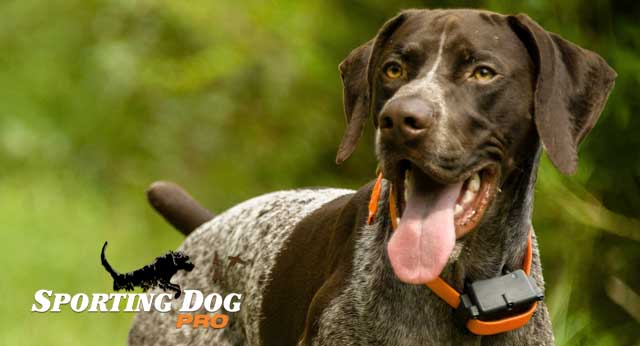
If you run dogs at range in the fall, a GPS tracking collar is the most practical safety tool you can add. The Garmin Alpha 300 and Dogtra Pathfinder 2 both combine real-time GPS tracking with e-collar control in a single system. Knowing exactly where your dog is in heavy cover isn’t a luxury — it’s the difference between finding him in five minutes and spending two hours searching.
Year-round basics that don’t change with the season
Feeding. A working dog in heavy use needs more calories than a dog in maintenance. Performance dog foods with higher fat and protein content exist for this reason. Adjust intake to match activity level — don’t feed the same amount in January that you feed in November. Monitor body condition regularly. A dog carrying extra weight going into conditioning season has a harder time than one that finished last season lean.
Dental health. Dental disease is one of the most common and most ignored health problems in dogs. Bacteria from infected teeth and gums enters the bloodstream and affects heart, kidney, and liver function over time. Annual dental cleanings and regular brushing between cleanings are not optional for a dog you expect to work hard at ten years old.
Collar wear time. Any collar worn for extended periods — e-collar, tracking collar, or standard field collar — should be removed when the dog is crated or kenneled. Contact points against skin for more than 8–12 hours can cause pressure necrosis, a condition similar to a bedsore. Rotate contact point placement if you run a collar daily. Read our article on pressure necrosis from collar misuse if you’re not familiar with it — it’s more common than most hunters realize.
Kennel maintenance. A clean, dry kennel is not a nicety — it’s health infrastructure. Wet bedding, accumulated waste, and poor ventilation create conditions for respiratory illness and skin problems. Clean weekly at minimum. Provide adequate shelter from both heat and cold. A dog that sleeps well and stays dry between hunts recovers faster and performs better than one that doesn’t.
The dogs that hold up through ten or twelve seasons of hard hunting are the ones whose owners treated year-round care as seriously as the hunt itself. The investment is modest. The return is a dog that’s still capable and willing in his later years, not broken down by forty.