You have no items in your shopping cart.
My Dog Has Fleas! What now?
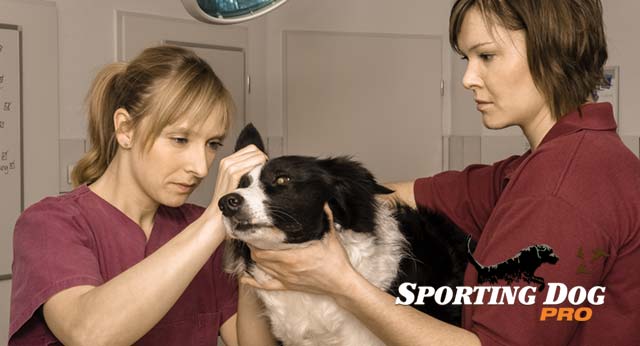
With the rising summer temperatures here in the South come the humidity — and unfortunately, with that combination also come fleas. These hateful little parasites who spend their time eating our dog’s blood are one of the most common health issues dog owners deal with, and one of the most frustrating. The reason they’re frustrating isn’t that they’re hard to kill — they’re not. It’s that treating the dog without treating the environment leaves a reservoir of eggs, larvae, and pupae that will produce a new adult population within weeks, right on schedule.
Recognizing the signs early
The earlier you catch a flea problem, the faster and cheaper it is to resolve. A few fleas addressed immediately is a much smaller project than a full infestation that’s been developing for two weeks. Know what to look for.
The most obvious sign is the dog himself: sudden, intense licking, biting, and scratching that wasn’t there before. Fleas tend to congregate at the base of the tail, the groin, the belly, and around the neck. A dog working at those areas repeatedly is telling you something. Look at the skin in those areas for hair loss, red irritated patches, and small scabs — signs of flea allergy dermatitis, which some dogs develop from an allergic reaction to flea saliva.
Beyond the dog: look for flea dirt — dark, pepper-like specks in the coat and on the dog’s bedding. Flea dirt is digested blood, and a simple way to confirm what you’re looking at is to put the specks on a damp white paper towel. If they dissolve to a reddish-brown color, it’s flea dirt. You may also spot tiny white flea eggs in the coat or bedding, though they’re significantly harder to see than the dirt.
In severe infestations, particularly in puppies or small dogs, watch for pale gums and unusual lethargy — signs of anemia from blood loss. A single adult flea eats roughly 15 times her own weight in blood per day, and a heavy infestation on a small dog can cause real anemia quickly. If you see pale gums, get to a veterinarian promptly.
Understanding the life cycle — why treating the dog alone doesn’t work
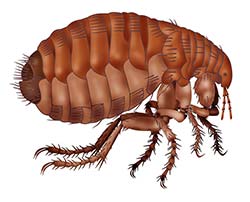
The flea life cycle has four stages: adult, egg, larva, and pupa. The adult fleas living on your dog are only a small fraction — roughly 5% — of the total flea population in your home and yard. The other 95% exists as eggs, larvae, and pupae in the environment: in carpet fibers, in furniture fabric, in cracks in flooring, in shaded outdoor areas where your dog rests.
A single adult female lays approximately 40 eggs per day. Those eggs fall off the dog wherever he goes. The larvae that hatch from those eggs feed on organic debris, including the adult flea’s droppings in the environment. The pupa stage, enclosed in a sticky cocoon that vacuum cleaners can’t easily remove, is the most resistant stage to treatment — it can remain dormant for months and hatch in response to heat, vibration, and carbon dioxide that signals a host is present.
This life cycle is why treating only the dog produces only temporary results. You kill the adults on the dog, but the environmental reservoir continues producing new adults that immediately reinfest. Effective flea treatment has to address all stages in all environments simultaneously.
Treatment: on the dog and in the environment together
On the dog: consult your veterinarian about the best product for your situation. Options include monthly oral medications (isoxazoline class products like Bravecto, NexGard, and Simparica are among the most effective currently available), spot-on topical treatments, and for severe infestation, flea shampoo as an initial knockdown. Flea collars vary widely in effectiveness — the newer prescription-strength collars (like Seresto) are more effective than traditional over-the-counter options. Whatever you use, treat every dog and cat in the household at the same time. Treating one animal while others go untreated maintains the adult flea population and extends the problem indefinitely.
In the environment: vacuum thoroughly and frequently, including carpet edges, under furniture, and anywhere the dog rests. Vacuuming removes eggs, larvae, and some pupae, and the vibration of vacuuming can trigger pupae to hatch — so the adult fleas that emerge are then exposed to any environmental treatment you apply. Wash all pet bedding in hot water. Apply an insecticide product labeled for flea control that contains both an adulticide (to kill adults) and an insect growth regulator (IGR, to prevent eggs and larvae from developing). Products without an IGR component won’t interrupt the reproductive cycle and will require more repeat treatments.
Treatment must be repeated. Even with thorough treatment, new adults will continue hatching from protected pupae for several weeks. This is normal and doesn’t mean the treatment isn’t working. Stay consistent with the dog’s treatment and continue environmental treatments for at least 30 days after you stop seeing adult fleas.
Outdoor environments and yard treatment
Fleas prefer shaded, moist areas with organic debris — exactly where your dog prefers to rest on a hot day. Under decks, in shrubby areas, and in leaf litter accumulations are prime flea habitat. Mow the lawn frequently and remove leaf and debris accumulations that create moist, shaded conditions. Treat outdoor areas where the dog spends time with an outdoor flea product labeled for yard use. Don’t leave food sources or debris that attract rodents — wildlife passing through a yard can import fleas continuously regardless of how thoroughly you treat.
Prevention is far easier than treatment
A dog on consistent year-round flea prevention almost never develops a flea problem. Monthly oral preventives or spot-on treatments maintained through warm months (and year-round in the Southeast, where the flea season effectively never ends) keep the adult flea population from establishing on the dog and break the reproductive cycle before it starts. The cost of monthly prevention is a fraction of the cost — in product, time, and disruption — of treating a full infestation.
Maintain prevention on all pets in the household simultaneously. A single untreated cat that goes outside and comes inside is enough to maintain a flea population in a house where all the dogs are treated. Prevention only works when applied comprehensively.