You have no items in your shopping cart.
Underground Dog Fences ![Underground Fence]() Keep your dogs within your exact boundary zone.
Keep your dogs within your exact boundary zone.
Underground Dog Fences

Keep your dogs within your exact boundary zone.
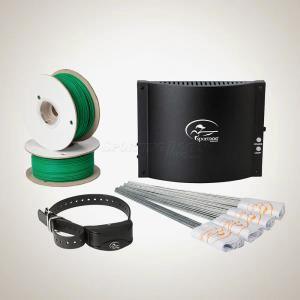
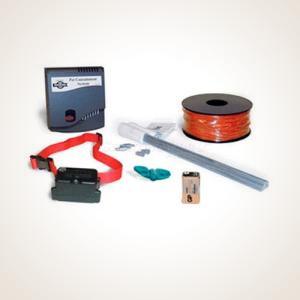
![SportDOG Underground Dog Fence System]() SportDOG Underground Dog Fence System$319.95
SportDOG Underground Dog Fence System$319.95![Collar Only]()
![Sport DOG]()
Best for: most dogs, large properties
The go-to underground fence for dog owners. Covers up to 100 acres with additional wire, handles unlimited dogs with additional collars, and is built to the same standards as SportDOG’s field training collars. If you have a large property or a dog that needs a serious containment system, this is it...![Petsafe Classic In-Ground Fence]() Petsafe Classic In-Ground Fence$174.99
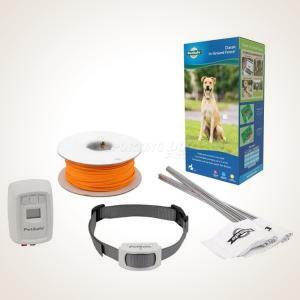
Petsafe Classic In-Ground Fence$174.99![Collar Only]()
![PetSafe]()
![Stimulation Type]() Continuous, Vibration, Tone
Continuous, Vibration, ToneBest for: average-temperament dogs, standard yards up to 5 acres
PetSafe®’s entry-level underground fence covers ⅓ acre out of the box and expands to 5 acres with additional wire. Rechargeable waterproof collar with 8 correction settings; LCD transmitter shows boundary distance and alerts you to wire breaks. DIY weekend install...![Dogtra EF3500 Underground Fence]() Dogtra EF3500 E-fence System$269.99
Dogtra EF3500 E-fence System$269.99![Collar Only]()
![Dogtra]()
![Stimulation Type]() Continuous, Momentary, Vibration, Tone
Continuous, Momentary, Vibration, ToneBest for: value, vibration-sensitive dogs
Dogtra’s underground system includes a vibration warning before the static correction — the same approach that makes their bark collars so effective. Dogs learn faster when they have a clear warning signal before correction. Covers up to 40 acres and includes a wire continuity indicator that alerts you if the boundary wire ever breaks...![SportDOG Contain + Train System]() SportDOG Contain + Train Dog Fence System$474.99
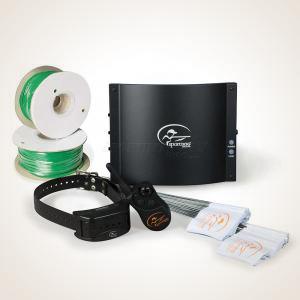
SportDOG Contain + Train Dog Fence System$474.99![500 Yards]()
![Yes]()
![Sport DOG]()
![Stimulation Type]() Continuous, Momentary, Vibration, Tone
Continuous, Momentary, Vibration, ToneBest for: dogs that need containment and obedience training
The only system on this page that combines underground fence containment with a full remote training collar in a single collar receiver. Train your dog in the yard and in the field with the same collar. Covers up to 100 acres and expands to three dogs in training mode...![PetSafe Stubborn Dog Radio Fence]() PetSafe Stubborn Dog Radio Fence$244.99
PetSafe Stubborn Dog Radio Fence$244.99![Yes]()
![PetSafe]()
Best for: strong-willed or hard-to-contain dogs
Built specifically for dogs that test boundaries or have run through lower-powered systems before. Higher correction levels, tone plus vibration mode, and proven reliability. If you’ve had trouble keeping a determined dog in with other systems, start here...



 Continuous, Vibration, Tone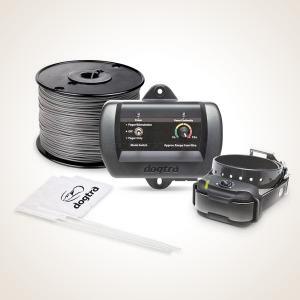



Derrick Moore, Senior Field Staff
Underground dog fences — custom boundaries for any yard, any size
An underground dog fence lets you define exactly where your dog can and can’t go — following the shape of your property rather than forcing a circular boundary. Bury the wire along your fence line, around your garden, away from the pool, or through any configuration your yard requires. Unlike wireless systems, underground fences aren’t affected by terrain, trees, metal structures, or hills. Once installed, they work reliably regardless of what’s in your yard.
We carry underground fence systems from SportDOG, Dogtra, and PetSafe — the brands that serious dog owners and professional trainers actually rely on. If you’re not sure whether underground or wireless is right for your situation, see our wireless fence comparison.
How to set up and train your dog to use an underground fence
If you’ve been thinking about getting an underground fence system, or you’ve already made the purchase but can’t stand the thought of the work after you take it out of the box, these tips are here to ease your worries. An underground fence system is safe and effective for keeping your dog in a confined space away from dangers. If you’ve already been using an electronic training collar for hunting or obedience, you’re ahead of the game — your dog already understands what the sounds and vibrations mean. If not, you can still train any dog with a few simple, consistent steps.
Step 1: Establish the “come” command first
There is no reason to assume that your dog will automatically come to you if you have never trained him to do so. If you have a training collar, use it. If the fence is your first electronic collar, wear it as a dummy collar during these sessions so your dog gets used to it. Limit initial training sessions to no more than 15 minutes. Repetition and consistency are the keys to a solid recall command. Your dog should master the come command reliably before you move on to the fence boundary work.
Step 2: Introduce your dog to the boundary flags
The boundary flags that come with your system may seem unsightly but you will never regret putting them down. Giving your dog a visual boundary is one of the most critical steps in the process. Once the flags are in place, walk your dog around the yard with the collar on but turned off so he gets a chance to see that something is different. Don’t make the flags seem like toys. If he seems wary of the flags, that’s actually helpful — it means he’s already paying attention to them.
If your dog tries to cross the flag line during these walks, give him the “come” command and redirect him. You are showing him that the flags are off limits and the proper reaction is to move back inside the boundary. If your dog has already been trained with a training collar and understands what static correction means, it is perfectly fine to start with the collar turned on from the beginning.
Step 3: Turn the collar on
Once your dog understands that the flags are off limits, it’s time to activate the collar. Walk him around the yard close to the boundary flags again and watch his reaction. This can take a while if your dog is new to the idea — don’t leave him outside alone until he fully understands the boundaries. Be patient if he continues to break the boundary; his territory just decreased and he doesn’t yet understand it as a fence.
Stay inside the safe zone yourself during this stage. Don’t tempt him or test his reaction deliberately. When he crosses over and returns to you, praise him or reward him so he learns that staying inside the boundary earns good things. When he is wearing the collar, let the collar do the correcting — don’t layer in other commands at this stage. He will quickly learn that staying inside the boundary means praise and staying outside means correction.
For a dog already trained on an e-collar, it is perfectly acceptable to use the tone or vibrate as a recall signal if you have already built that association. This is how many experienced handlers recall their dogs without saying a word.
Step 4: Monitor outdoor time until training is complete
These systems work extremely well on a properly trained dog, but you should never trust them to keep your dog safe without supervision until he has consistently stayed within the boundaries through real temptations. The best way to know if your dog is ready is to watch how he responds to distractions. You can even stage safe tests — have a neighbor walk by the boundary line and see how your dog reacts.
Be realistic about where your dog is in training. If he was chasing cars the day before, the fence alone won’t instantly change that behavior. It takes time and consistency. Stick with it. Before long your dog will be enjoying more time outside and you will know his boundaries are solid.
Common questions about underground dog fences
How much wire do I need?
Most systems come with 1,000 feet of wire, which covers roughly 1 to 1.5 acres in a standard loop. To estimate your needs, measure the perimeter of the area you want to contain and add 10 to 15 percent for corners and any route adjustments. Additional wire is inexpensive and available separately. The SportDOG system can cover up to 100 acres with additional wire.
How deep does the wire need to be buried?
Most installations bury wire 1 to 3 inches deep. Deeper burial protects against damage from lawn mowers and aerators. In areas where you won’t be cutting grass, the wire can be simply laid on top of the ground or under mulch. Burying is always preferred for long-term durability.
What happens if the wire breaks?
The transmitter will typically emit a continuous beep to alert you that the loop has been broken. The Dogtra eF-3000 includes a wire continuity indicator light specifically for this purpose. A wire break locator tool, available separately, makes finding the break much faster than walking the entire perimeter.
Can I contain multiple dogs on one system?
Yes. All of our underground fence systems support unlimited dogs with the purchase of additional receiver collars. Each collar is independent, so you can set different correction levels for each dog in your household.
Underground vs. wireless — how do I decide?
Underground fences work in any terrain, follow any boundary shape, and cover much larger areas. They require installation but are more reliable long-term. Wireless fences require no installation and are portable but create circular boundaries only and can be affected by terrain and structures. If you have a flat yard under 3/4 acre and want a quick setup, wireless is a good fit. For anything more complex, underground is the better solution.
Questions? Call us at 1 (800) 524-2428 — we’ll help you find the right underground fence system for your yard and your dog.