You have no items in your shopping cart.
Bark Collars ![Bark Collars]() Teach your dog the art of silence. Safe and effective bark control solutions.
Teach your dog the art of silence. Safe and effective bark control solutions.
Bark Collars

Teach your dog the art of silence. Safe and effective bark control solutions.
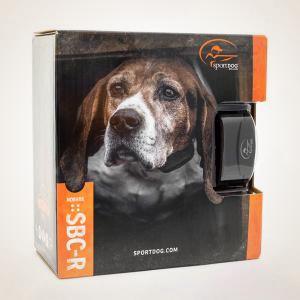
![SportDOG SBC-R NoBark Rechargeable Bark Control Collar - Box Front]()
"Best bark collar."
SportDOG NoBark SBC-R Rechargeable Bark Control Collar$109.99![Yes]()
![8 lbs. and up]()
![Sport DOG]()
Patented dual-sensor detection fires only when your dog barks — not from outside noise or other dogs. 10 stimulation levels, three programmable modes, OLED display, built-in safety timeout. Rechargeable, 200-hour battery life, IPX7 waterproof. For dogs 8 lbs. and up...
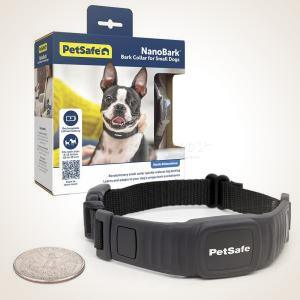
![Petsafe NanoBark Collar]()
"For miniature size dogs."
Petsafe Miniature NanoBark Collar$100.99![Yes]()
![PetSafe]()
The world's smallest bark collar — receiver weighs 1.4 oz and sits flush on the neck like a smartwatch, not a traditional module. Perfect Bark® dual-sensor technology (vibration + sound simultaneously) means it won't false-fire from other dogs or ambient noise. 10 auto-escalating correction levels, waterproof, rechargeable. For dogs 3–25 lbs with necks 6"–13"...
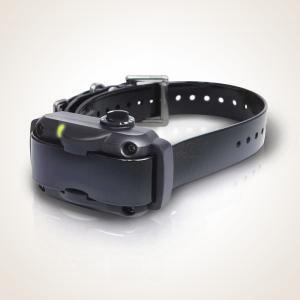
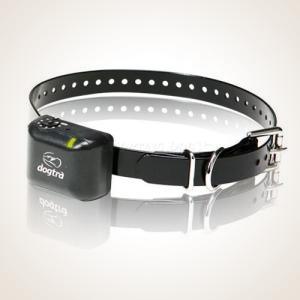
![Dogtra YS-600 Yapper Stopper]() Dogtra YS-600 Yapper Stopper$89.99
Dogtra YS-600 Yapper Stopper$89.99![Yes]()
![35 lbs. and up]()
![Dogtra]()
High-powered bark collar for medium to large dogs 35 lbs. and up. Accelerometer bark sensor reads throat vibration, not sound. 10 stimulation levels plus a High Performance Pager vibration strong enough to work through thick coats. Persistent Bark Indicator shows barking activity each time the collar powers off. Fully waterproof, 2-hour rapid charge...
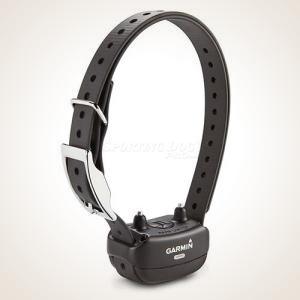
![Garmin Bark Limiter Deluxe Collar (Rechargeable)]() Garmin Bark Limiter Deluxe (Rechargeable)$129.99
Garmin Bark Limiter Deluxe (Rechargeable)$129.99![Yes]()
![8 lbs. and up]()
![Garmin]()
Accelerometer detection reads throat vibration — not ambient sound. Autorise mode requires no setup: starts at level 1 and rises until barking stops, then self-resets. Built-in Bark Odometer counts corrections while you're away. 7 manual levels, vibration-only mode. Rechargeable battery lasts approximately 3 months. IPX7 waterproof. For dogs 8 lbs. and up...
![Dogtra YS-300 Yapper Stopper]() Dogtra YS-300 Yapper Stopper$84.99
Dogtra YS-300 Yapper Stopper$84.99![Yes]()
![10 and 45 lbs.]()
![Dogtra]()
Dogtra's smallest rechargeable bark collar — 2.1 oz., built for sensitive dogs 10 lbs. and up. Every correction starts with a vibration before any static fires. Six static levels (low to medium output) plus a pager-only mode. Fully waterproof, antimicrobial strap, surgical stainless steel contacts. 2-hour rapid charge...
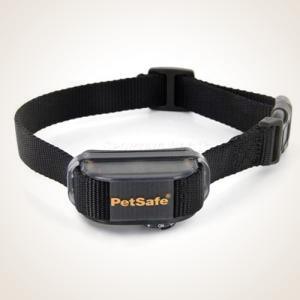
![Petsafe Vibration Bark Control Collar]() Petsafe Vibration Bark Control Collar$75.99
Petsafe Vibration Bark Control Collar$75.99![Yes]()
![PetSafe]()
Vibration only — no static correction at all. 10 random-duration vibration combinations interrupt barking without escalating to static. The gentlest option on this page. Waterproof, fits necks up to 27". Replaceable RFA-188 battery included. For dogs 8 lbs. and up...
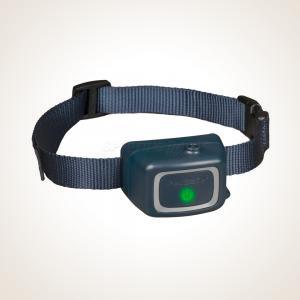
![PetSafe Spray Bark Collar]() PetSafe Spray Bark Collar$75.95
PetSafe Spray Bark Collar$75.95![Water Resistant]()
![8 lbs. and up]()
![PetSafe]()
Corrects barking with a burst of citronella or unscented spray — no static. Dual detection won't trigger from outside noise or other dogs. Approximately 35 sprays per cartridge. Low battery and low spray LED indicators. Rechargeable, up to 40-hour battery life. One of each scent included. For dogs 8 lbs. and up, necks up to 27"...








Derrick Moore, Senior Field Staff
What is a bark collar?
A bark collar is a training device that detects when your dog barks and delivers an automatic correction — static stimulation, vibration, or spray — without requiring you to be present or hold a remote. The collar does the work. When your dog barks, the collar responds immediately and consistently, which is what makes the training effective. Dogs learn through repetition and timing, and a bark collar provides both.
The collars on this page use dual detection — both sound and vibration from the vocal cords must be present simultaneously before the collar fires. This matters because a single-sensor collar can false-correct from a door slam, a passing car, or another dog barking nearby. Dual-sensor bark collars are significantly more accurate and cause less confusion during training.
Not sure which collar to start with? For most dogs, the SportDOG NoBark SBC-R is the right starting point — rechargeable, 10 levels, three programmable modes, and dual-sensor detection accurate enough for single-dog homes and multi-dog setups alike. For small dogs under 25 lbs, the PetSafe NanoBark is purpose-built for lighter breeds. Call us at 1 (800) 524-2428 if you want a recommendation for your specific dog.
Types of bark collars
Static bark collars are the most effective option for dogs that have a stubborn barking habit or don't respond to gentler corrections. They deliver a mild static stimulation — similar to the static shock you feel touching a metal doorknob — when the dog barks. Most static bark collars offer multiple correction levels so you can start low and adjust based on your dog's temperament. Rechargeable static bark collars like the SportDOG SBC-R and Dogtra YS-600 eliminate the need for replacement batteries and are ready to use after a 2-hour charge.
Spray bark collars correct barking with a burst of citronella or unscented spray directed at the dog's muzzle. The spray startles the dog and interrupts the barking without static stimulation. This makes spray bark collars a practical option for owners who prefer a non-static approach, or for dogs that respond well to scent-based correction. The PetSafe Spray Bark Collar includes both a citronella and an unscented cartridge so you can find out which your dog responds to better.
Vibration bark collars use vibration only — no static stimulation at all. The PetSafe Vibration Bark Control Collar is the gentlest option on this page and a reasonable starting point for sensitive dogs or owners who want to try a no-static approach first.
Choosing the right bark collar for your dog
Dog size matters. No bark collar is one-size-fits-all. The Dogtra YS-300 and PetSafe NanoBark are built for small dogs — the NanoBark fits dogs as small as 3 lbs. with necks 6” to 13”, making it the right choice for Chihuahuas, toy breeds, and other miniature dogs. The Dogtra YS-600 and SportDOG SBC-R are calibrated for medium to large dogs and deliver higher output levels appropriate for bigger breeds. Using a collar calibrated for a large dog on a small breed, or vice versa, reduces effectiveness and can cause unnecessary stress.
Temperament matters too. A sensitive dog that startles easily is a different training challenge than a high-drive breed that barely notices a low-level correction. Most of the static bark collars on this page offer 7 to 10 correction levels specifically so you can dial in the right setting. Start at the lowest level and work up only if the dog isn’t responding — most dogs find an effective level within the first few sessions.
Anti bark collars for dogs left alone. If your dog barks while you’re away from home, an automatic bark collar is one of the few tools that can actually address the problem in real time. The Garmin BarkLimiter Deluxe includes a built-in Bark Odometer that counts corrections while the collar is in use — when you get home, you can check it to see exactly how much barking activity occurred and whether the correction level is working.
Small dog bark collars
Finding a bark collar that actually fits a small dog — and delivers correction calibrated for a small dog’s sensitivity — is harder than it sounds. Most bark collar manufacturers build for medium and large dogs. The collars in our small dog bark collar section are specifically sized and powered for lighter dogs, with receivers small enough to sit comfortably on a small breed’s neck without throwing off balance or causing irritation from an oversized module.
No bark collar vs. remote training collar
A no bark collar operates automatically — it responds to barking without any input from you. A remote training collar requires you to push a button. For nuisance barking, the automatic bark collar is almost always the better tool because the correction needs to be immediate and consistent to be effective, and you can’t push a button fast enough every time your dog barks — especially when you’re not in the room. Remote training collars are the right choice for obedience and field training. Bark collars are the right choice for stopping a barking problem.
Maximum wear time. Most manufacturers recommend limiting bark collar wear to 8–12 hours per day and removing the collar at night. Check the contact point area daily for any skin irritation. If redness or soreness develops, remove the collar and allow the skin to recover before resuming use. Rotating the collar position slightly each day helps prevent pressure buildup on the same spot. For more on this, see our article on pressure necrosis from collar misuse.
Common questions about bark collars
Do bark collars actually work?
Yes, for most dogs. Static and spray bark collars consistently produce results in owner reviews across all brands we carry. Most dogs make the connection between barking and the correction within the first one to three days of consistent use, and many owners report a significant reduction in barking within the first week. Results vary by dog — some respond immediately, others take longer. The key factors are correct fit, contact point skin contact, and starting at the right correction level.
Are bark collars safe?
Yes, when used correctly and within the manufacturer’s guidelines. The static stimulation these collars produce is not painful — it is a brief, attention-getting sensation similar to the static you feel touching a doorknob. All collars on this page have safety features that limit corrections if the dog barks continuously, and adjustable levels so you can find the lowest effective setting. The primary safety consideration is fit — contact points must touch skin without the collar being too tight, and the collar should be removed after 8–12 hours per day.
Will a bark collar correct the wrong dog?
Not if you use a dual-sensor collar. The bark collars on this page require both the sound of a bark and the vibration of the vocal cords before firing — which means the collar only responds to the dog wearing it. Another dog barking nearby, a loud noise, or environmental sound will not trigger the collar. Single-sensor collars that use sound only can false-correct from external noise; we don’t carry them.
How long does it take for a bark collar to work?
Most dogs show a noticeable change within the first few days. Some respond after a single session. Others, particularly stubborn or high-drive breeds, may take one to two weeks of consistent use before the behavior changes significantly. If you’re not seeing improvement after two weeks, check contact point fit first — the most common reason a bark collar stops working or never worked is the contact points resting on fur rather than skin.
What age can I start using a bark collar?
Most manufacturers recommend waiting until the dog is at least 6 months old. Before that age, a dog’s understanding of cause and effect isn’t sufficiently developed for correction-based training to be effective, and positive reinforcement is the better approach. When you do start, introduce the collar at the lowest correction level and observe the dog’s response before increasing.
Can I use a bark collar on an aggressive dog?
No. Bark collars are not appropriate for dogs that show aggression. An aggressive dog that receives an unexpected correction can redirect that aggression unpredictably, which creates a safety risk. If your dog has aggression issues, a professional trainer or veterinary behaviorist is the right starting point before any correction-based tool is introduced.
Additional resources
The Training Benefits of Using Bark Collars
Let’s Talk About Barking — Are Bark Collars Right For Your Dog?
9 Common Training Collar Mistakes — Bark Collars Included
Can Bark Collars Help With Separation Anxiety or Latchkey Dogs?