You have no items in your shopping cart.
The Training Benefits of Using a Bark Collar
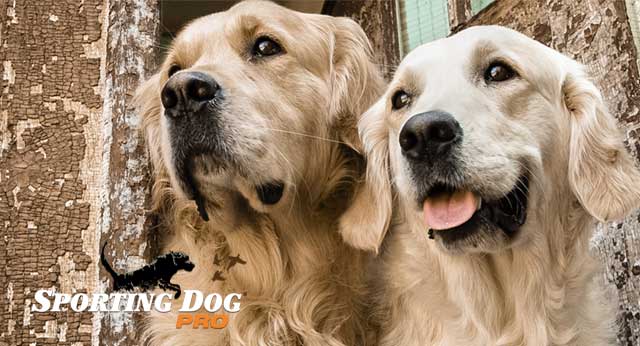
Most people think of a bark collar as a nuisance-barking solution — a way to stop a dog from keeping the neighbors awake or turning a kennel into a noise problem. That’s what they’re most often purchased for, and they work well in that application. But there’s a secondary benefit that matters specifically to hunters and serious trainers: the consistent self-correction a bark collar provides builds a dog’s capacity for self-control in ways that carry over directly into field performance and overall trainability.
Why excessive barking is a field problem, not just a nuisance
A dog that barks excessively burns physical and mental energy on a behavior that produces nothing useful. The elevated arousal that comes with sustained barking — elevated heart rate, muscle tension, mental stimulation without resolution — leaves the dog in a state that makes calm, focused work harder. It’s the same mechanism that makes an over-aroused dog difficult to work in the field: the dog is already running hot before the session begins, and adding the stimulus of game or other dogs pushes him further over the threshold where productive work happens.
Excessive barking in a kennel or blind context specifically is a problem that affects other dogs and other hunters. One dog that starts barking in a duck blind can set off every dog present and alert birds working toward the decoys. A kennel dog that carries on through the night before a hunt leaves every dog in the kennel tired and wound up for the morning. These aren’t minor inconveniences — they directly affect the quality of the hunt and the relationship between hunting partners. A dog known for uncontrolled barking stops getting invited on trips.
There’s also the feedback loop worth understanding: excessive barking can create and amplify the anxiousness that drove it in the first place. A dog left to work himself into a bark-and-pace cycle becomes more anxious, not less, and the behavior compounds over time without intervention. Breaking that cycle earlier is easier than addressing an entrenched pattern.
How a bark collar builds self-control differently than handler correction
The training benefit that bark collar advocates consistently point to is this: the correction comes from the behavior itself, not from the handler. When a handler delivers a correction, the dog learns that barking when the handler is present produces a consequence. When a bark collar delivers the correction, the dog learns that barking itself produces a consequence — regardless of whether the handler is watching, nearby, or even present at all.
That distinction matters in practice. A dog corrected only by the handler for barking will often bark freely when the handler isn’t there. A dog collar-trained to self-correction develops a consistent internal standard that applies in the kennel, the blind, the truck, and anywhere else the collar is worn. The consistency of correction — the same response every time the behavior occurs, without delay — is what produces the behavioral change.
Self-control is a trainable quality, and a dog that practices it in one context tends to transfer it to others. A dog that has learned to manage his own arousal around barking is generally more manageable in high-stimulation environments. The pattern of self-regulation that the bark collar establishes is the same pattern you want in a steady dog on the line, a patient retriever waiting for the send, or a pointing dog honoring another dog’s point.
Bark collars and the hunting dog specifically
The connection between bark control and field performance is most direct in situations where the dog needs to be quiet as a functional requirement: waterfowl hunting where silence is essential to bringing birds within range, upland hunting where a barking dog flushes birds before the hunter is in position, and any situation where a dog is expected to wait quietly in a blind or kennel while other dogs or hunters are working.
For kennel dogs that will spend time near other dogs — at hunting camp, in a boarding kennel, or at a field trial — the ability to settle quietly without setting off a chain reaction through the kennel is a practical skill. A dog that can do this is easier to travel with, easier to board, and more welcome in group hunting situations.
A bark collar is not the right tool for every barking situation. A dog barking from genuine distress, separation anxiety, or pain needs those underlying issues addressed, not suppressed with a correction collar. For nuisance barking from boredom, territorial behavior, or habit, bark collars are effective. Know which situation you’re dealing with before choosing the approach.
Choosing the right collar type
Bark collars operate through different correction mechanisms — static stimulation, vibration, ultrasonic sound, or spray — and different dogs respond differently to each. Static stimulation collars are the most consistent and reliable for most dogs, delivering a correction calibrated to the bark intensity. Vibration-only collars work well for some dogs and are a reasonable starting point for sensitive breeds. Spray collars (typically citronella) produce strong initial suppression but tend to habituate faster than static collars in dogs with persistent barking.
Level of stimulation matters significantly. Most quality bark collars offer adjustable levels or automatic intensity scaling. Starting at the lowest effective level is the right approach — the goal is a correction that interrupts the behavior, not one that frightens the dog. A dog that becomes anxious or fearful around the collar isn’t learning self-control; he’s learning to be afraid of the collar.
Browse our full bark collar selection for static, vibration, and combination options from SportDOG, Dogtra, and PetSafe — organized by dog size and application. Call us at 1 (800) 524-2428 if you want help selecting the right system for your specific situation.