You have no items in your shopping cart.
Enjoying The Warm Summer Months With Your Dog
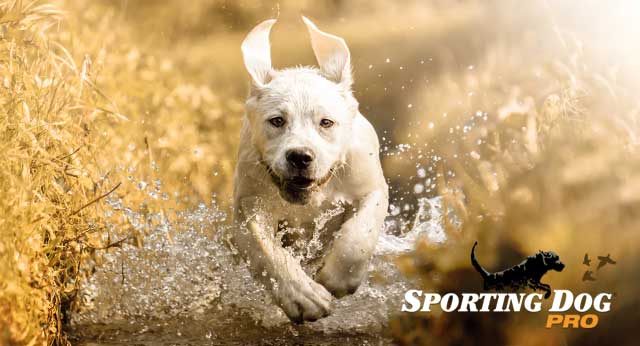
Hunting season ends and the dog doesn’t. He’s still there every morning, still wants to work, still needs exercise and mental engagement and time with you. The summer months are when a lot of hunters put their dogs on autopilot — feed, water, kennel, repeat — and wonder why the dog that was sharp in October is soft and out of shape in September. The off-season is actually an opportunity. The relationship you build with your dog in the summer shows up in the field in the fall.
Prepare before you go, not when you get there
One of the most useful lessons we learned the hard way: don’t introduce your dog to a new situation for the first time on a trip where you need him to behave. We took our six-month-old GSP to a lake house for the weekend. He’d never slept outside in his kennel before — always inside, always in his usual spot. The change of scenery, the unfamiliar sounds, the new smells — he communicated all of it with his voice, at length, through the night. We had a bark collar along and it did eventually work, but introducing a bark collar on the first night of vacation while trying to be a considerate guest is not the ideal testing environment.
The lesson: if you plan to travel with your dog, spend a few nights before the trip getting him comfortable with whatever conditions he’ll encounter. Outside kennel time? Practice at home. New sleeping arrangement? Try it in the backyard first. A dog that’s been exposed to a situation in a low-stakes environment handles it dramatically better when it actually matters.
That said, a bark collar in the bag is genuinely useful insurance for camping, vacation rentals, and campgrounds. Dogs bark at things they don’t recognize — unfamiliar animals, other campers, new night sounds — and they don’t understand that the campsite next door can hear every bit of it. Use the temperament-learning mode if your collar has one, and introduce it during the day before you need it at night.
Off-leash hiking with control
Hiking with your dog off-leash is one of the better summer activities you can do for the relationship — it lets him cover ground, use his nose, and burn energy in a way that a leashed walk doesn’t. The catch is that off-leash in a public area requires reliable recall, and reliable recall doesn’t happen without training it specifically.
An e-collar is the most practical tool for maintaining control on the trail. When another hiker comes around the corner, when your dog winds something interesting in the brush, when he decides to investigate something 50 yards off the trail — the collar gives you the ability to call him back and enforce the command from a distance. Without it, you’re depending entirely on verbal commands in a high-distraction environment, which is asking a lot of a young or high-drive dog.
Building the recall for trail use is straightforward. Practice in your yard with the “come” or “here” command, enforce it with the collar at the working level, and reward the return. When the command is reliable at home with distractions, take it to low-traffic trails and work up from there. The dog learns that the command means the same thing everywhere, not just in the backyard.
For hiking and off-leash outdoor activities, the SportDOG FieldTrainer 425X is a compact, user-friendly system with 21 stimulation levels and a vibration option — both the collar and transmitter are waterproof, which matters when your dog is in and out of the water all day. For a wider range or multi-dog setup, the SportTrainer 1275 covers up to a mile.
Heat is the most serious summer risk
Dogs don’t manage heat the way people do. They don’t sweat through their skin — they cool almost entirely through panting, which is significantly less efficient. Your dog covers three to four times the ground you do on a walk. He’s working harder than you are in the same temperature, and he doesn’t have the sense to stop when he’s done. Sporting breeds in particular will work themselves into heat exhaustion because they were bred to keep going.
The warning signs to watch for: panting that becomes rapid and labored rather than normal exertion panting, drooling heavily, slowing down or appearing uncoordinated, glazed eyes, or gums that look pale or bright red rather than normal pink. Any of those signs means stop immediately, move to shade, and get water on the dog — especially on his paws, groin, and underside where cooling is most efficient. If he’s staggering or unresponsive, get him into cool (not ice cold) water and to a vet as fast as you can. Heat stroke in dogs can be fatal within minutes if not addressed.
The practical rules: exercise in the early morning or evening when temperatures are lower. Carry more water than you think you need. Build in rest breaks in shade. On hot days, shorten the session — 20 minutes of hard work in 90 degrees is more than enough. Don’t leave your dog in a parked vehicle even briefly in warm weather.
Different breeds have different heat tolerance. Short-muzzled breeds like Bulldogs and Boxers are significantly more susceptible than long-muzzled sporting breeds, but no dog is immune. Double-coated breeds may look like they should be overheating but their coats actually provide some insulation against heat as well as cold — don’t shave them thinking it helps. It doesn’t, and it removes the insulation.
Water and hydration
A working dog needs considerably more water than a resting dog, and more than most owners provide. A dog that’s been running for an hour in summer heat needs water, not a small dish when you get home. Carry water for your dog the same way you carry it for yourself and offer it regularly — not just when he’s showing signs of thirst, because by the time he’s visibly thirsty he’s already behind.
For dogs that are kenneled outside in summer, a reliable water source that can’t tip over or run out is worth investing in. Automatic waterers that connect to a hose line are a simple solution that removes the risk of a kennel dog running dry on a hot afternoon. Browse our waterers and bowls if you’re looking for something more reliable than a standard bucket.
Summer training keeps the edge
The hunting dog that shows up to September conditioning in good shape, with his commands sharp and his relationship with you solid, has a significant head start on the dog that spent the summer doing nothing. Summer training doesn’t have to be formal. Regular off-leash time, obedience work mixed into walks, water retrieves if you run a retriever, bird launcher work if you have access — any of it maintains what you built last season and sets up what comes next.
The summer is also when you can address problems that showed up in the field last fall without the pressure of an open season. A dog that was breaking point, a retriever that was getting mouthy, a recall that was unreliable in heavy cover — these are all fixable in the off-season when you have time to work through them properly. Don’t save them for October.