You have no items in your shopping cart.
Knowing When to Turn Up the Stimulation Level on an E-Collar
One of the most common mistakes new e-collar users make is setting the level too high out of impatience, and one of the most common mistakes experienced users make is leaving it too low out of reluctance. Neither produces good training. Finding and using the right level — and knowing when to adjust it — is a fundamental skill that takes some time to develop but isn’t complicated once you understand what you’re actually looking for.
Start by finding the working level, not the correction level
Before you ever use an e-collar to correct a behavior, you need to find what’s called the working level — the lowest stimulation your dog can actually perceive. This is not the level that makes him yelp, flinch, or look uncomfortable. It’s the level where you see the faintest acknowledgment: a slight ear flick, a twitch along the neck or shoulder, a momentary shift in attention. That’s your baseline.
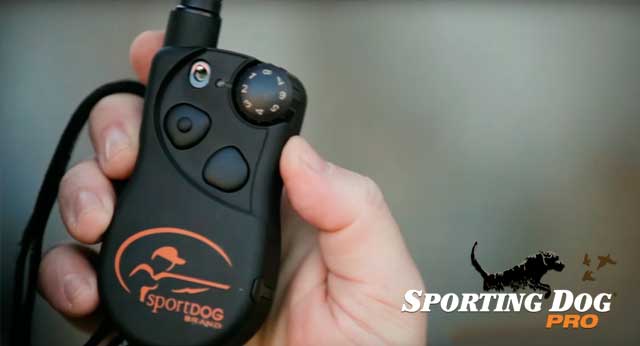
To find it, have the collar fitted and on the dog. Start at level 1 and press the continuous button briefly. Watch carefully. If you see nothing, move up one level. Repeat until you get that first subtle response. Write the number down. That’s the level where your dog can feel the collar without being startled or stressed by it.
Most training starts at or near this working level and doesn’t need to go much higher. If you’re well above it and your dog isn’t responding, the problem is usually the training approach, not the level.
What the level should accomplish
The purpose of stimulation in e-collar training is communication, not punishment. At the right level, the collar is saying “pay attention” or “that’s not the right response” — not “that hurt.” A dog that shuts down, tucks his tail, or becomes anxious around the collar is being trained at too high a level. A dog that ignores the collar entirely is being trained at too low a level.
What you want is a dog that acknowledges the stimulation, adjusts his behavior in response to it, and remains engaged and willing. That mid-point is where good e-collar training happens.
When to move the level up
There are a few legitimate reasons to increase stimulation level, and it’s worth being precise about what they are.
The dog isn’t perceiving it. If you’re pressing the button and getting zero response — not a subtle one, truly zero — the level may be below the dog’s perceptible threshold. Contact point fit is the first thing to check. The points must be in firm contact with skin, not riding on top of coat. A contact point buried in thick fur on a double-coated breed will deliver almost nothing. Try longer contact points or part the hair before concluding the level is too low.
Competing stimulation in the environment. A dog working at high drive in a field full of pheasant scent is in a very different state than a dog sitting in your backyard. Adrenaline, excitement, and arousal raise the threshold for what a dog perceives. A level that gets a clear response in training may get nothing when the dog is locked onto a bird. This is the most common reason experienced trainers bump the level in the field versus in controlled training — not because the dog needs more correction, but because the environment requires more stimulus to break through. This is normal and expected.
The dog has genuinely stopped responding to a level he previously acknowledged. This is rare and usually misdiagnosed. Most of the time when trainers think a dog has “gotten used to” a level, the actual problem is that the association between the stimulation and the expected behavior was never fully conditioned. Bumping the level treats the symptom, not the cause. Before increasing, ask whether the dog actually understands what response the collar is asking for.
A note on stubborn dogs. Some dogs genuinely require higher output collars — particularly hard-headed working breeds that have high pain tolerance and high drive. For these dogs, standard collars may simply not deliver enough output to be meaningful. Stubborn dog systems are designed specifically for this and are a better answer than trying to push a standard collar past what it was designed to do.
When not to increase the level
Increasing stimulation because a dog isn’t doing what you want is the wrong instinct in most cases. Before you reach for the dial, run through this checklist:
Does the dog actually know the behavior you’re asking for? An e-collar cannot teach a dog something he doesn’t understand. It can only reinforce or correct behaviors the dog already has some foundation in. Using stimulation to try to teach a new command rather than reinforce a known one produces a confused, anxious dog, not a trained one.
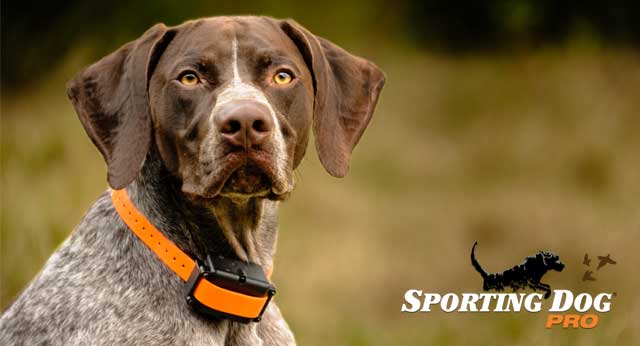
Is the collar making proper contact? Check the fit before every session. A collar that’s even slightly loose on a dog that’s been running and panting will shift position. The contact points should leave faint temporary marks on the skin after a training session — if they’re not, they’re not making consistent contact.
Are you reading stress correctly? A dog that is stressed, fearful, or shutting down looks similar on the surface to a dog that’s ignoring you. They’re not the same problem and they don’t have the same solution. Increasing stimulation on a stressed dog makes the problem worse. If your dog is panting heavily, avoiding eye contact, moving slowly, or showing displacement behaviors, the level is too high or the training approach needs to change — not the other way around.
Different collars, different scales
Level 5 on one collar is not the same as level 5 on another. Collar manufacturers use different output ranges and different stimulation scales. Dogtra’s 127-level rheostat system offers very fine gradation. SportDOG and Garmin use numeric scales with different output profiles. If you’re switching collars or trying a new system, start the working-level-finding process over from scratch rather than assuming your previous number transfers.
If you’re evaluating e-collar systems, our training collar guide breaks down the full lineup by application — family dog, upland, waterfowl, hound, and professional. Call us at 1 (800) 524-2428 if you want help matching a collar to your dog and your training goals.
The short version
Find the lowest level your dog can perceive. Train at or near that level. Move up when the environment demands it or when you confirm the dog genuinely isn’t perceiving the stimulation — not when you’re frustrated that the training isn’t going the way you expected. The e-collar is a precise tool. Used with precision, it works. Used as a volume knob to turn up consequences, it creates problems that take longer to fix than the original behavior did.