You have no items in your shopping cart.
What are E-collars, and How Are They Used?
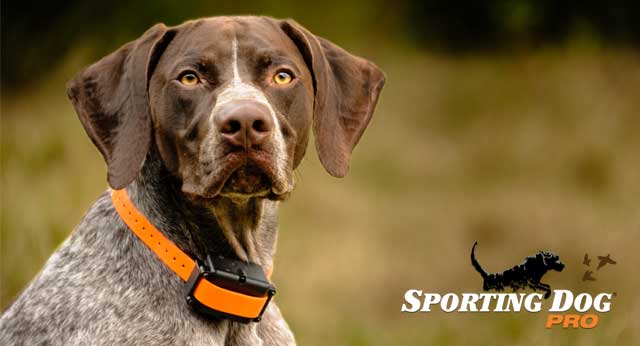
An e-collar is a remote training system consisting of two components: a handheld transmitter the handler carries and a receiver collar the dog wears. When the handler presses a button on the transmitter, the receiver delivers a stimulus to the dog — static stimulation, vibration, or tone depending on the system and the button used. That’s the whole mechanism. There’s nothing complicated about how it works at a hardware level. The complexity is in how it’s used.
What the stimulation actually feels like
The static stimulation from a modern e-collar is not a painful shock. It’s closer to the static you feel touching a doorknob after walking across carpet — a surprising sensation, not a painful one. The purpose is to get the dog’s attention and create an association between a behavior and a consequence, not to cause pain. Modern collars offer anywhere from 8 to 127 levels of stimulation, allowing the handler to dial in precisely what the dog needs — which for most dogs in most training situations is a level that’s barely perceptible.
Collars that deliver vibration use a motor similar to what you’d find in a smartphone. Tone-only modes produce an audible beep from the receiver. Many systems combine all three — you can use tone as a warning, vibration as a secondary cue, and static as a reinforcement, or use them in any combination that fits your training approach.
What e-collars are actually used for
Recall training. Teaching a reliable recall — a dog that comes when called under any conditions, including when he’s distracted by a squirrel, another dog, or a deer — is one of the most valuable things an e-collar can do. A leash gives you a physical connection to enforce a command. An e-collar extends that ability to the distance the transmitter reaches, which on most modern systems is anywhere from a quarter mile to several miles. A dog that has been properly conditioned to recall with an e-collar will come back when called in conditions where no other tool reaches.
Obedience reinforcement. Commands like sit, stay, heel, and place can all be reinforced with an e-collar once the dog understands them. The collar doesn’t teach the behavior — that work happens through conventional training — but it allows the handler to enforce the behavior at a distance and in high-distraction environments where a leash isn’t practical.
Hunting dog training. For sporting dogs, the e-collar is standard equipment rather than a specialized tool. Retrievers, pointing breeds, flushing spaniels, and hounds are all trained with e-collars routinely by professional and amateur handlers alike. The ability to communicate with a dog working 200 yards away in heavy cover without shouting, whistling, or physically intervening is genuinely irreplaceable in the field. Steadiness on point, honoring another dog’s point, stopping to flush, and recall from a chase are all behaviors that e-collar training makes reliably enforceable at hunting distances.
Behavior modification. Unwanted behaviors like jumping, excessive barking, chasing livestock, and counter-surfing can all be addressed with e-collar training. For containment purposes, underground fence systems and GPS fence systems use the same receiver collar technology to enforce a boundary without physical fencing.
If your dog barks persistently and you’re looking for an automatic solution rather than a remote-activated one, a bark collar uses the same receiver technology but activates automatically when the dog barks rather than requiring a handler with a remote. For property containment, underground fence systems and GPS fence systems apply the same principle to boundary enforcement.
How the transmitter works
Most e-collar transmitters have at least two buttons — one for momentary stimulation (a brief pulse regardless of how long you hold the button) and one for continuous stimulation (held as long as you press it, typically with an 8-12 second automatic cutoff for safety). Many systems add a dedicated vibration button, a tone button, and on hunting systems, additional buttons for beeper modes or boost stimulation.
The stimulation level is set by a dial or digital selector on the transmitter. Some systems like Dogtra use a smooth rheostat dial with 100 or 127 levels — very fine gradation that allows precise adjustment. Others like SportDOG and Garmin use numbered selector dials with fewer steps but clear settings. Neither approach is inherently better; they suit different training styles and different handlers.
Multi-dog systems allow one transmitter to control two, three, or more receivers independently. Each dog gets his own channel, his own stimulation level settings, and his own controls on the transmitter. For hunters who run multiple dogs simultaneously, this is the standard configuration.
What e-collars are not
An e-collar is not a substitute for training. A dog that doesn’t understand what “come” means will not learn it from an e-collar. A dog that has never been taught to sit will not sit because the collar fires. The collar is a tool for reinforcing and communicating behaviors the dog already has a foundation in — not for teaching those behaviors from scratch and not for punishing a dog into compliance. Used that way, it produces anxious, confused dogs. Used correctly, it produces dogs with reliable responses under conditions where no other tool reaches.
It’s also not a set-and-forget solution. Finding the right stimulation level, timing the stimulus correctly, and reading the dog’s response accurately are skills that take time to develop. The good news is that the basics aren’t complicated — most handlers who put in the time to learn the fundamentals and start at a low level find the process straightforward.
Choosing the right system
The right e-collar depends on what you’re training, what size dog you have, and how far you need to reach. A family dog owner training a Labrador in the backyard has different needs than a professional trainer running multiple pointing dogs at a mile. Range, output level, number of dogs supported, and waterproofing are the main variables to match against your use case.
Browse our full lineup of remote training collars organized by application — family dog, upland hunting, waterfowl, hound hunting, and professional training. Not sure what fits your situation? Call us at 1 (800) 524-2428 and we’ll help you work through it.