You have no items in your shopping cart.
Dog Training Do's and Don'ts
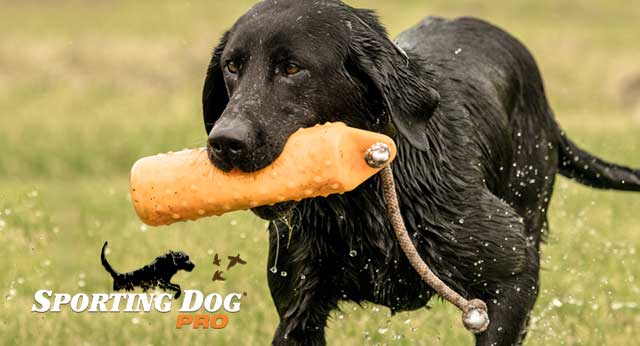
Dog training is straightforward in principle and genuinely difficult in practice. The principles don’t change much — clear communication, consistent consequence, appropriate timing, patience. What trips people up is not understanding the principles but failing to apply them consistently when things get frustrating. These do’s and don’ts aren’t complicated, but following them reliably is what separates handlers who make steady progress from handlers who plateau and wonder why.
Don’t train when you’re angry or stressed
Your emotional state communicates directly to your dog whether you intend it to or not. A tense handler produces a tense dog. A frustrated handler who is going through the motions of training while internally furious about the last ten failed reps is not training — he’s marinating in frustration and the dog is picking up every bit of it. Dogs are extraordinarily good at reading human body language and emotional state, and a dog in the presence of a stressed handler will be operating with elevated anxiety that makes learning significantly less efficient.
If you’re not in the right frame of mind to be patient and clear, don’t start the session. Put the equipment away and come back tomorrow. A short good session is worth more than a long bad one, and a session that ends on a successful rep with genuine praise produces a better outcome than a session that grinds on until someone gives up. Your dog didn’t create the bad mood. Don’t train it into him.
Don’t give up before the behavior is reliable
Almost every training struggle has a handler component. A dog that’s been working on a command for two weeks without reliable compliance almost always has a foundation issue, a consistency issue, or a timing issue — all of which are handler problems, not dog problems. Before concluding that the dog won’t learn something, audit your own approach honestly. Are you enforcing the command every time? Are you correcting at the right moment? Does the dog actually understand what you’re asking, or have you moved on before the foundation was solid?
Most dogs will learn any behavior you have the patience and consistency to teach them. The ones that are slower aren’t necessarily less intelligent — they’re often more sensitive, more independent, or wired to process information differently. Adjust your approach before you conclude that the dog is the problem. Twenty to thirty minutes per session is generally the right ceiling; end before either of you is worn out, and always end on something the dog did correctly.
Don’t switch methods mid-stream
Finding a training approach that works and sticking with it is more important than finding the perfect approach. Every time you change your method, your cues, or your consequences, you introduce ambiguity that the dog has to work through. A dog trained with three different recall methods by three different people in the household doesn’t have a recall — he has three partial recalls that may or may not work depending on who’s asking and how.
Decide on the approach, decide on the cues, communicate both to everyone who handles the dog, and apply them consistently. Adjusting intensity or timing as you learn more about how your specific dog responds is fine — that’s reading the dog. Abandoning a method because it didn’t produce results after three sessions and trying something new is a pattern that produces perpetually half-trained dogs.
Don’t train multiple dogs simultaneously
Dogs are distractions to each other in ways that significantly degrade individual training quality. One dog watching another get worked is a dog that’s mentally somewhere else. One dog getting a correction while another is nearby can produce confusion about who the correction was directed at. And if one dog grasps a command quickly while the other struggles, you end up either boring the fast learner or rushing the slow one — neither outcome is good.
Individual sessions produce better results. If you run multiple dogs, rotate them through sessions and crate or kennel the others while one is working. The dog getting the session is focused. The dog in the crate is resting and not rehearsing distracted behavior. When you have a need to train behaviors that require other dogs — honoring another dog’s point, steady in the presence of a working brace mate — introduce that deliberately as a specific training exercise, not as a default approach.
Crate the dog that’s waiting, not just tether him nearby. A dog tied out watching another dog work is still distracted and still building anticipation that makes his session harder. A dog in a secure crate rests and arrives at his session calmer and more focused.
Do take your time and work one command at a time
Introducing a new command before the previous one is reliable is one of the most common mistakes in self-training. It’s tempting to keep moving — the dog is doing well on sit, let’s add stay, now let’s add down, let’s work on heel — but each new command introduced before the previous one is solid dilutes all of them. You end up with a dog that knows eight commands at 60% rather than four commands at 95%.
The standard for moving forward should be: the dog responds to the command correctly, the first time, in at least two different environments, at least 8 out of 10 repetitions. That standard may feel slow. It produces reliable behavior that holds under distraction. The faster alternative produces behavior that works in the backyard and falls apart in the field.
Do spend time with your dog outside of training
The relationship between a handler and a working dog is not only built in formal training sessions. Time in the field running and exploring, play, regular handling and grooming, simply being in the same space — all of it contributes to a partnership that makes training more effective. A dog that only interacts with his handler during training sessions doesn’t develop the read on the handler that makes field work genuinely collaborative. A dog that spends varied time with you reads your intentions, your mood, and your expectations from a much deeper foundation.
The old advice about not letting a hunting dog be “too soft” by being a house dog isn’t supported by the performance records of dogs that are household companions as well as working dogs. The Labrador that sleeps at the foot of the bed and hunts hard the next morning isn’t less effective because he’s social — he’s more attentive to his handler because the relationship runs deeper.
Do reward correct behavior — during and outside of sessions
Rewards don’t only belong in formal training sessions. A dog that is praised for sitting calmly when a stranger approaches, or for bringing a retrieve to hand in casual yard time, or for waiting at a door without being told is getting rewarded for generalizing the behavior to everyday life. That generalization is what makes training stick across contexts.
The form of the reward matters less than the consistency and immediacy of it. Food treats work well for many dogs and are easy to deliver precisely. Praise and physical affirmation work well for handler-oriented dogs. A game of fetch or a retrieve is a natural reward for a dog with high drive. Match the reward to the dog. The most effective reward is whatever your specific dog values most and will work to earn.
Do be consistent above everything else
Consistency is not just about applying the same method. It’s about holding the same expectations in every context, every day, with every person who handles the dog. A command that is enforced when you feel like enforcing it and ignored when you don’t is a command that the dog is being trained to treat as optional. Dogs are situationally smart — they notice when rules are enforced and when they aren’t, and they adjust their compliance accordingly.
Good behavior reinforced consistently and bad behavior corrected consistently, by everyone who handles the dog, across all environments — that is the entire formula for a well-trained dog. It doesn’t require advanced technique. It requires showing up the same way every time.
Having the right tools makes consistency easier. Browse our training collar guide for systems that give you reliable, precise communication at any distance — the tool that makes “every time” possible in the field as well as the yard.