You have no items in your shopping cart.
Using a Training Collar for Anxiety in Dogs
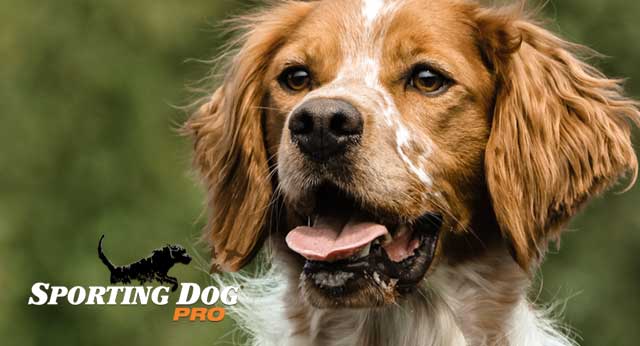
Using an e-collar to address anxiety in dogs seems contradictory on the surface — adding a correction tool to a dog that’s already struggling with stress. But the application described here isn’t about correcting anxiety. It’s about using the e-collar to redirect an anxious dog’s attention to the handler and give her a clear behavioral option in situations that would otherwise leave her overwhelmed and reactive. Done correctly, this approach builds trust, reduces over-arousal, and gives an anxious dog something concrete to do when she doesn’t know what to do.
Understanding the problem first
Before getting into technique, an important distinction: there is a meaningful difference between a dog that is genuinely anxious — fearful, distressed, physiologically overwhelmed by a stimulus — and a dog that is over-aroused, excited, or undisciplined in certain contexts. The approaches are different, and mixing them up produces poor results at best and makes things worse at worst.
A dog with severe, clinical anxiety — one that shuts down, trembles, loses the ability to respond to any cue, or reacts with panic to normal stimuli — needs veterinary evaluation before any training protocol is applied. Anxiety at that level has a physiological component that training alone doesn’t address, and a correction delivered to a dog in a panic state adds stress to an already overwhelmed nervous system. If your dog’s anxiety is severe, start with your veterinarian and possibly a veterinary behaviorist before reaching for training tools.
The dog this article is written for is the one who is manageable but reactive: over-excited at other dogs on a walk, distracted and spinning in the field when other dogs are present, nervous in new environments but not shut down, or unfocused and hard to reach when arousal is elevated. For this dog — the vast majority of dogs people describe as “anxious” — the approach below works well.
Why the e-collar works in this context
When a dog is anxious, over-aroused, or distracted, her attention is on the source of her stress rather than on you. Verbal commands often don’t reach her in this state — not because she’s disobedient, but because the competing stimulus is consuming her attention. Yelling or repeating commands in a raised voice adds your own stress to the environment, which typically amplifies the dog’s arousal rather than reducing it.
A low-level continuous e-collar stimulation — applied calmly as a physical cue rather than a punishment — breaks through the competing stimulus in a way that a voice often can’t. It’s a tap on the shoulder from someone she’s learned to respond to, delivered without emotional charge. Paired with a known command like “sit” or “here,” it gives the dog both a direction and a behavioral option: stop reacting, orient to the handler, and do the known command. The stimulation ends when she complies. Over repetitions, the dog learns that when she’s uncertain or overwhelmed, turning to the handler produces a predictable, positive outcome — and that becomes her default response.
The result isn’t a dog that’s been suppressed by fear of correction. It’s a dog that has been given a coping mechanism: look to the handler. That’s a fundamentally different thing.
The training approach
Start with a long leash or a check cord as a physical backup before working toward off-leash reliability. The leash gives you control if the dog tries to bolt, and it keeps her safe in environments where an untethered reaction could put her in danger.
Identify the specific stimulus or environment that triggers the over-arousal. For many dogs, this is other dogs, unfamiliar people, vehicle traffic, or certain hunting scenarios — like being in a blind or field with other excited dogs. Whatever it is, that stimulus needs to be present in training for the training to transfer. Practicing in neutral environments teaches the dog to respond to you in neutral environments; it doesn’t teach her to respond to you when the triggering stimulus is present.
Introduce the stimulus at a distance or intensity level where the dog notices it but isn’t yet fully reactive. This is the working threshold — close enough for the stimulus to register, far enough that the dog can still respond to a command. When she begins to fix on the stimulus and disengage from you, give the command calmly and deliver a low-level continuous stimulation simultaneously. Release the stimulation the moment she orients toward you or makes any movement toward compliance. Mark the orientation with praise. You are reinforcing the act of turning to you rather than continuing to react.
Gradually decrease the distance to the stimulus over multiple sessions as the dog’s ability to respond improves. The goal is a dog that can be in the presence of the triggering stimulus, respond to your commands reliably, and default to checking in with you when she’s uncertain — rather than escalating into reaction.
The stimulation level is critical. You are using it as a communication cue, not a punishment. Start at the lowest level that the dog notices — a level that produces an ear flick, a slight head turn, or a brief pause in her current behavior. A level that startles, causes a yelp, or visibly frightens the dog is too high and will make anxiety worse. If you’re unsure where to start, the guidance in our article on finding the right level of correction is worth reading before you begin this work.
For the over-excited hunting dog
The hunting dog that becomes unmanageable when other dogs are present — spinning, barking, breaking, lunging — is a specific version of this problem with a specific field consequence. A dog that can’t settle in the blind or hold steady at the line when other dogs are working isn’t just annoying. He’s a hunt ruiner, and he’s being asked to operate in an environment he hasn’t been prepared for.
The fix is structured exposure in training — the same approach described above, applied specifically in hunting scenarios. Put the dog in situations that mirror the hunt: multiple dogs present, birds working, excitement running high, and require him to hold steady and respond to your commands throughout. The e-collar’s ability to deliver a precise, immediate communication at any distance is especially valuable here, because the dog in a hunting scenario may be twenty or thirty yards from you when the behavior needs to be addressed.
What success looks like
You will know the training is working when the dog begins to orient toward you voluntarily in the presence of the triggering stimulus, before you give a command. She has learned that checking in with you in uncertain situations produces a predictable, positive outcome, and that has become her habit. The static correction becomes less necessary over time because the desired behavior — look to the handler — is being offered voluntarily.
That shift from correction-dependent to handler-oriented is the goal. A dog that trusts her handler and turns to him when she’s uncertain is a calmer, more manageable, and more enjoyable dog in every context — in the field, in the kennel, and at home.