You have no items in your shopping cart.
Stopping Dog Aggression Early
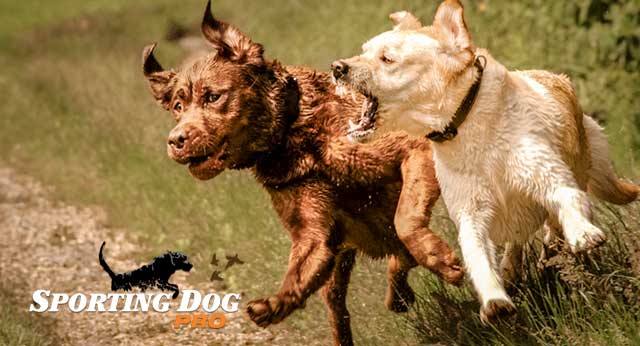
Most aggression problems in adult dogs were preventable. That’s not a comfortable thing to hear if you’re dealing with one, but it’s useful to understand because it means the same behaviors that allow aggression to develop are also the behaviors you can change to stop it early. The window is widest when the dog is young, but it doesn’t close entirely. Aggression that has been practiced for years is harder to address than aggression that showed up last month — but neither is hopeless if you respond to it correctly.
Understanding where aggression comes from
Dogs are social animals with a built-in hierarchy orientation. Most litters have a dominant puppy — the one that pushes to the food first, that stands over the others, that tests boundaries more persistently than his littermates. That drive isn’t bad in itself. A dominant dog with structure and clear leadership from the handler is often a confident, capable working dog. A dominant dog with no structure and no leadership develops into a problem.
The mechanism is simple: a dog that is never clearly shown that he is not in charge will conclude that he is. Once he concludes that, he starts making decisions that belong to you — including decisions about when to use force. Aggression in most cases isn’t random. It’s a dog exercising what he believes is his authority to manage a situation. Removing that belief — establishing clearly and consistently that you are the decision-maker — is the foundation of addressing it.
Fear-based aggression operates differently and is covered separately below. If your dog’s aggression is triggered specifically by fear or pain rather than by dominance or resource guarding, the approach is different.
Establish leadership early through everyday interactions
Leadership doesn’t come from a single confrontation. It comes from the consistent accumulation of small interactions where you are clearly in charge. A dog learns his position in the household from what he’s allowed to do, when he’s allowed to do it, and whether the rules are enforced reliably.
Food is the most direct tool. A dog that eats only when you say, that waits while you prepare his bowl, that steps back when you reach toward it, is a dog that has been shown in the most fundamental way that resources come from you on your terms. Practice this daily. Periodically interrupt his meal, briefly remove the bowl, and then return it. A dog that accepts this calmly has learned that you control what he has. A dog that growls or snaps at the bowl needs that behavior addressed immediately — not tolerated — because resource guarding that isn’t corrected becomes resource guarding that escalates.
Access to space matters too. A dog that controls furniture, doorways, and rooms — that won’t move when asked, that growls when displaced from a favored spot — is a dog that has been allowed to claim territory. Reclaiming that through consistent enforcement of simple rules (off the furniture, move when I ask, wait at the door) communicates the same message as the food exercise: you control the environment, not him.
Socialization is not optional
An isolated dog becomes a fearful dog, and fear turns into aggression faster than almost any other pathway. A dog that has been exposed to a wide variety of people, dogs, environments, and situations from puppyhood has a much lower baseline anxiety than a dog raised in isolation, and lower baseline anxiety means less reactive, less aggressive behavior across the board.
This matters especially for hunting dogs that will encounter other dogs in the field, strangers at check-in stations, and unfamiliar environments constantly. A gun dog that goes rigid and stiff-legged every time he encounters an unfamiliar dog at a hunting club is a liability. A gun dog that has been properly socialized meets new dogs with appropriate confidence and moves on. The difference is almost entirely environmental — it’s what the dog was exposed to, and when.
Socialization doesn’t mean forcing your dog into every situation. It means controlled, positive exposure at a level the dog can handle, gradually expanding his comfort zone. A dog that encounters something unfamiliar and is allowed to investigate at his own pace, with your calm presence as a stabilizing factor, learns that new things are manageable. A dog flooded with overwhelming stimulation learns the opposite.
Early socialization and exposure are easier to build into a puppy’s life than to retrofit into an adult dog. Take the puppy with you. Let him encounter different people, surfaces, sounds, and animals in low-pressure contexts from the first weeks. The confident, well-adjusted adult dog is the one who saw everything early.
Read and respond to pre-aggression signals
Aggression almost never appears without warning. Dogs communicate threat through a predictable escalation sequence before they reach the bite: stiffening, hard stare, low growl, lip curl, snarl, snap, bite. Most owners who say their dog “bit without warning” missed the earlier signals — the stiffening, the stillness, the change in posture. Learning to read those signals gives you the ability to intervene before the situation escalates.
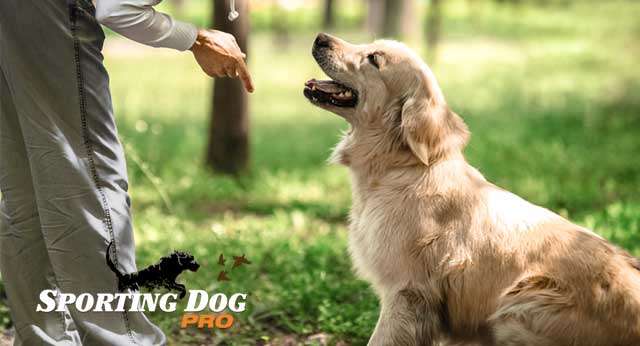
When you see a growl or a stiff posture, the correct response is not to back away and accommodate the behavior — that reinforces it. The correct response is a calm, immediate correction that communicates that the behavior is not acceptable, followed by a redirect to a command the dog knows and can comply with. The correction interrupts the escalation. The command gives the dog something to do that earns a positive outcome. That sequence — correction, redirect, reward — is how you begin replacing aggressive responses with compliant ones.
An e-collar is genuinely useful here because it allows you to interrupt pre-aggression behavior at the moment it appears regardless of distance or position. A dog that stiffens and begins to stare at another dog 20 feet away can be corrected in the moment the behavior starts — not after you’ve crossed the distance and the situation has already escalated. Timing is everything in aggression correction, and the e-collar closes the timing gap.
Praise matters as much as correction
Aggression training is not purely corrective. A dog that is told what not to do without being shown what to do instead has an incomplete lesson. When your dog encounters a situation that previously triggered aggression and responds calmly instead — meets another dog without stiffening, accepts handling without growling, moves away from his food bowl without resistance — that calm response needs to be acknowledged clearly and immediately. He made the right choice. He needs to know that.
Most dominant dogs are highly motivated by praise from the person they respect. Once you’ve established real leadership, that praise becomes a powerful reinforcer. A dog that is genuinely trying to please you and knows what pleasing you looks like will work hard to produce those outcomes. The relationship is the tool — the corrections and the leadership establish it, and the praise sustains it.
If your dog’s aggression is serious — has resulted in a bite, involves redirected aggression toward family members, or doesn’t respond to consistent handling — professional assessment is the right next step. A trainer who specializes in aggression rehabilitation can evaluate the severity and build a structured program. Don’t manage serious aggression with self-help methods alone.
Fear-based aggression
Fear-based aggression — a dog that becomes aggressive when frightened, cornered, or in pain — requires a different approach than dominance-based aggression. Punishing a fearful dog for the aggressive behavior it produces when frightened typically makes the fear worse and accelerates the aggression. The correct approach is to identify the triggers, address the underlying fear through gradual desensitization, and manage the environment to prevent the dog from being put into situations that overwhelm him while that work is being done.
If you’re not sure whether your dog’s aggression is dominance-based or fear-based, a professional evaluation is worth the investment. Misidentifying the type and applying the wrong approach wastes time at best and makes the problem significantly worse at worst.
Browse our training collar guide for systems suited to obedience work and behavior correction — from family dog e-collars to professional-grade systems for high-drive dogs. Call us at 1 (800) 524-2428 if you want help choosing the right tool for your situation.