You have no items in your shopping cart.
Teaching the "Stop" Command
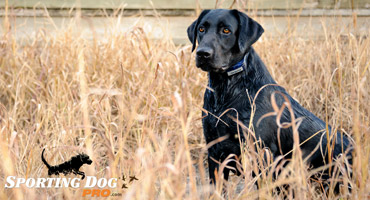
Of all the commands a hunting dog needs to know, the stop command may be the most consequential. Sit, down, and recall are essential for a well-managed dog. But stop — the command that freezes a dog in place immediately, wherever he is, whatever he’s doing — is the command that can save a dog’s life at the edge of a road, prevent a broken point in a critical moment, keep a dog from running into a shooting lane, and give the handler control over a dog that is moving fast in the wrong direction. Every other command manages the dog when things are going normally. Stop manages the dog when something has gone wrong or is about to.
Why tone matters for this command specifically
The stop command is delivered in a different voice than most training commands. Not harsh, not angry — but clear, authoritative, and without the warmth you might use for a recall or a sit. The original article makes this point well: you would never use a sweet or gentle tone if you needed a dog to stop before running into traffic. The tone of the command communicates urgency and non-negotiability. A dog trained to stop to a casual, friendly voice won’t have the reflexive response to that command that the command needs to function in an emergency. Train it with authority from the beginning and maintain that tone consistently, so the dog associates the specific sound of the command with the specific required response: stop moving, right now, and hold.
Some trainers use a whistle blast as the stop/sit cue in the field rather than a voice command — a single long blast paired with the raised hand signal. The whistle carries further than a voice in wind and cover, and the sound profile is distinctive enough that the dog can isolate it clearly even when other sounds are competing. Whether you use a voice command, a whistle, or both, the principle is the same: one signal, one required response, immediate compliance.
Equipment
The tools for teaching stop are simple. A check cord or long lead gives you physical control during early training so that the dog cannot simply walk away from the command before he understands it. The cord is not used to jerk or correct — it’s used to prevent non-compliance by giving you the ability to stop the dog’s forward movement at the moment the command is given. This is important: you want the dog stopping to your command, not stopping because he ran out of cord. Use the cord to prevent the failure rather than to punish it after the fact.
A training collar is the tool that eventually extends stop enforcement to off-lead situations and field distances. A dog who understands the command from check cord work can be transitioned to e-collar maintenance: the low-level continuous stimulation paired with the stop command gives the handler the ability to communicate the standard at any distance, the moment the dog needs to hear it. This is particularly valuable for a dog working at range in cover where the handler cannot physically reach him.
Teaching the stop: the walking method
Start in a quiet, distraction-free environment with the dog on the check cord. Walk forward with the dog at your side or slightly ahead. After a few normal steps, stop walking yourself, give the stop command once in a clear authoritative voice, and simultaneously use a physical cue to block the dog’s forward movement — a hand signal palm-out in front of him, or a stick or crop held horizontally at his chest height. The physical blocker is not a threat; it’s a visual and tactile reinforcement of the command at the moment it’s given, helping the dog understand what “stop” means in terms of body position.
The moment the dog stops — even if he stopped partly because of the blocker — mark the behavior with genuine praise and, in early sessions, a treat. The reward for stopping is immediate. You are marking the position: all four feet still, movement ceased. Do not ask for a sit at this stage; stop and sit are separate commands and blending them creates confusion. Stop means stop moving and hold position. Nothing more, nothing less.
After holding the dog in the stop position for a few seconds, walk a short distance ahead while he holds. If he moves, calmly return him to the original position and repeat the command. If he holds, return to him and reward. Gradually extend the distance you walk away from the stopped dog before returning. You are building two things simultaneously: the stop response itself and the hold — the understanding that “stop” means stay stopped until released.
Give the command once. If you say “stop” three times before the dog responds, you are teaching him that the first two repetitions are warm-up and the third is the real command. One command, one required response. If he doesn’t stop on the first command, use the check cord or your physical position to enforce it immediately — don’t repeat the word.
Proofing: building reliability under distraction
A stop that only works in the training yard at close range is not a trained stop. Once the dog is reliably stopping in a quiet environment, move training to progressively more distracting situations: the yard with other dogs present, a field with birds nearby, near traffic. Each new environment tests and strengthens the response. Every successful stop under distraction builds the habit that makes the command reliable when it matters most.
For hunting dogs, proof the stop in the specific field scenarios where it will be used. Stop the dog while he’s working cover. Stop him mid-retrieve. Stop him approaching the shooting line. The stop trained only in a yard isn’t the same as a stop trained while the dog is engaged with something highly motivating. The distraction-proofed stop is the one you can trust.
Field applications for the sporting dog
For a pointing dog, the stop command is the foundation of steadiness at flush. A dog that drops immediately into a stopped position when birds flush — and holds until sent — is a dog whose steadiness is built on a deeply conditioned stop response rather than sheer self-control under maximum temptation. The stop command gives the handler a specific behavioral request in that moment rather than simply hoping the dog holds.
For a retriever, stop is the command used to interrupt a retrieve in progress and redirect the dog to a different fall or a blind retrieve. A dog stopped at distance and then cast in a new direction is doing advanced handling work that begins entirely with a reliable stop. For a flushing dog, stop at the flush prevents the dog from following flushed birds out of range and keeps him in position for the shot.
In any application, stop is the command that gives the handler a moment of control in the middle of action — a pause that allows a redirect, a correction, or simply a moment to regain the situation before something goes wrong.