You have no items in your shopping cart.
Four Simple Rules About the "Drop" Command
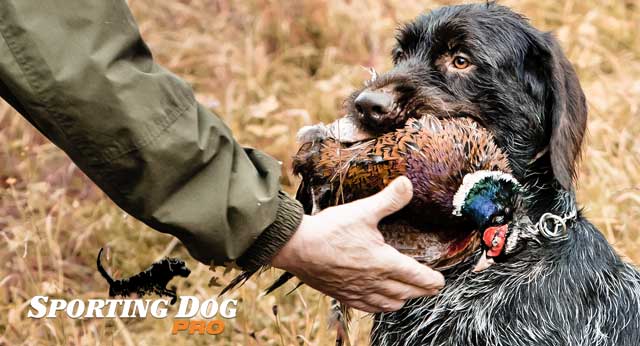
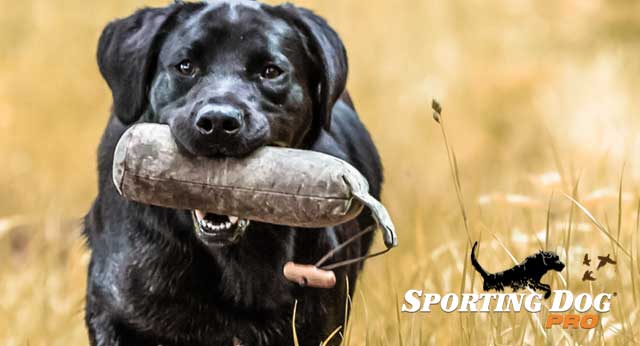
Teaching a dog to drop — to release whatever is in his mouth cleanly, on command, into your hand — is one of those skills that seems simple and gets overlooked until it becomes a problem. For a retriever or bird dog, it’s not a nice-to-have. A dog that won’t release cleanly, that drops the bird at your feet, that mouths and chews what he’s carrying, or that turns a retrieve into a game of keep-away has a training gap that was almost always created in puppyhood and is harder to fix than it was to prevent.
The good news is that the drop is one of the easiest commands to establish early, before bad habits form. The bad news is that most people inadvertently train the wrong thing in the first weeks of a puppy’s life without realizing it.
Start before formal training does
Most people think of the drop command as something that comes later in the training sequence, after the dog has been taught to fetch and retrieve properly. That’s partially true for the formal, field-ready version — but the habits that make a reliable drop possible are established from the first week you have the puppy.
A retriever puppy will naturally pick up objects and carry them. That instinct is exactly what you want — don’t suppress it, don’t scold him for carrying things around the house, and don’t snatch things out of his mouth. Every time you grab something out of a bird dog puppy’s mouth, you’re teaching him that when he has something, you’re going to take it. The natural response to that lesson is to grip tighter, to run, to drop the object before coming to you. All of those behaviors show up later as problems in the field: hard mouth, reluctant delivery, stopping short and dropping the bird rather than coming all the way to hand.
Instead, let him bring things to you. Call him to you when he has something. Make coming to you and releasing to you the thing that gets rewarded. Start building the association early that delivering to hand is the job and the thing that earns praise — not the retrieve itself.
Never pull, tug, or snatch
This deserves its own section because it’s the most common mistake and the hardest rule to enforce with everyone in the household. As Richard Wolters writes in Gun Dog, the dog has worked for what he’s carrying and giving it up is not his instinct. Pulling it away from him teaches the opposite of what you want.
Tug of war is off the table entirely for a bird dog. It’s fun, the puppy loves it, and it trains him that the correct response to something in his mouth is to grip harder and resist. That training carries directly into the field. A dog that learned tug of war as a puppy is the dog that’s hard-mouthed on birds, that chomps on the retrieve on the way in, that fights the release.
This rule applies to everyone who handles the puppy — family members, kids, houseguests. One person who plays tug with the puppy regularly while everyone else is following the rules will undermine the training. Make it a household standard from day one.
Teaching the command
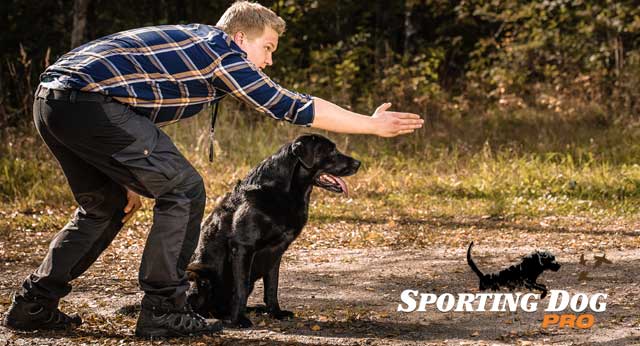
When your puppy brings you something — a sock, a toy, anything — let him come to you without chasing him or reaching for it. Hold your hand out calmly, give the drop command in a quiet, even tone, and wait. If he doesn’t release, gently squeeze the sides of his muzzle just behind the canine teeth with your fingers — not hard, just enough to create mild pressure — while repeating the command. He will open his mouth. The moment he does, praise him immediately and clearly. The praise is what teaches him that releasing to hand is the right outcome.
Do not chase him to retrieve the item. If he takes it and runs, ignore him. The moment you run after him, the item becomes a prize and the game of keep-away becomes worth playing. A puppy that gets no reaction when he runs off with something quickly discovers there’s no game there. A puppy that gets enthusiastic pursuit every time he grabs something and runs has found the most reliable entertainment in the house.
Keep the early sessions short, positive, and frequent. The puppy doesn’t need to understand that this is training — he just needs to rehearse the right sequence enough times that it becomes the automatic response. Call him to you, he comes, he releases to hand, he gets praised. Repeat that enough times and the behavior is built before you ever pick up a dummy.
Prevention is easier than correction
A retriever puppy left to his own devices will practice retrieving constantly — shoes, socks, kids’ toys, whatever he can find. That’s not bad behavior, it’s instinct doing exactly what it’s supposed to do. Don’t punish him for retrieving; manage the environment so the things you don’t want retrieved aren’t accessible. If he does grab something he shouldn’t have, don’t make it a correction — calmly call him to you, ask for the drop, praise the release, then put the item away. You just got a free training rep.
The dogs that develop hard mouth, reluctant delivery, or keep-away habits as adults almost always had those habits accidentally trained into them by well-meaning owners who didn’t know the rules in puppyhood. The drop isn’t complicated to teach. It’s just easy to accidentally teach the wrong version of it if you’re not paying attention from the start.
Browse our selection of retrieving dummies for introducing formal retrieve work once the drop foundation is in place. For training collar guidance as your dog progresses into more advanced field work, visit our training collar guide.