You have no items in your shopping cart.
What Is The Perfect Level of Correction?
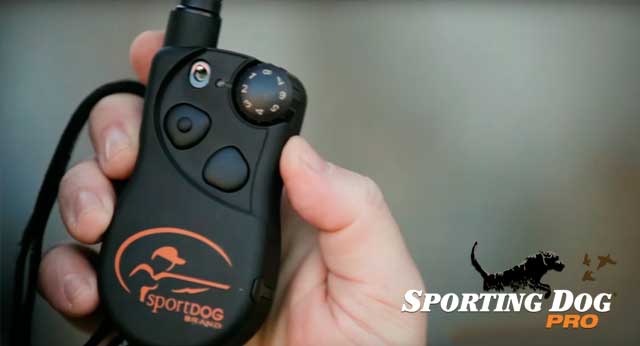
The most common e-collar mistake isn’t a wrong command or a bad correction — it’s the wrong level. Start too high and you scare the dog instead of communicating with him. Stay too low and nothing gets through. Finding the right level isn’t complicated, but it requires patience and a clear understanding of what you’re actually looking for.
Lower is always the starting point
Regardless of breed, size, or what you’re training for, start at the lowest available level and work up from there. The goal at this stage is not correction — it’s finding the working level: the lowest stimulation the dog can actually perceive.
What does that look like? Not a yelp, not a flinch, not a startled jump. You’re watching for the subtlest acknowledgment — a slight twitch along the neck, an ear flick, a momentary shift of attention. On short-coated breeds you may see a brief ripple in the skin. On heavy-coated breeds it’s often just a change in expression or a slight head movement. That faint, barely-there response is what you’re looking for. That’s the working level.
If your dog is yelping, startling, crouching, or showing any sign of stress at the level you’re using, you’re too high. Back down. A dog trained at the right level stays engaged, often turning toward you when the stimulation is applied — because he’s been conditioned to associate you with relief and reward. That response is exactly what you want to build.
Two dogs of the same breed won’t be the same level
This surprises a lot of first-time e-collar users. Two Labradors from the same litter can have completely different working levels. The bold, driven dog might acknowledge the collar at level 1. The quieter, more sensitive dog might not respond until level 5 or 6. Neither is right or wrong — it’s individual variation in sensitivity and temperament, not a reflection of drive or trainability.
This is exactly why you always find the working level for each individual dog rather than picking a number based on breed, size, or what worked on your last dog. The number on the dial means nothing in isolation. What matters is where that specific dog’s threshold sits.
What the collar is actually for
An e-collar is a communication tool, not a compliance device. The distinction matters. A dog trained into compliance through fear is a dog that performs when the pressure is applied and checks out when it isn’t. A dog trained through clear communication — where the collar creates a consistent, understandable connection between an action and a consequence — is a dog that understands what you’re asking and responds to it.
The collar doesn’t teach a dog what to do. It reinforces and communicates behaviors the dog already understands. If your dog doesn’t know what “here” means, stimulating him with the collar won’t teach it to him — it will just create confusion and anxiety. The foundation comes first. The collar extends and reinforces the foundation.
If your dog is crouching, shutting down, or showing avoidance around the collar, the level is wrong, the timing is wrong, or the foundation wasn’t in place before the collar was introduced. Those are handler problems, not dog problems, and they’re fixable by backing up in the process rather than pushing forward.
When and how to increase the level
Once you’ve established the working level and your dog understands the collar as part of normal training, the level stays there for routine obedience and command reinforcement. Don’t increase it because you’re frustrated, because the dog seems distracted, or because you feel like the training isn’t progressing fast enough. Those are training problems that won’t be solved by turning up the dial.
There are two legitimate reasons to increase the level from the working baseline. The first is competing stimulation — a dog working at high drive in a bird-rich field is in a completely different physiological state than a dog training in your yard. Adrenaline raises the threshold of what the dog perceives. A level that gets a clear response in low-distraction training may get nothing when the dog is locked onto a bird. Adjusting upward to account for that environment is normal and expected.
The second is controlled aversion training — teaching a dog to stay away from a specific hazard or location. The original article makes a useful point about this: don’t introduce a higher-level correction for the first time in the actual hazard situation. If you want to teach a dog to stay away from a road, bring him to the boundary under controlled conditions, apply the correction at the appropriate level there, and build the association before you ever need it in an emergency. A correction the dog has never felt before, in a high-stress situation, produces panic rather than learning.
Outside of those two situations, the working level is the training level. The collar is most effective when it’s consistent and predictable. A dog that can read the communication clearly — this feeling means adjust what I’m doing — learns faster and retains the lesson longer than a dog that just knows something unpleasant sometimes happens.
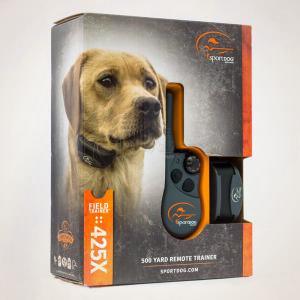
"Best for the family dog."
$154.99
This item qualifies for FREE SHIPPING*


The most popular starting point for dog training. 500-yard range, 21 stimulation levels across low/medium/high ranges, 3-dog capable, DryTek waterproof. Compact X-Series transmitter with one-handed dial operation. Works for dogs 8 lbs and up... [read more].
Browse our full lineup of training collars organized by application — family dog, upland, waterfowl, hound, and professional. Call us at 1 (800) 524-2428 if you want help choosing the right system for your dog.