You have no items in your shopping cart.
What Is Shed Hunting All About?
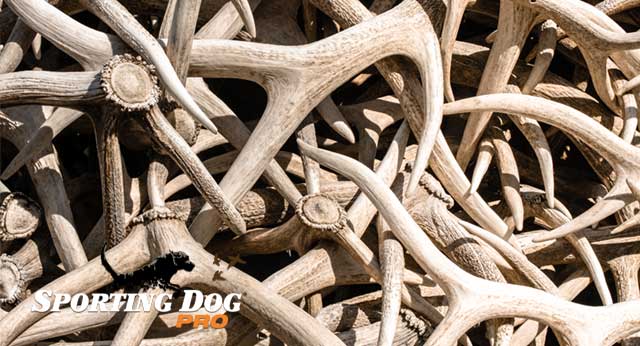
Shed hunting has grown from a niche activity into one of the most popular off-season pursuits for deer hunters and hunting dog owners alike. The idea is simple: male deer, elk, and moose shed their antlers annually after breeding season ends, and those antlers lie where they fell until someone finds them. For hunters, shed hunting is scouting that doubles as recreation. For hunting dog owners, it’s a year-round training activity that builds drive, nose work, and retrieving skills while keeping dogs engaged through the months between seasons.
What shed hunting actually is
Every year after breeding season, falling testosterone levels cause bucks to cast their antlers — typically between January and March in most of the country, though timing varies by region, individual animal, and nutritional condition. The antlers simply detach and fall, usually near wherever the buck spent the most time in late season: bedding areas, food sources, and the travel corridors between them. The buck grows a new set starting almost immediately, completing the cycle before the next rut.
Finding a shed antler means you’ve found evidence that a specific buck survived the season and is likely to be in the same general area come fall. Matched sets from the same buck give you a sense of his antler development. Finding multiple sheds in the same area over consecutive years tells you something meaningful about the habitat and the deer using it. For the serious whitetail hunter, shed hunting is intelligence gathering that happens to be enjoyable.
For everyone else, it’s the discovery that makes it addictive. There’s something about finding a shed antler half-buried in last year’s leaves — a piece of a wild animal’s annual cycle left behind in the woods — that doesn’t get old regardless of how many you find.
Why shed hunting with a dog is different
A person walking a grid can cover ground and find sheds by sight. A dog working the same ground covers it faster, finds sheds hidden in thick cover or buried in debris that a person would walk past, and turns the activity into genuine teamwork rather than a solo walk. Some dogs — particularly retrievers with strong natural drive — take to shed hunting with minimal training and will find antlers independently within their first few sessions. Others need a more structured introduction. Either way, the activity engages the dog’s nose, drive, and desire to please in a way that translates directly into better field work during the season.
The connection to hunting season performance is real. A dog that spends the off-season making finds and retrieves — even finds as different from a bird as a shed antler — stays sharp on the retrieve instinct and stays connected to the handler. The dog that sat in the kennel for eight months and then hits the field in September is starting from a lower baseline than one who worked through the off-season.
Shed hunting is also one of the most accessible activities for dogs at either end of the experience spectrum. A young puppy learning to use his nose and build retrieve drive can shed hunt months before he’s ready for bird work. An older dog past his prime field career can still contribute meaningfully on a shed hunt and stay mentally and physically engaged well into his later years.
When and where to look
Timing depends on region, but late winter to early spring — after peak shed season but before new vegetation obscures the ground — is generally the best window. In the Southeast, this is often late January through March. In northern states, late February through April. Going out too early means many bucks are still carrying; too late and shed antlers become harder to spot in new growth and may be chewed by rodents attracted to the minerals in the bone.
Focus on the areas where deer spent the most time in late season. South-facing slopes that collect winter sun and offer early green-up in spring are classic late-season deer habitat. Agricultural field edges where standing corn or beans held deer through winter. Bedding areas in thick cover adjacent to food sources. Travel corridors between them. If you know where deer were in November and December, shed antlers are likely within a short distance of those same areas.
One important consideration: most states have regulations about when you can access certain public land areas in late winter and early spring to avoid disturbing wintering wildlife and nesting birds. Check your state’s regulations before going out. On private land where you know the deer, there’s rarely a concern, but pressuring deer that are already stressed by late winter conditions is counterproductive for next season’s hunting.
Training your dog to find sheds
Fresh antlers have a distinct scent that dogs can learn to identify and track, and the training progression is similar to introducing any new retrieve object — start close, build drive, extend the difficulty gradually.
Phase 1: Introduction in close quarters. Start with a single antler in a small area — your yard, a garage, or even indoors. Choose an antler that’s manageable for the dog to carry: no long sharp tines that make it awkward or uncomfortable. Slide the antler along the ground to build chase drive, let the dog grab it and get it in his mouth, then ask for the retrieve and praise genuinely when he brings it to you. The goal at this stage is building a strong positive association with the object — this thing in my mouth is what gets praised. Repeat until the dog finds and retrieves the antler enthusiastically every time.
Phase 2: Hidden retrieves in a contained area. Move to a backyard or small field. Place the antler in full sight first, ask for the find, and praise the retrieve. Then begin hiding it — under leaf litter, behind a log, in tall grass — so the dog has to use his nose rather than just his eyes. A long lead or check cord gives you the ability to redirect a dog that picks up the antler and tries to run with it or chew it rather than retrieve. Keep sessions short, end on successful retrieves, and use genuine praise to mark the correct behavior.
Phase 3: Field work with multiple antlers. Take the dog to the type of terrain where you’d actually shed hunt — timber edges, field margins, brushy cover. Place several antlers at various distances, some visible and some hidden, and let the dog work the area. At this stage you’re building the pattern of covering ground, working the nose, and bringing finds back to you. If the dog has trouble, help him by working him toward a hidden antler rather than watching him miss it repeatedly — success and praise build drive faster than frustration does.
Phase 4: Natural sheds. Once the dog reliably finds and retrieves planted antlers in varied terrain, let him work areas where naturally shed antlers may actually be present. He’ll make his first genuine find on his own, and that moment tends to cement the behavior permanently. Most dogs that experience a real self-directed find become noticeably more motivated for all subsequent shed work.
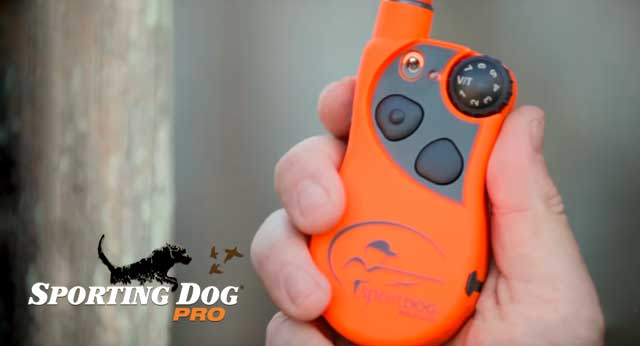
A training collar is useful throughout this process for the same reasons it’s useful in any retriever work — it gives you timely, precise communication at any distance when the dog needs correction or redirection, without having to physically be at his position.
Shed hunting works year-round. Even in summer and fall when there are no natural sheds to find, hiding antlers and running your dog on planted finds keeps the skill sharp and the dog engaged. It’s one of the easiest off-season activities to fit into a regular routine and one of the most directly beneficial to field performance.