You have no items in your shopping cart.
Teaching Your Dog the "Down" Command
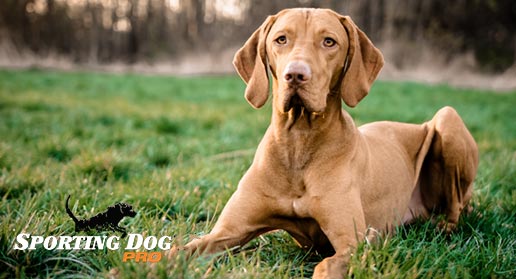
The down command — asking your dog to drop fully to the ground with his abdomen on the floor and his front legs extended — is one of the more useful commands in the obedience toolkit, and one that many owners skip or undertraining because it seems less urgent than sit or recall. That’s a mistake. Down requires a greater degree of physical submission than sit, which makes it one of the most useful commands for settling an excited dog, interrupting unwanted behavior, and keeping a dog still and low in situations where that matters. For a hunting dog, the ability to drop and stay in a blind, on a boat deck, or in any position the handler needs is genuinely valuable. For a family dog, it’s one of the best tools for managing the dog who greets everyone by launching himself at them.
How down differs from sit — and why the difference matters
Down requires a more committed physical position than sit. A dog in a sit can pop back to its feet in a fraction of a second. A dog in a full down has to push up from the ground, which takes more effort and more time. For a handler trying to maintain control of an excited dog or keep a dog still during a tense situation, that physical distinction translates into more reliable compliance under pressure.
The original article makes a good point about tone: unlike the stop or whoa command — which carries authority and urgency because it can be a safety command in the field — down can be delivered calmly. It’s typically used in situations that aren’t emergencies: settling a dog before guests arrive, keeping him still during a veterinary examination, or having him hold in a blind while the hunter positions. A calm, clear delivery works well for this command. That said, the dog still needs to respond to it reliably, which means it requires the same consistency in enforcement as any other command.
Before working on down, have a reliable sit and stop command in place. Down builds on the same foundation principles, and a dog with a solid sit has already practiced the physical self-control that down requires.
Teaching the position — physical guidance method
Start in a quiet environment with minimal distractions. The same principle that applies to sit applies here: the dog needs to be able to focus on learning the new behavior without competing stimulus pulling his attention elsewhere. Once the behavior is reliable at home, proof it in progressively more distracting environments.
Begin with the dog in a sit. Give the down command once, clearly and calmly. Simultaneously reach over the dog’s back, place one hand gently but firmly on the shoulders, and guide or press downward while using your other hand to draw the front legs forward into the down position. The moment all four points of contact are on the ground — elbows and hindquarters down — release pressure immediately and praise genuinely. The immediate release of pressure is the reward the dog connects to the position.
Hold him in the down position briefly before releasing with a release word. The release cue is important: the dog should hold the down until you release him, not until he decides to get up. A down that only lasts until the dog’s interest drifts is not a trained down. Build the hold duration gradually over multiple sessions.
Give the command once and follow through immediately. If you say “down” three times before guiding the dog into position, you’re teaching the dog that the first two repetitions are optional. One command, one follow-through, immediate praise for compliance.
Transitioning to a hand signal
Once the dog understands the physical guidance and is beginning to anticipate the position, begin transitioning to a hand signal. The standard down signal is a flat hand raised palm-down and lowered toward the ground — the same motion as pressing down, but without physical contact. If you’ve been holding a treat during early sessions, the treat held at the dog’s nose and drawn straight down to the ground between the front feet also produces a natural down for most dogs. Phase out the treat lure once the behavior is being offered reliably — you want the hand signal to become the cue, not the treat.
Eventually the verbal command and the hand signal both work independently, giving you two channels to communicate down — useful in noisy environments where voice commands don’t carry and situations where you need the dog to respond at a distance to a visual signal.
Proofing under distraction and at distance
A down that only works in the backyard is not a trained down. Move the training to different environments, increase the level of distraction gradually, and require the same clean response in each. The dog should drop on command in the front yard, at the park, around other dogs, and in the field.
For a hunting dog, practice down in the specific contexts where it will matter: in the blind, on the boat, in the truck. A dog conditioned to respond to down in those environments specifically has a more reliable command in those contexts than one who has only practiced it in the training yard. The e-collar is the tool that makes enforcement possible at distance — if the dog is twenty yards away and breaks from a down, the collar delivers the correction at the moment the behavior is happening rather than after the opportunity to teach has passed.
Uses in the field and at home
The down command earns its keep in several specific situations. In a blind or boat, a dog that will drop and hold on command stays out of the way, stays below the profile of the blind, and doesn’t interfere with the shot. It’s also a useful reset for an over-aroused dog — requiring a dog to drop into a down position physically interrupts the arousal cycle and often changes the mental state that was driving it. For a dog that’s jumping, barking, or otherwise worked up, down is one of the most effective commands available because it requires a physical position incompatible with the behavior you want to stop.
At home, down in a specific location — a mat or a bed — is a powerful management tool. A dog sent to his mat and told to down stays there, out of the way, without being crated. This is useful during mealtimes, when guests arrive, and whenever you need the dog to be calm and settled without removing him from the room entirely.