You have no items in your shopping cart.
Sporting Breeds For Therapy
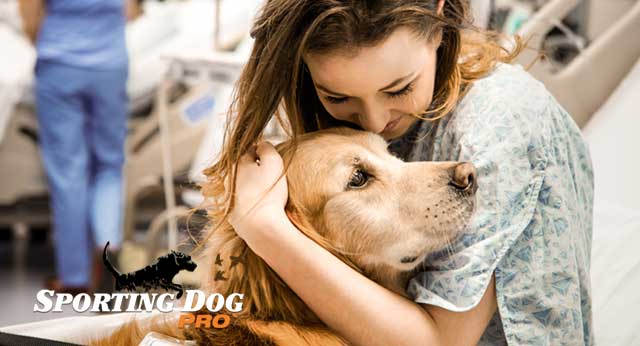
Most hunters already know their dog does something for them beyond the hunt. The dog that settles at your feet at the end of a long day, the one that reads your mood before you do, the one that gets you outside and moving when nothing else would — that’s therapy, even if nobody calls it that. The formal application of dogs to healthcare settings is an extension of what most dog owners experience at home. Sporting breeds, as it turns out, are particularly well suited to it.
Why sporting breeds make good therapy dogs
Therapy dogs need a specific combination of qualities that aren’t universal across breeds: genuine friendliness toward strangers, stable temperament under unpredictable conditions, tolerance for being handled by people who may be clumsy or intrusive, and the ability to stay calm in noisy, busy environments. Many breeds that are excellent working dogs or family dogs don’t meet that profile — they’re too protective, too reactive, or too highly strung.
Sporting breeds were developed to work closely with people, to be biddable and responsive to human direction, and to maintain even temperament through long days in varied and demanding conditions. The Labrador Retriever and Golden Retriever consistently top the therapy dog lists for exactly these reasons — they are not just friendly but reliably friendly, with a temperament that doesn’t shift with the environment. A dog that is warm and calm in your living room but unpredictable in a hospital corridor is not a therapy dog candidate. A Labrador that is the same dog everywhere is.
Spaniels, Goldens, and certain pointing breeds also appear regularly in therapy work. The common thread is handler orientation, social confidence, and a stable baseline temperament that holds up under the kinds of stimulation a healthcare or institutional setting involves.
Where therapy dogs are used
Veterans and PTSD. The use of therapy dogs with military veterans dealing with post-traumatic stress disorder has grown significantly over the past two decades and has become one of the better-documented applications of animal-assisted therapy. Veterans working with therapy dogs report reduced anxiety, better sleep, and improved ability to engage socially. For some, a dog provides a point of connection and routine that supports recovery in ways that medication and talk therapy alone don’t fully address.
Mental health and anxiety disorders. Anxiety disorders affect tens of millions of adults in the United States. The physiological response to interacting with a calm, friendly dog — reduced cortisol, increased oxytocin, lower blood pressure and heart rate — is measurable and consistent. Therapy dogs are used in clinical settings, schools, and crisis response situations to provide immediate calming support in ways that are hard to replicate with other interventions.
Cancer and long-term care. For patients in extended treatment or long-term care, a therapy dog visit provides something that is hard to quantify but easy to observe: the patient is present, engaged, and lighter for a period of time. Dogs create a natural social bridge, give patients something to care for and about, and provide physical contact that is comforting in a context that can feel clinical and isolating. Some programs leave dogs in the care of patients for periods of time specifically to create a sense of responsibility and purpose.
Trauma response. In the aftermath of natural disasters, mass casualty events, and school crises, therapy dogs are now a standard part of the response deployment in many areas. The ability of a calm, well-trained dog to walk into a room of distressed people and reduce the overall anxiety level quickly — without words, without a protocol, just by being present and available — is something that experienced crisis responders have documented repeatedly.
The qualities that make a great hunting dog — biddability, stable temperament, confidence in novel situations, responsiveness to the handler — are the same qualities that make a great therapy dog. Many hunters find their sporting breed naturally fits both roles.
Is your dog a candidate?
Not every friendly dog is suited for therapy work, and honest assessment matters more than optimism here. The core requirements:
Reliable temperament with strangers. The dog must be genuinely comfortable with people he has never met — not just tolerant, but actively friendly. A dog that warms up eventually doesn’t meet the standard. In therapy settings, the dog encounters many strangers in a single visit and needs to engage warmly with each one.
Calm under pressure. Hospitals, schools, and care facilities involve loud equipment, unexpected sounds, wheelchairs, walkers, crying, and crowds. A dog that is skittish, reactive to loud noises, or easily overstimulated will be stressed rather than therapeutic in those environments. Test your dog in genuinely busy, unpredictable settings before pursuing certification.
Tolerance for handling. Therapy dog patients may be children who pet roughly, elderly people with limited motor control, or patients who are medicated and moving unpredictably. The dog needs to accept all of it without stiffening, growling, or pulling away. This is a higher standard than tolerating normal handling from familiar people.
Basic obedience under distraction. Sit, stay, come, and leave it need to be reliable in high-distraction environments. A therapy dog that can’t hold a stay when a child runs past or won’t leave food on the floor is a liability in a clinical setting.
Training for therapy work
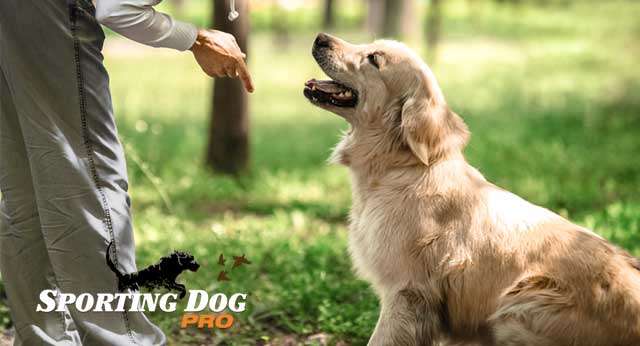
The foundation is the same as any good obedience training: reliable response to basic commands in varied environments, calm behavior around strangers and other dogs, and a stable temperament that the handler can read and trust. An e-collar or training collar is useful for building that foundation — particularly for reinforcing recall and stay reliability in high-distraction settings — though the finished therapy dog should be able to perform without it in most situations.
Beyond the foundation, therapy-specific training involves systematic exposure to the environments and stimuli the dog will encounter: medical equipment, crowds, unusual surfaces, people in distress, children behaving unpredictably. The goal is a dog that is not merely tolerant of those things but genuinely unbothered by them — a dog whose baseline calm is stable enough that a chaotic environment doesn’t move him off it.
Most therapy dog organizations require formal evaluation and certification before a dog can work in a healthcare or institutional setting. The AKC Canine Good Citizen test is a common prerequisite and a good benchmark for where your dog’s obedience needs to be before pursuing therapy certification.
Most therapy dog certification programs require passing a standardized temperament and obedience evaluation, a period of supervised visits, and ongoing recertification. The organizations below are good starting points for finding a program in your area.
Resources
Anxiety and Depression Association of America — Facts & Statistics