You have no items in your shopping cart.
To Breed, or Not to Breed
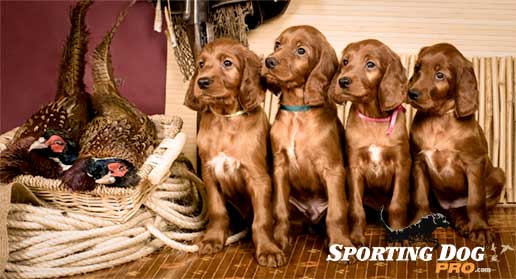
The decision to breed a hunting dog is one that most dog owners approach casually and should approach seriously. Responsible breeders hold themselves to a standard that isn’t common among first-time breeders, and that gap between intention and practice is why so many hunting dogs with mediocre genetics, undiagnosed health conditions, and questionable temperament exist. The question isn’t just whether your dog is good enough to breed — it’s whether you’re willing to do the work that responsible breeding requires, and whether the result will genuinely improve the breed rather than just produce more puppies.
The foundational question: should this dog be bred at all?
A responsible breeder applies one consistent standard to every breeding decision: each litter should represent an improvement over the parents, or at minimum maintain the same level of quality. “She’s a great dog” is not a sufficient reason to breed. “She’s a great dog who passes health screening, has proven field performance, and has a documented pedigree that indicates consistent quality” is a reason to breed.
The question to ask honestly is whether your dog would merit a spot on someone else’s shortlist of breeding candidates for the breed. Not whether you love her — you love all your dogs — but whether an objective evaluation of her health, performance, temperament, and conformation would make her a compelling choice. If the honest answer is yes to all of those, you have a dog worth breeding. If the answer is “yes, but” with significant exceptions, think carefully about whether those exceptions will appear in the offspring and whether that’s acceptable.
Health: the non-negotiable starting point
Health screening should precede any breeding decision in sporting breeds where inherited conditions are a known concern. Hip and elbow dysplasia are prevalent in many of the most popular hunting breeds — Labrador Retrievers, Golden Retrievers, German Shorthaired Pointers, Chesapeake Bay Retrievers. A dog bred before her hips are evaluated and certified is a dog whose offspring carry an unknown orthopedic risk. The Orthopedic Foundation for Animals (OFA) evaluates and certifies hips, elbows, and numerous other heritable conditions; their database is publicly searchable and responsible breeders use it to verify the health status of potential breeding partners.
The original article makes a point worth emphasizing: most serious inherited health conditions don’t manifest until age five or later. A dog bred at two years old before her hips have fully developed or before any other late-onset conditions have had time to appear is a dog whose health status is not yet fully known. The standard OFA hip evaluation requires the dog to be at least 24 months of age for a reason. Breed after the health picture is as clear as it can be, not before.
Health conditions that affect a hunting dog’s ability to work — hip dysplasia, elbow dysplasia, exercise-induced collapse, progressive retinal atrophy, hypothyroidism — can end careers and cause significant suffering. Breeding dogs with known or suspected heritable conditions because they’re otherwise excellent hunters is how those conditions persist in breeds. The hunter who ends up with a dog benched at three years by hip pain traced to poor breeding decisions has every right to be frustrated.
Field performance: the hunting dog standard
A hunting dog should be evaluated as a hunting dog, not just as a nice dog that hunts a little. The questions to ask are specific: Does she perform her hunting tasks reliably, not just occasionally? Does she have the drive that motivates her to work through difficult conditions, or is she a fair-weather hunter? Does she have the natural instincts — pointing, retrieving, tracking, swimming — that define excellence in her breed, and are those instincts strong or merely adequate? Is her prey drive compelling enough that other hunters would want it in their dogs?
The prettiest dog in the kennel who hunts at a mediocre level is not a good breeding candidate for a hunting dog program. Aesthetics are secondary to performance for working dogs, and breeding for appearance at the expense of performance degrades the breed’s working capability over generations. The hunting tradition depends on dogs that can do the work. Breeding toward dogs that look right but perform adequately is how sporting breeds become kennel dogs rather than hunting dogs.
Temperament: trainability and social reliability
Temperament is heritable. A dog that is difficult to train, excessively dominant, reactive with other dogs or people, or unreliable in the social settings of a multi-hunter situation passes those tendencies to her offspring at rates that surprise owners who didn’t account for it. A dog with an excellent nose and poor temperament produces puppies that are difficult to live with, difficult to train, and difficult to hunt over. The hunting dog’s job requires social reliability — working around other dogs and other hunters, handling without drama, accepting commands under pressure.
Evaluate temperament honestly and specifically: Is she genuinely biddable or does she only comply when she feels like it? Does she recover quickly from corrections or hold grudges? How does she behave around unfamiliar dogs in hunting situations? A dog with an excellent pedigree and mediocre temperament should be evaluated against that pedigree to determine whether the temperament is anomalous or representative. If her parents and grandparents were reliably biddable and she is not, the question is why. If temperament issues run through the family, they will likely run through the offspring.
Conformation: form serves function
The original article addresses conformation as one of the considerations, and it’s worth explaining why it matters for working dogs specifically. Conformation in a sporting breed isn’t about aesthetics — it’s about whether the dog is built to do its job efficiently and without injury over a long career. A dog with structural faults that compromise movement, endurance, or physical soundness is a dog more likely to have orthopedic problems as she ages and more likely to tire and break down in the field. A Lab with poor angulation or a poor topline works harder to cover the same ground and carries more physical risk than one built correctly.
You don’t need to be a conformation expert, but familiarizing yourself with the breed standard and understanding what structural qualities are associated with working soundness is worthwhile before a breeding decision. A veterinarian and a breed mentor can both provide useful input on structural evaluation.
The practical commitment of a litter
Before any of the above matters, the question of whether you can manage a litter responsibly needs an honest answer. A litter of puppies requires intensive management for the first eight weeks and selective, thoughtful placement after that. Whelping complications can require emergency veterinary intervention. Puppies need appropriate nutrition, socialization, and veterinary care including their first shots. Finding appropriate homes — homes that understand the breed, have the lifestyle for a working dog, and will commit to the dog for its life — takes time and screening.
Producing a litter and placing puppies in the first available homes without screening is how sporting dogs end up in rescues and shelters at two years old. A responsible breeder stands behind every puppy he or she produces and is willing to take that dog back at any age if the placement doesn’t work out. That commitment doesn’t end when the puppies leave — it extends for the life of each dog.
The standard worth holding: would you be comfortable if other serious hunters in your breed evaluated your breeding decision objectively? If the answer is yes — if the health clearances are in order, the field performance is documented and genuine, the temperament is reliable, and the pedigree supports the pairing — you have a defensible breeding. If the answer is “probably not, but she’s my dog and she’s great,” reconsider. The dogs produced by casual decisions exist for twelve or fourteen years. Make the decision accordingly.