You have no items in your shopping cart.
Preparation for Hunting: Boats, Decoys, and Calls
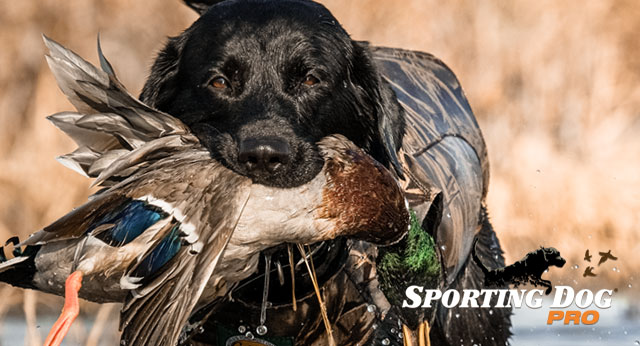
A waterfowl retriever that hasn’t been prepared for the specific conditions of a duck hunt is going to have a rough opening morning. The boat he’s never been in, the decoys he’s never seen deployed, the calls he’s never heard, the gunfire from multiple positions at once — all of it is stimulus the dog has to manage while also doing his job. The hunters who get the cleanest, most reliable retrieves from their dogs are almost always the ones who did the preparation work before the season, not after it.
Steadiness is the foundation for everything else
Before any of the waterfowl-specific preparation matters, your dog needs a solid steady sit. A retriever that breaks on the shot — or at the sound of calling, or when he sees decoys hit the water — is a liability in a blind or boat with other hunters and guns. The steady sit is the baseline behavior that makes everything else manageable. If it isn’t reliable in low-distraction training environments, it won’t hold up when mallards are working the decoys and everybody in the blind has their gun up.
Build the sit/stay under increasing distraction well before the season. Practice it with throwing objects, with other dogs moving, with loud noises, and eventually with water retrieves where the dog has to watch the bird fall and hold until you send him. A dog that can hold a steady sit through all of that in training will hold it in the field. A dog that has only practiced it in the backyard will struggle when conditions are genuinely exciting.
The waterfowl e-collar systems we carry are built for exactly this application — waterproof to IPX7 or better, with ranges up to 1 mile or more for dogs working at distance across open water. Having the collar on during training and during the hunt gives you the ability to enforce the sit at the moment the dog starts to break, not after he’s already swimming.
Introducing decoys
Many retrievers will fixate on floating decoys the first time they encounter them in the water — swimming toward them, picking them up, treating them as the retrieve. That behavior is understandable but it needs to be addressed before it becomes a habit. A dog that retrieves decoys instead of birds during a hunt is pulling your spread apart while you watch.
Start decoy introduction on land. Put a few decoys out in the yard and let the dog investigate them until the novelty wears off. Correct any attempts to pick them up and redirect to a dummy. Once he ignores them on land, move to shallow water with decoys floating and practice retrieves past them. The dog should be focused on the marked retrieve, not the decoys. Correct any detour toward the decoys with the same clear, immediate consequence you use for any other unwanted behavior.
Progress gradually: a few decoys first, then more. Practice blind retrieves through a decoy spread. The goal is a dog that treats decoys as part of the landscape, not as objects of interest.
Once your dog reliably ignores decoys during retrieves, practice the full sequence: call, shot simulation, send. Run it until it’s routine — the dog should associate the sequence of sounds with the specific behavior expected of him at each step.
Boat work
A dog that has never been in a boat before shouldn’t encounter one for the first time on opening morning in the dark with other hunters and gear loaded aboard. Boat introduction is a specific training task that takes several sessions done in sequence.
Start with the boat on dry land or on a trailer. Let the dog get in and out at his own pace, rewarding calm entries and exits. Practice the sit/stay in the boat. Practice the send from the boat with the boat stationary. The dog should be completely comfortable with the boat as an environment before any water is involved.
Move to shallow, calm water next. The boat will move differently than it did on land — it rocks, shifts with the dog’s weight, and responds to water movement. A dog that isn’t prepared for that instability will panic, lunge, or bail out at the wrong moment. Let him experience the movement in shallow water where mistakes are low-consequence. Practice entries and exits with the boat in shallow water. Steady the dog until he understands that he waits for the send command regardless of what he sees or hears.
Teach a specific entry command for the boat — “load” or “kennel” — and enforce it consistently. A dog that gets in and out of the boat only when commanded is safer and easier to manage than one that self-loads based on his own judgment about when the time is right.
One of the most important boat behaviors is knowing when not to jump out. An excited retriever that launches himself over the side the moment a bird hits the water — before you’ve given the send command, before the shooting is done, before you’ve confirmed what fell and where — is a dog that creates safety problems and chaos. The send command from the boat is the same command as anywhere else: he goes when you say, not when he decides.
Gunfire and calling
A dog that isn’t comfortable with gunfire has no business in a duck blind, and gun introduction should happen early in a puppy’s life rather than being left to chance. The standard approach — starting with distant shots during excited activity, gradually decreasing distance over many sessions until the sound is associated with positive events rather than startling ones — works well and takes patience. A dog that has been properly desensitized to gunfire takes shots from multiple positions in stride. A dog that was gun-introduced too fast or too harshly may be gun-shy in ways that are difficult to reverse.
Duck and goose calls are sounds the dog will hear repeatedly throughout a hunt, often immediately before a shot. Introduce calling during training so the dog associates the sound with the routine he knows — hold, watch, wait for the send. Blow the call during practice sessions before throwing the dummy. Over time the sound becomes a cue to pay attention, not a source of excitement or anxiety.
The sequence you run in training should mirror the sequence of a real hunt: calling, then shot, then send. Running it consistently in practice means the dog knows exactly what’s coming at each step and responds predictably rather than improvising.
Cold water and physical preparation
Waterfowl season in most of the country means cold water, and cold water pulls heat from a dog rapidly. A retriever working in 40-degree water repeatedly across a full morning can exhaust his thermal reserves faster than most hunters realize. Watch for shivering that doesn’t stop between retrieves, slowing behavior, or reluctance to re-enter the water — those are signs the dog needs to warm up, not push through.
Physical conditioning before the season matters here. A dog in good cardiovascular condition handles cold water retrieves better than a soft dog because he has more reserve to draw from. Get him swimming in the weeks before the season opens, not just in the final days before it starts.
Browse our waterfowl training collar systems — waterproof, long-range systems from SportDOG, Dogtra, DT Systems, and Garmin built for retrievers working in and around water. Call us at 1 (800) 524-2428 if you want help choosing the right system for your dog and your hunting setup.