You have no items in your shopping cart.
Keeping Your Dog Happy and Healthy
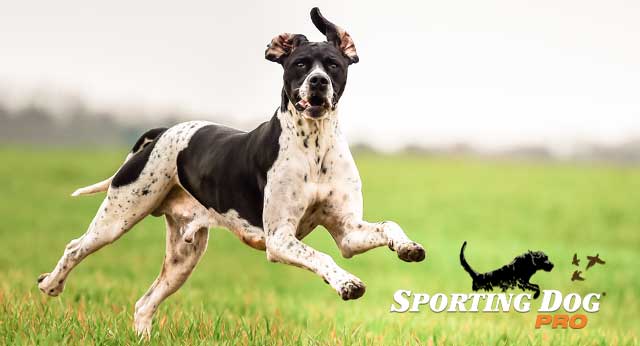
A hunting dog that stays healthy, sound, and eager to work across ten or twelve seasons isn’t the product of luck. It’s the product of consistent attention to the basics — veterinary care, appropriate nutrition, and genuine exercise — maintained not just during hunting season but throughout the year. The dogs that break down early are almost always the ones whose maintenance was reactive rather than proactive. The ones that hold up are the ones whose owners treated the off-season as seriously as the season itself.
Veterinary care — the relationship matters as much as the visit
Annual wellness visits are the minimum standard, not the ceiling. A yearly checkup gives your vet a baseline for your dog’s normal parameters — weight, heart rate, coat condition, joint mobility — that makes any deviation easier to identify. A vet who has examined your dog every year for five years and knows what normal looks like for that specific dog is a significantly more useful resource than one meeting the dog for the first time with a problem already established.
The argument for consistency with a single veterinary practice is a practical one: the medical record. A complete history of vaccinations, prior illnesses, treatments, bloodwork results, and the vet’s own notes on the dog’s condition over time is a diagnostic asset that can’t be reconstructed from memory. If you move or change practices, get the full records and bring them. A veterinarian who isn’t interested in prior records when you transfer is a veterinarian who will likely run tests that have already been run and potentially miss context that would inform the current situation.
Beyond the annual visit, your veterinarian is the right resource for region-specific preventive care. Heartworm and tick-borne disease risk varies by geography and changes over time as parasite ranges expand. Leptospirosis vaccination makes sense for dogs that work around standing water in endemic areas — which describes most hunting dogs — and many vets still underutilize it. Lyme vaccination is appropriate in endemic regions if you hunt brushy, wooded terrain. These aren’t decisions to make based on general internet advice; they’re conversations to have with someone who knows your local disease pressure and your specific dog.
Do your own weekly health check between vet visits. Run your hands over the dog, check the ears, look at the eyes and gums, inspect the paws and pads. You know what normal looks like for your dog; you’re the one who will notice when something has changed. Catching a problem early — a lump, an ear infection, a pad cut that’s not healing cleanly — is almost always cheaper and easier to treat than the same problem caught a month later.
Nutrition — match the food to the work
The right diet for a hunting dog in hard use is not the same as the right diet for a house dog or a dog in off-season maintenance. A performance diet with higher fat and protein content fuels sustained aerobic work in a way that standard maintenance formulas don’t. Fat is the primary fuel source for a dog working at endurance, and a dog burning 1,500 calories on a hard hunting day needs significantly more than the same dog resting in a kennel.
The practical management principle: adjust food intake to match activity level rather than feeding the same amount year-round. A dog fed hunting-season quantities through the summer gains weight. A dog fed maintenance quantities during hard hunting loses condition. Monitor body condition throughout the season — you should be able to feel the ribs without pressing hard, see a waist from above, and see a slight abdominal tuck from the side. If those markers are off, adjust intake before the condition problem compounds.
Transition to a higher-performance food a few weeks before the season starts rather than on opening day. Digestive adjustment takes time, and you don’t want to add dietary disruption to the stress of the first hard hunt days. Similarly, transition back to a maintenance diet after the season rather than abruptly switching.
The table scraps point from the original article is worth keeping: human food prepared for our digestive system is frequently problematic for dogs, and fatty or fried foods are a direct path to pancreatitis — a painful, expensive, potentially serious condition that is almost entirely avoidable. A hunting dog that’s been eating well all week doesn’t need table scraps. He needs his diet managed as carefully as his training.
Fresh, clean water available at all times is as important as food quality. A working dog in warm conditions can dehydrate faster than most owners account for. Keep water available in the field during hunting, in camp, and in the kennel. Browse our waterers and bowls for automatic and gravity-feed options that keep water accessible and clean.
Exercise — consistent is better than occasional and intense
The hunting dog that arrives at opening day in genuine physical condition — conditioned cardiovascular system, toughened pads, working muscle mass — didn’t get there through a two-week sprint before the season. He got there through consistent activity maintained through the off-season. The dog that’s been genuinely active all summer needs significantly less specific pre-season preparation than the dog that’s been largely inactive for eight months.
Exercise for a gun dog isn’t just about cardiovascular fitness. Pads need exposure to rough surfaces to toughen and stay serviceable in the field. Joints and muscles need to be worked under load to maintain the strength and stability that prevents injury. A kennel dog on grass who’s run hard in crop stubble and rough country for the first time on opening weekend is a dog whose body wasn’t prepared for what you asked of it. That gap shows up as soreness, stiffness, and cut pads that sideline the dog in the first week.
For a hunting dog that lives in a kennel or has limited free range, structured daily exercise is non-negotiable. A long walk isn’t enough for most sporting breeds — genuine running, field work, or swimming is needed to maintain the fitness level a working dog requires. The off-season is also when you address training gaps and build on what the previous season showed you. A dog that came up short on steadiness in October benefits more from steady work in March than from cramming it in September.
Mental exercise matters alongside physical exercise. A bored dog in a kennel develops behavioral problems that make training harder and make the dog less pleasant to live with. Training sessions, even short ones, provide the kind of sustained focus that physically tires a working dog in ways that running alone doesn’t. A dog that gets both physical and mental engagement is a calmer, more settled, and more trainable dog than one that gets only one or neither.
The dogs that hunt hard into their later years are almost always the dogs whose owners treated health maintenance as year-round work rather than a pre-season checklist. The investment is modest relative to the return — a sound, willing partner through a full hunting career rather than a dog that breaks down at six because the basics weren’t attended to.