You have no items in your shopping cart.
Dealing With Your Dog Who Bites
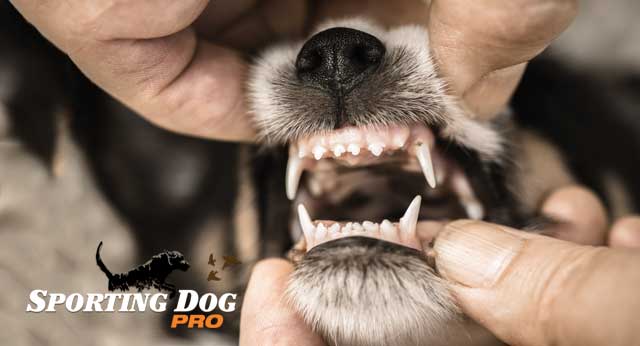
Biting is communication. That’s worth understanding before anything else, because the way you respond to a dog that bites should depend entirely on what he’s communicating. A puppy that bites your hand during play is doing something completely different from a dog that bites out of fear, which is completely different from a dog that bites out of dominance or aggression. The cause determines the correct response. Getting that wrong — applying a dominance correction to a fear biter, for instance — makes the problem worse, not better.
Puppy biting and nipping
Puppy biting is normal, expected, and needs to be addressed early. Puppies explore the world with their mouths, they play with littermates by mouthing, and they test limits because that’s what puppies do. Those razor-sharp needle teeth are unpleasant on human skin and genuinely dangerous to the game a retriever is supposed to deliver with a soft mouth. Letting it continue because the puppy is small and cute creates a habit that gets harder to break as the dog gets bigger and stronger.
Don’t wait for the puppy to outgrow it. Address it from the first week. The approach matters less than the consistency — what works is any clear consequence applied every single time, by every person who interacts with the dog. The most effective method for most puppies is immediate social exclusion: the moment teeth touch skin, all engagement stops, you turn away or leave the room, and the puppy gets nothing from the interaction. For a puppy that is highly social — which most sporting breeds are — being ignored is more aversive than most physical corrections. He learns quickly that biting ends the thing he wants most.
For puppies that are biting excessively or who don’t respond to social exclusion alone, crate or kennel time as an immediate consequence works the same way. He bites, he goes in the crate, interaction ends. The crate is not punishment in a negative sense — it’s just the removal of access to what he wants. Consistency across all household members is what makes this work. One person who lets the puppy nip during play undoes everyone else’s effort.
For gun dog owners specifically: soft mouth is a trained behavior that starts with how you handle biting in puppyhood. A retriever that was allowed to bite and tug on hands and clothing as a puppy has learned that using his mouth hard on things is acceptable. That habit transfers directly to how he handles birds. Address biting early and you’re also laying the groundwork for the soft retrieve.
Fear biting
Fear biting is the most misunderstood type and the most dangerous to handle incorrectly. A dog that bites out of fear is not aggressive in the true sense — he’s defending himself against what he perceives as a threat. That threat might be a stranger approaching too fast, a loud noise, a child running toward him, or simply being cornered with no escape route. The bite is defensive, not offensive, and punishing it with force typically makes the problem worse because it confirms to the dog that his fear was justified.
The correct response to fear biting is to identify the trigger and address the underlying fear, not just the bite. This takes time and patience. Desensitization — controlled, gradual exposure to the trigger at a distance that doesn’t produce fear, then slowly reducing that distance over many sessions — is the approach that actually resolves it. Flooding the dog with what he’s afraid of to “get him over it” usually backfires and can make the fear permanent.
Practical management in the meantime: know your dog’s triggers. If he’s reactive around children, don’t put him in situations with children unsupervised. If storms trigger aggression, give him a safe den space — a covered crate in a quiet room — where he can ride it out without being approached. Never leave a fear-reactive dog alone with someone he hasn’t been around before. Management prevents incidents while you do the training work to resolve the underlying issue.
Pain biting is in the same category. A dog in pain will bite the person touching the painful area regardless of how much he loves that person — it’s reflex, not aggression. Before handling a wounded dog or treating an injury, muzzle him first. Keep children away from injured dogs as a firm rule. The dog is not being mean; he’s protecting himself from what hurts, and he can’t distinguish help from harm in that moment.
If fear biting is serious or frequent, a consultation with a veterinary behaviorist is worth pursuing. In some cases anxiety medication as a bridge while behavioral modification work is done makes the training significantly more tractable. This isn’t giving up — it’s using every available tool.
Aggressive biting
True aggressive biting — a dog that bites without fear, without pain, without provocation — is a different problem entirely and needs to be taken seriously the first time it happens. There is no isolated incident when it comes to aggressive biting. A dog that bites once and receives no consequence has been taught that biting is effective, and he will bite again.
The root of most true aggression in dogs is a status problem. The dog has concluded, through a combination of handler permissiveness and his own temperament, that he is in charge. Dogs in charge of their household make decisions that dogs shouldn’t be making — including decisions about when it’s appropriate to use force. Correcting this requires reestablishing clear, consistent leadership across all domains: feeding, space, commands, and access. The dog that waits for his food, moves when you need him to move, follows commands reliably, and understands that your authority is non-negotiable is a dog with much less reason to escalate to biting.
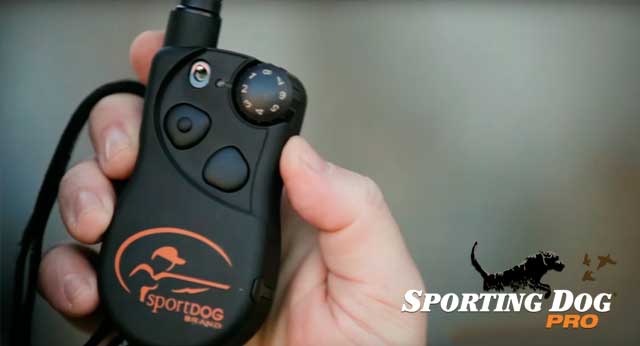
An e-collar is an effective tool for addressing early signs of aggression — growling, hard staring, stiffening — before they escalate. A correction at the moment the dog begins to display pre-bite behavior interrupts the escalation and reinforces that the behavior produces an unpleasant consequence. The key is catching it early in the sequence, not after the bite has already happened. Timing is everything.
Serious aggression — a dog that has bitten hard enough to break skin, a dog that bites repeatedly, or a dog that redirects aggression onto family members — requires professional assessment. A trainer who specializes in aggression rehabilitation can evaluate the severity, identify the triggers, and build a structured behavior modification program. Do not attempt to manage serious dog aggression through self-help methods alone. The stakes are too high and the consequences of getting it wrong are real.
Consistency across the board
The single most important factor in addressing any type of biting is consistency — not the specific method, not the tools, not the timing on any one correction, but the unwavering application of the same rules in the same way every time. A dog that gets corrected for biting by one family member and allowed to mouth during play by another never learns a clear rule. He learns that the outcome of biting depends on who he’s biting, and he adjusts his behavior accordingly.
Establish the rule, communicate it to everyone in the household, and hold it without exception. That’s the foundation everything else builds on.