You have no items in your shopping cart.
German Shorthaired Pointer
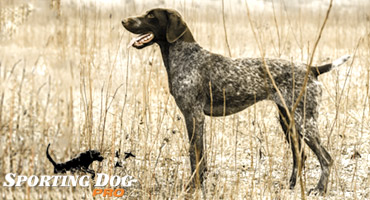
The German Shorthaired Pointer consistently ranks among the most popular hunting breeds in the United States, and the case for that popularity is easy to make. No other breed combines upland pointing, retrieving on land and water, tracking, and versatile game coverage in a single package at the level the GSP does. When the breeding is right and the training is done, a good GSP is genuinely one of the most capable sporting dogs available. Understanding what makes the breed exceptional — and what it requires from an owner — is worth doing before you bring one home.
History and development
The GSP was developed in Germany through a selective breeding program in the late 19th and early 20th centuries with an explicit goal: produce the most versatile hunting dog possible. Early breeders crossed the Old Spanish Pointer, the English Foxhound, the Schweisshunde (a German tracking hound), the Bloodhound, and the original German Bird Dog, selecting from each generation for the qualities that best served the whole hunting day rather than a single specialized task. The early selection process was demanding — dogs were evaluated and kept or culled based on working performance, biddability, and cooperation with the hunter.
The result was accepted into the AKC stud book in 1930. Within a short period the breed established a reputation as the premier versatile gun dog in the world, a reputation it has maintained. The German working dog tradition that produced the GSP continued to refine the breed for performance; the best field-bred GSPs today trace their working qualities back through that deliberate, performance-focused lineage.
Physical characteristics
The GSP is built for an all-day working dog: lean and athletic, well-muscled through the hindquarters, with the deep chest and efficient stride of a dog designed to cover ground. Males stand 23 to 25 inches at the shoulder and typically weigh 55 to 70 pounds; females are somewhat smaller. The coat is short, dense, and water-repellent — easy to maintain, quick to dry, and adequate for most hunting conditions without the insulation problems of heavier coats in heat. Webbed feet make the GSP an efficient swimmer for a breed that isn’t primarily a water dog.
AKC-recognized colors are liver, black, liver and white, and black and white, in patched, ticked, or solid patterns. The liver coloration is most common and most closely associated with the breed’s traditional appearance. The overall impression of the breed in condition is athletic, alert, and purposeful — a dog that looks like it’s ready to work.
Field capabilities
The GSP’s versatility is its defining quality as a hunting dog. It points, retrieves, tracks, and covers a range of game that no specialist breed can match. Pheasant, quail, grouse, woodcock, partridge, duck and other waterfowl, rabbit, and raccoon all fall within the GSP’s working repertoire. The breed’s keen nose, combined with the intelligence to use it efficiently, makes it effective across different terrain types and different hunting applications in a way that a specialist breed simply cannot be.
In the upland field, the GSP typically works at a medium range — closer and more biddable than a wide-ranging pointer, but with enough drive and range to cover ground effectively. The natural pointing instinct is strong in well-bred dogs; a GSP on birds will lock into a stylish point and hold for the approach and flush. The breed also retrieves naturally and most dogs will work water without significant hesitation, making the GSP genuinely useful across a full day that includes both upland and waterfowl work.
For upland hunters, an upland beeper collar is the standard complement to a GSP in cover — the beeper signals the dog’s location continuously on the move and switches to point mode when the dog locks up, letting the hunter locate the dog without the dog having to break position. For hunters who run their GSP in varying cover or at ranges where visual contact is intermittent, a GPS tracking collar adds real-time location data to the beeper’s on-point signal.
Temperament and trainability
The GSP is among the most biddable of the versatile breeds — intelligent, responsive, and genuinely oriented toward working with the handler rather than independently of him. This is part of what the original breeding program selected for: a dog that cooperates with the hunter and can be directed effectively in the field. A well-bred GSP with appropriate training is one of the more straightforward hunting dogs to work with, because the dog wants to do the right thing and has the intelligence to understand what that is.
That intelligence is a two-way commitment. A GSP that receives adequate training, adequate exercise, and adequate mental engagement is an exceptional companion and hunting partner. A GSP that doesn’t get enough physical and mental outlet will find its own outlets — which typically means destructive behavior, nuisance barking, and general unruliness. The breed’s energy level is high and sustained. An owner who can’t or won’t commit to significant daily exercise and active engagement is not a good match for a GSP, regardless of how much they appreciate the breed.
The GSP is a dog that needs a job. Hunting season provides it. The rest of the year, regular field work, training sessions, and active exercise fulfill the same need. A GSP that hunts hard in the fall and sits in a kennel through spring and summer is not living the life the breed was designed for and will not perform as well as one that stays active year-round.
As a family dog
The GSP makes an excellent family dog for an active family. The breed is affectionate, loyal, and typically good with children it’s been raised with. The same energy that makes a GSP exceptional in the field means it needs space and activity at home — a GSP in an apartment without adequate exercise is a problem waiting to happen. In an active household with regular outdoor time, the breed’s intelligence, trainability, and affectionate nature make it one of the more rewarding companion dogs available.
Life expectancy for the breed is typically 12 to 14 years, and well-conditioned GSPs tend to maintain their drive and working ability deep into their senior years. The same athletic lifestyle that makes them exceptional young dogs keeps them healthier and more active longer than breeds that are less physically maintained.