You have no items in your shopping cart.
Gathering All The Dog Training Equipment
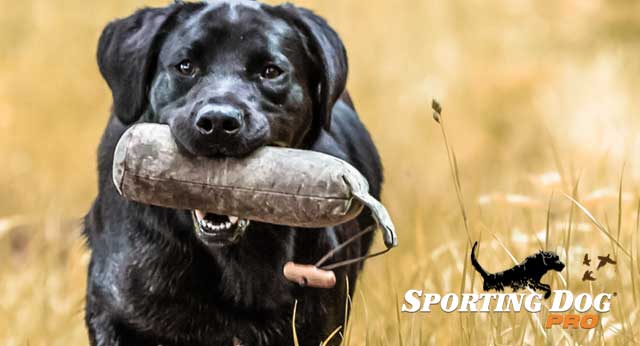
Training equipment doesn’t make a dog trainer. But having the right tools, understanding what each one does, and knowing when to use them makes the training process significantly more efficient. A handler who reaches for the wrong tool at the wrong time — or who skips foundational tools because they didn’t seem important — creates friction that good training approach can’t fully compensate for. Here’s what the core gun dog training kit looks like and what each piece actually contributes.
Collar and leash — the starting point for everything
Before any formal training begins, a properly fitted flat collar and a standard 4-to-6-foot leash are the minimum. The collar needs to fit correctly — snug enough that it won’t slip over the dog’s head, loose enough that you can fit two fingers underneath. Leather and nylon are both reliable materials; leather softens and conforms over time, nylon is easier to clean. Avoid retractable leashes for training entirely. They teach the dog that pulling creates more leash, which is the exact opposite of what you want to establish.
For close-range training and basic obedience work, the flat collar and leash give you physical control to enforce commands when the dog doesn’t comply. That physical backup is essential in the early stages when the dog is learning that commands have consistent consequences. Browse our collars and leads for flat collars, slip leads, and leather options.
Check cord
A check cord — typically a 20-to-30-foot light rope attached to the dog’s collar — is one of the most useful and most underused tools in gun dog training. It bridges the gap between leash work and off-leash work, giving you physical control at distance without the dog knowing the leash is off. For teaching recall, steadiness, and early handling commands at range, the check cord lets you enforce commands the dog can’t yet reliably comply with voluntarily.
The check cord is particularly valuable for pointing dog and flushing dog training where the dog needs to range at distance before e-collar conditioning is complete. It’s also an excellent supplement to e-collar training for handlers who want a physical backup when working in close cover where timing matters most. Our 30-foot orange check cord is the standard starting point for most gun dog applications.
E-collar
The training collar is the tool that extends your communication with the dog to any distance he can work at. For gun dogs that need to perform reliably at 50 yards, 200 yards, or beyond — in heavy cover, in water, in the noise and distraction of a real hunt — the e-collar is what makes the training transfer from controlled environments to field conditions.
Choosing the right system depends on your dog, your application, and how many dogs you run. A family dog owner training a single Labrador for retrieves needs a different system than an upland hunter running two pointing dogs at range. Our training collar guide organizes the full lineup by application — family dog, upland, waterfowl, hound, and professional. The key specs to match to your situation are range, output level, waterproofing, and number of dogs supported.
The e-collar doesn’t replace the leash and check cord — it comes after them. A dog that has never learned to respond to physical leash pressure doesn’t have the foundation needed for e-collar conditioning. Build the foundation with the leash and check cord first, then introduce the e-collar to extend that foundation to distance.
Whistle
A whistle carries further than a voice in wind, heavy cover, or noisy field conditions, and it doesn’t carry the emotional tone that a human voice does. A frustrated handler’s shouted command communicates frustration to the dog. A whistle blast communicates only the signal. For recall, casting, and stopping commands at distance, the whistle is cleaner and more consistent than a voice.
The standard in gun dog training is the pea-less whistle — the Roy Gonia style that produces a consistent tone regardless of weather or moisture. Introduce whistle commands early and pair them consistently with the corresponding verbal command or hand signal so the dog learns both simultaneously. Once the whistle command is conditioned, it’s often more reliable at distance than voice alone.
Retrieving dummies
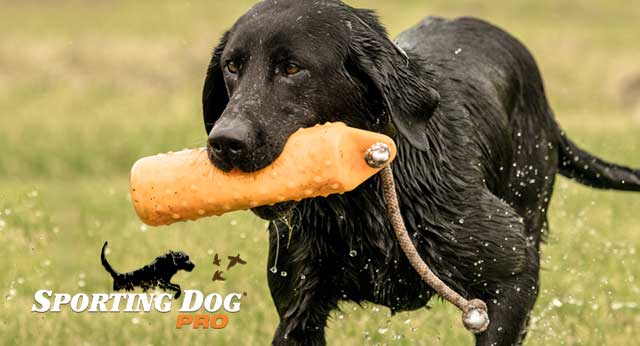
For retriever training, dummies are the primary training tool from puppyhood through advanced work. They’re used to develop marking skills, introduce water work, build drive, practice blind retrieves, and condition steadiness. Having multiple dummies in different sizes and weights lets you vary the work and match the dummy to the development stage — a small canvas puppy dummy for a young dog just learning to hold and carry, a heavier plastic dummy for building drive and marking at distance.
Browse our full selection of retrieving dummies — canvas, plastic, and foam options in puppy through jumbo sizes. Having a mix of types available lets you tailor each session to what you’re working on.
Launchers and blinds
A dummy launcher allows you to throw marks at distances a human arm can’t reach, and to throw them consistently without the dog being influenced by your body movement or arm position. For building marking ability at distance, for multiple mark work, and for blind retrieve training where you need precise placement, a launcher is an essential tool for serious retriever training. For upland and bird dog work, bird launchers simulate flush and allow you to work steadiness on point without a human standing at the flush position.
Holding blinds are used to position dogs during training scenarios — keeping a second dog steady while the first works, teaching a dog to hold in a blind until sent, and running multi-dog drills where dogs need to be stationed at distance.
Crate
A crate is training equipment, not just storage. A dog that is crate-trained has a defined space that is his, where he rests between sessions, settles after excitement, and develops the calm baseline that makes training more productive. Dogs that are crated appropriately during the day between training sessions often learn faster than dogs with unsupervised free time, because they aren’t rehearsing unwanted behaviors between sessions.
For a gun dog that will spend significant time in a truck or in hunting camp, crate comfort is a practical field skill. A dog that loads and unloads reliably, that rests quietly in a crate between retrieves, and that can settle in a vehicle crate for a long drive is easier to travel with and safer in the field. Browse our Zinger aluminum dog crates — built specifically for working dogs, airline-rated, and available in sizes for every breed.
Frame of mind
The original article ends with this point and it’s worth keeping: the most important thing you bring to a training session is not in the bag. A calm, focused, patient handler produces a calm, focused dog. A frustrated, rushed, or distracted handler produces the opposite. If you’re not in the right frame of mind to train well, put the equipment away and come back tomorrow. A short, good session is worth more than a long, bad one, and a training session that ends on a correct rep with clear praise is worth more than one that grinds on until both of you are done.
Browse our full training gear lineup — dummies, launchers, blinds, whistles, check cords, and more. Call us at 1 (800) 524-2428 if you want help putting together the right kit for your dog and your training goals.