You have no items in your shopping cart.
First Steps in Puppy Training
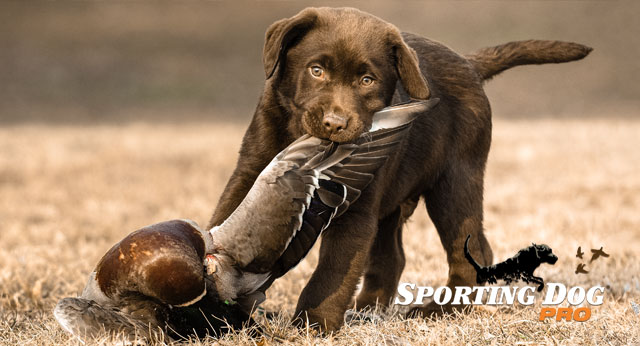
You brought home the puppy, and within the first hour something got chewed that shouldn’t have. That’s not a problem puppy — that’s a puppy. Chewing, nipping, and getting into everything accessible is exactly what puppies do, and the question isn’t how to stop a puppy from being a puppy. It’s how to create an environment and establish a pattern of handling that turns those first weeks into a foundation rather than chaos.
Puppy-proof before he arrives, not after
The single most effective thing you can do before the puppy comes home is manage the environment so he can’t practice behaviors you’ll spend months undoing. A puppy left unsupervised in a room full of opportunities will practice every behavior that room invites — chewing cords, pulling items off low shelves, eliminating in corners, raiding trash cans. Every time he practices one of those behaviors unsupervised, he’s reinforcing it. Environmental management prevents the practice.
Get down to the puppy’s level and scan the accessible space from there. Electrical cords are the most serious hazard — puppies chew them, and the consequences range from ruined equipment to electrocution. Secure or remove them. Anything on or near the floor that you don’t want chewed — shoes, remote controls, phone chargers, children’s toys — needs to be off the floor or behind a closed door. Small objects that could be swallowed need to be picked up. The test is simple: if it’s accessible and interesting, assume it will be investigated with teeth.
A crate is not a punishment — it’s the single most effective management tool available for a new puppy. A crate-trained puppy that rests in his crate when unsupervised is a puppy who cannot practice bad behaviors between training sessions, cannot get hurt by household hazards, and is significantly easier to housebreak. The crate should be appropriately sized: large enough to stand, turn around, and lie down comfortably, but not so large that he can designate a corner as a bathroom. Introduce it positively with meals and treats inside, and it becomes a den he chooses rather than a confinement he resents.
Establishing the “no” cue from day one
The original article makes a point worth emphasizing: starting the “no” command from day one gives you a communication tool that pays dividends across every other area of training. A puppy that learns to recognize a firm, calm “no” as a meaningful signal — stop what you’re doing, pay attention to me — is a puppy building the foundation for all subsequent training.
The mechanics: when he’s chewing something he shouldn’t, say “no” once in a clear, firm voice. Remove the item immediately and replace it with an appropriate chew toy. The moment he engages with the toy, genuine praise. You’re teaching two things simultaneously: “no” means stop, and the correct alternative produces praise. Consistent repetition of this sequence — every time, by everyone in the household — builds the association quickly.
Important: don’t use old shoes or household items as chew toys, even ones you consider disposable. The puppy cannot distinguish between your old sneaker that you said was fine and your new boot that isn’t. The rule needs to be simple: dog toys are for chewing, everything else is not. Keep a supply of appropriate chew toys accessible so there’s always an immediate correct option available when you redirect.
The tones in your voice are training tools. A puppy that learns to distinguish your firm “no” from your praise voice has a meaningful foundation for later training collar work, field commands, and every other aspect of handling. The pattern — command followed by consequence, correct behavior followed by genuine praise — is the same pattern regardless of what you’re training.
Addressing nipping and biting
Mouthing and nipping is how puppies interact with the world and with each other. It’s not aggression — it’s normal puppy behavior. The problem is that if it’s allowed to continue without correction, it becomes a habit that gets worse as the puppy grows and the teeth get bigger and stronger. The time to establish the rule is when the puppy is small and the stakes are low, not when he’s a fifty-pound adolescent and the habit is entrenched.
The principle is consistent and simple: teeth on skin produces an immediate, consistent, undesirable consequence. The specific method matters less than the consistency. Most trainers use some variation of: a clear “no” or “ouch”, immediately withdrawing attention and interaction, and offering a chew toy as the acceptable alternative. The withdrawal of attention is the consequence the puppy doesn’t want — he wants engagement, and biting ends it immediately.
Physical correction methods like squeezing the muzzle or scruffing can work but carry a higher risk of creating a hand-shy dog if applied with too much force or in the wrong context. For most puppies, consistent social consequence — biting ends the interaction every time without exception — is both effective and lower risk. What undermines it is inconsistency: allowing it one day because he’s being cute, then correcting it the next. The puppy learns from the pattern, and an inconsistent pattern teaches the wrong thing.
Supervision and management
Everything in this article is dependent on one thing: you watching the puppy. A puppy learning what’s allowed and what isn’t needs to be corrected at the moment the behavior is happening, not after the fact. A correction that arrives after the puppy has already chewed the shoe, already had his fun, and moved on teaches nothing. The correction at the moment of the behavior — “no,” redirect, praise for the correct response — is the training.
This is why the default for unsupervised time must be the crate or a confined, puppy-safe area. It’s not a limitation on the puppy’s development — it’s the responsible management that allows you to actually teach rather than just react. The puppy that’s supervised when out and crated when not is the puppy building good habits. The puppy that’s free to roam unsupervised for hours is the one practicing bad ones.
Starting field skills early
For the sporting dog owner, the first weeks at home are also the right time to start building the instincts and exposures that field training will build on later. At eight to twelve weeks, a puppy is in the critical socialization window and is forming associations that will last a lifetime. Use this window to expose him to the environments, sounds, and objects that will be part of his working life: different terrain, water, birds, dummy objects, the sound of the gun at appropriate distance. None of this is formal training — it’s positive exposure that builds familiarity rather than fear.
A puppy that has been handled thoroughly — mouth, ears, paws, body — from day one accepts examination, veterinary care, and equipment fitting easily as an adult. That handling tolerance is worth building deliberately. The ten minutes you spend handling your puppy today is an investment in every future training session, field day, and veterinary visit.
The first weeks matter more than most new dog owners realize. The habits formed — good and bad — in the first months are the ones that carry forward into every stage of training. Starting with management, consistency, and genuine patience produces a dog that’s a pleasure to live with and a foundation for everything that follows.