You have no items in your shopping cart.
Eight Training Tips For Giving Your Dog Any Command
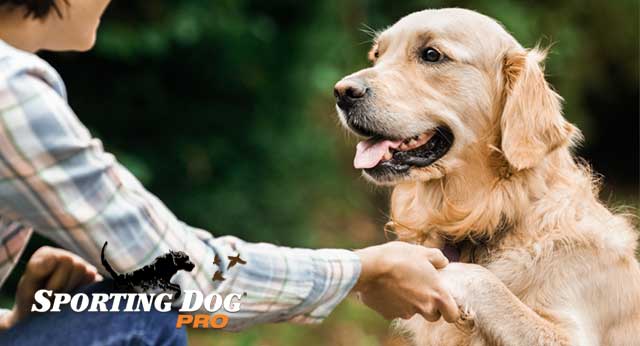
The mechanics of giving a command seem straightforward until you watch someone train a dog and notice how many small things they’re getting wrong — commands given without expectation of compliance, repeated without follow-through, delivered in tones that communicate the opposite of what the handler intends. The tips below aren’t advanced technique. They’re the fundamentals that determine whether a command means something or doesn’t, and getting them right matters more than anything else in the early stages of training.
1. Be consistent so you don’t create confusion
Inconsistency in commands is the most reliable way to teach a dog that commands are suggestions rather than directives. This applies to the words you use, the tone you use them in, the body language that accompanies them, and the consequences that follow. A sit command delivered in five different ways over the course of a week creates five slightly different pictures of what “sit” means. A dog trying to comply with an inconsistent cue isn’t being difficult — he’s trying to figure out which of the five versions applies right now.
Pick the cue, pick the delivery, and repeat it exactly. This applies to everyone who handles the dog. If one person says “sit,” another says “sit down,” and a third says the dog’s name followed by “sit,” the dog has three commands to parse rather than one. Agree on a standard and hold it across everyone in the household.
2. Only give a command you intend to enforce
This is one of the most commonly broken rules in dog training and one of the most consequential. Every time a command is given and not followed through — the dog doesn’t comply and nothing happens — the dog is being taught that the command is optional. Over enough repetitions, that lesson becomes reliable: I don’t have to respond to this because not responding has no consequence.
The practical standard: if you give a command, you follow through on it. If you aren’t in a position to follow through — you’re across the yard, you’re on the phone, you’re not paying full attention — don’t give the command. A command not given is neutral. A command given and not enforced is actively destructive to training. When you can’t back it up, wait until you can.
Also watch for the situation the original article identifies: giving a command when the dog is already doing the thing. Telling a dog to sit when he’s already sitting creates ambiguity about what you’re actually asking. Commands should be given when you want a specific behavior, not as commentary on what’s already happening.
3. Keep your voice calm and authoritative
Your tone communicates information the dog uses to calibrate his response. A calm, confident delivery signals that you expect compliance — not because you’re demanding it through volume, but because your tone carries the same certainty a person uses when they aren’t questioning whether the outcome is in doubt. That certainty is contagious. A dog that hears it tends to respond more readily than a dog that hears uncertainty or frustration.
Yelling does not improve compliance. It adds arousal and anxiety to the situation, which degrades the dog’s ability to respond correctly. A dog that jumps when you shout isn’t responding well — he’s startled. A loud voice that produces a startle response isn’t a command working; it’s a threat response. For sensitive dogs, a raised voice shuts them down entirely. For bolder dogs, volume often escalates their arousal rather than producing compliance.
The goal is a delivery that communicates calm authority — not a request, not a plea, not a threat, just a clear expectation stated with conviction. Practice this in low-stakes situations until it becomes your default.
4. Use single-word commands
Dogs process the sounds of commands as audio patterns, not as language they parse the way people do. A one-syllable or two-syllable command is a distinct, recognizable pattern. “Sit down” is a longer pattern that, to a dog, sounds like two commands in sequence. The dog that hears “sit down” and lies down rather than sitting is not being wrong — he heard the last part and responded to it.
Standard gun dog commands are single words for exactly this reason: sit, stay, here, heel, whoa, fetch, back. Where two-word commands exist, they’ve typically been practiced so many times that the whole phrase functions as a single pattern. For a dog in early training, single clear words are unambiguous. Add complexity later, once the foundation is solid and the dog has demonstrated he can handle it.
Whistle commands are a useful extension of single-word training. A specific number of blasts for recall, a single pip for stop — these are even cleaner than verbal commands because they carry no emotional tone and travel further in wind and cover. Introduce whistle commands alongside verbal commands early so the dog learns both simultaneously. Browse our whistle lineup for the Roy Gonia-style pealess whistles standard in gun dog training.
5. Training is mental work — treat it that way
A dog that doesn’t get adequate mental exercise develops the same behavioral problems as a dog that doesn’t get adequate physical exercise — restlessness, destructive behavior, inability to settle. Obedience training is one of the most effective forms of mental exercise available because it requires sustained focus, problem-solving, and the kind of concentrated attention that drains mental energy quickly.
This is why a fifteen-minute training session often tires a high-energy dog more effectively than a thirty-minute walk. The mental effort of working through commands, responding to cues, and getting things right is genuinely tiring in a way that physical activity alone isn’t. A dog that works mentally during training is a calmer, more settled dog between sessions.
It’s also why training has a floor effect on your relationship: a dog that is regularly asked to think, respond, and succeed develops a different quality of engagement with his handler than a dog that only gets basic maintenance. Training builds the working relationship alongside the specific behaviors.
6. Supervision is how you prevent bad habits from forming
Bad habits are almost always acquired when the dog is unsupervised. A dog left alone with access to counters, furniture, shoes, and the garbage will practice whatever behaviors those environments invite, and practice is how habits form. By the time you discover the problem, it’s been rehearsed enough times to be a pattern — and patterns are harder to break than behaviors you caught early.
Supervision doesn’t mean hovering. It means managing the environment so that unsupervised time doesn’t create opportunities for undesired behavior. A crated dog can’t get into the trash. A dog in a secure yard can’t practice fence-running. A dog with limited free access to the house is a dog you can actually monitor and manage. When you can’t supervise, contain.
7. Create situations where the dog can’t fail
This is one of the most underused tools in training and one of the most valuable. When a dog is struggling — having a bad session, losing confidence, shutting down after repeated corrections — the right response is not more pressure. It’s a reset to something the dog does well, followed by clear, genuine praise for doing it well.
Ask for a command the dog performs reliably every time. Let him succeed. Praise it sincerely. End the session there. You’ve closed on a correct rep and a positive emotional note, which is what the dog carries into the next session. Confidence in training is cumulative — it builds from successful repetitions and erodes from repeated failure or sustained pressure. A dog that has been ending sessions on success for weeks approaches new challenges with more confidence than a dog that associates training with extended difficulty.
The same principle applies outside of formal sessions. When you notice your dog doing something correctly on his own — sitting calmly at the door, bringing a retrieve to hand without being asked, waiting before eating — acknowledge it. You just got a free training rep. Use it.
8. Train with the same standards you’d want applied to you
Clear expectations, consistent follow-through, fair correction, and genuine acknowledgment when things go right. That’s the framework that produces results with a dog, and it’s the same framework that produces results in any relationship where one person is trying to develop another. The handler who loses his patience, changes the rules arbitrarily, corrects for things the dog doesn’t understand, or never acknowledges what the dog is getting right isn’t a good trainer regardless of how much equipment he has or how much time he spends at it.
Most unruly, difficult-to-train dogs have owner problems, not dog problems. That’s not a criticism — it’s a practical observation that points toward the solution. The dog is doing what he was taught, explicitly or inadvertently, by the people who handled him. Change the handling and the behavior changes. It usually doesn’t take long once you identify where the inconsistency or unfairness is coming from.
If you’re building or upgrading your training kit, browse our training collar guide and training gear lineup. Call us at 1 (800) 524-2428 if you want help putting together the right setup for your dog and your goals.