You have no items in your shopping cart.
Do I need a Remote Beeper Collar?
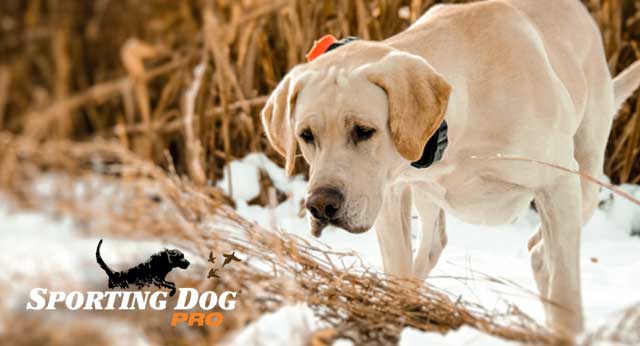
If you’ve hunted pointing dogs for any length of time, you already know the problem a beeper collar solves. The dog drives into thick cover and disappears. You stop and listen. You can’t hear bells anymore. You don’t know if she’s still running, locked up on point fifty yards ahead, or has worked her way into the next county. You start walking and hoping. A beeper collar changes that entirely — you always know what the dog is doing, even when you can’t see her.
What a beeper collar actually does
A beeper collar uses motion sensing to distinguish between a dog that is actively moving and a dog that has stopped. The collar emits different sounds depending on the mode and the dog’s activity: a rhythmic beep pattern while the dog is running, and a distinct, continuous tone when she stops — which, for a pointing dog, means she’s on point. That change in sound is one of the more exciting things in upland hunting to hear.
The original concept isn’t new — hunters have tracked pointing dogs with bells for generations. Bells tell you when a dog is moving and go quiet when she stops. A beeper does the same thing but carries significantly further, cuts through heavy cover and wind that would absorb a bell’s sound, and gives you a precise audible cue rather than just the absence of sound. In thick cover like the brushy swamps and dense undergrowth common in the South, the difference in audible range is the difference between finding a pointed dog and guessing where she is.
Most beeper collars offer selectable modes. The most common are a run mode that beeps continuously while the dog moves, a point-only mode that stays silent during the run and only activates when the dog locks up, and a combination mode that does both. Point-only mode is popular with hunters who find continuous beeping during the run distracting or who want the silence of the cover broken only by the signal that actually matters.
Remote vs. non-remote beepers
There are two basic configurations. A non-remote beeper is switched on at the collar before the dog is released and runs through the hunt until you physically turn it off. Simple, reliable, no handheld unit required. A remote beeper adds a handheld transmitter that lets you activate, silence, or change the collar’s mode from wherever you are in the field.
The remote capability matters most in two situations: when you want to locate a dog without the beeper running continuously, and when you need to change modes mid-hunt without catching the dog. If you hunt different terrain or different dogs in a session — say, a wider-ranging dog in open fields and a closer-working dog in heavy cover — the ability to adjust from the remote without interrupting the hunt is a genuine convenience. For hunters who keep it simple and want fewer variables, a non-remote beeper with a physical switch is perfectly adequate.
How to choose the right beeper for your situation
Three questions determine which beeper collar fits your hunting:
How do you hunt and how does your dog range? A wide-ranging pointer or setter in open country needs a louder beeper with longer audible range than a close-working flusher or a dog hunting brushy, tight-cover terrain. Volume and tone are worth paying attention to — some beepers penetrate heavy cover better than others, and you want one that you can actually hear when the dog is 100 yards into a briar thicket.
Do you already run other collar systems? If you’re already running a training collar or a GPS tracking collar, adding a separate beeper puts a third device on the dog’s neck. Several manufacturers offer combination systems that integrate beeper functionality with e-collar or GPS capability in a single unit — one collar, one receiver, multiple functions. If you’re building a collar system from scratch, it’s worth looking at combination units before buying three separate collars. If you have an existing system you’re happy with, check whether that brand offers a beeper that pairs with your current handheld before buying from a different manufacturer.
What terrain do you hunt? Dense, heavy cover requires more volume and tonal penetration than open fields. Consider where the dog most often goes out of sight and whether the beeper you’re considering can be heard from there under realistic field conditions.
Browse our full selection of upland beeper collars — remote and non-remote options from SportDOG, Dogtra, and Garmin, including combination e-collar/beeper systems. Call us at 1 (800) 524-2428 if you want help matching a system to your specific hunting style and terrain.
Introducing the beeper before the season
A beeper collar introduced for the first time on opening morning is a liability, not a tool. The sound is novel, potentially startling, and associated with the stress of a high-stimulation environment rather than the positive associations you need. A dog that bumps birds because she was distracted by a sound around her neck that she’d never heard before has been set up to fail.
Introduce the beeper during training sessions well before the season. Put it on the dog at feeding time so the first associations are positive. Run her with it during normal yard and field work so she hears the run tone while doing things she enjoys and the point tone when she locks up. By the time you walk into the field on opening day, the beeper should be background noise she’s completely comfortable with. At that point it’s doing its job: telling you what she’s doing without her even knowing the collar is there.