You have no items in your shopping cart.
Chesapeake Bay Retriever
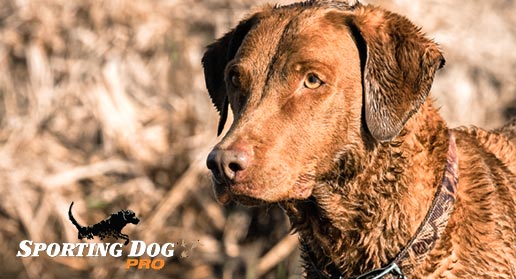
The Chesapeake Bay Retriever is in a different category from other retrievers — not better or worse, but genuinely different in ways that matter for the hunter who’s choosing a dog. The Chessie was built for a specific job in specific conditions: retrieving ducks from the icy, rough waters of the Chesapeake Bay, in weather that would send most dogs to the kennel and most hunters to the truck. For that job, there may be no better dog alive. For the hunter who wants the most biddable, easy-to-train retriever on the market, the Chessie is probably not the right choice. Knowing which situation you’re in before you buy one is everything.
History
The Chessie’s origin story is one of the better ones in sporting dog history. In 1807, an English ship wrecked off the coast of Maryland. Among those rescued were two Newfoundland puppies — named Sailor and Canton after the rescuing ship, Canton — who turned out to be exceptional retrievers. Word spread along the shores of the Chesapeake Bay, and the two dogs were bred with local water dogs, then with other breeds proven in cold water work, including the English Otterhound and curly-coated retrievers. The breeding program that followed was purposeful and demanding — only the most robust, capable, and cold-hardy offspring were selected forward. The result was recognized by the AKC as the Chesapeake Bay Retriever in 1878, making it one of the first American sporting breeds with a fully documented origin.
The coat
The Chessie’s coat is one of the most functional in the retriever world and the physical feature most directly responsible for the breed’s legendary cold-water capability. The outer coat is thick, short, and oily — the oil repels water in the way a duck’s feathers do, preventing the coat from becoming saturated. Beneath it is a dense, woolly undercoat that provides insulation. The combination allows a Chessie to make repeated retrieves in water temperatures that would exhaust and chill other breeds quickly. After emerging from the water, a quick shake leaves the Chessie substantially dry in a way that a Lab or Golden in the same conditions is not.
The recognized colors all fall within the brown spectrum — eight shades ranging from dark brown to light tan. The most valued color among working hunters is “dead grass,” a straw-colored tan that provides natural camouflage in the marsh grass and reed environments of the Chesapeake Bay and similar waterfowl habitat. This was not an aesthetic choice by early breeders — it was a functional one.
Physical build and field performance
The Chessie is powerfully built: heavily muscled through the chest and hindquarters, with the physical strength to power through rough water and break ice. Early breeders selected specifically for robustness and durability over lean efficiency, which is why the Chessie presents differently from a Lab or a Golden — broader, heavier, built more like a freight hauler than a sprinter.
That build is a tradeoff. The Chessie’s cold-water endurance and power in rough conditions is exceptional. In terms of raw speed over distance on land, he’s outpaced by leaner breeds. He can move quickly through heavy cover — reeds, marsh grass, thick brush — and his mass and power give him advantages in water conditions that smaller breeds struggle with. He tends to tire more quickly than lean breeds in land-based work, which is worth knowing if your application involves extended upland hunting as well as waterfowl.
Temperament and training
The Chessie’s temperament is what sets him apart from other retrievers and what prospective owners most need to understand before committing. He is intelligent, emotionally complex, and deeply independent in his thinking. You can watch a Chessie survey a situation and know that whatever he does next, he considered his options. The problem is that his conclusion about the best course of action may not align with yours.
Unlike a Lab, which tends toward eager-to-please compliance, the Chessie is more likely to evaluate a command and decide whether to comply based on his own assessment of the situation. He is not disobedient in the sense of being difficult or resistant by nature — he is independent in the sense of a dog with genuine opinions. That independence in a well-trained dog becomes a field asset; the dog that makes good decisions on his own in cover and water conditions where the handler can’t direct every move is a valuable hunting partner. In an undertrained dog, that same independence becomes a source of frustration.
The Chessie can become dominant in situations where he feels challenged — by other dogs, by strangers, or by training pressure applied inconsistently. Firm, fair, consistent handling from a handler who doesn’t back down when challenged produces a reliable, capable dog. Inconsistent handling or giving ground when the dog pushes produces a dog that knows the rules are negotiable and will test them. The e-collar systems built for waterfowl retrievers are well suited to Chessie training — the ability to communicate precisely at any distance, consistently and without emotional escalation, is exactly what the breed’s independent nature requires.
As a family dog
The Chessie’s reputation as a difficult dog is somewhat overstated when it comes to family life. He is loyal and deeply affectionate with his family, generally good with children he’s been raised around, and has a natural protective instinct that makes him an effective watchdog. He tends to be reserved with strangers rather than overtly aggressive — assessing before accepting, which is a personality trait consistent with his general approach to everything.
With other dogs, the Chessie is typically fine as long as he’s not challenged. His sheer mass can create problems with smaller dogs that don’t read his signals correctly. Early socialization matters with this breed more than it does with more socially flexible retrievers.
Is the Chessie right for you?
If you hunt hard over cold water in demanding conditions and want a dog that will outlast the weather, work through conditions other dogs won’t enter, and make difficult retrieves that require power and cold-water endurance — the Chessie is one of the best choices in the retriever world for that application. If you want the most agreeable, handler-oriented, easy-to-train retriever available and you’re hunting moderate conditions, a Lab or Golden will give you more compliance with less friction. The Chessie earns his place by doing things other retrievers can’t, and for the hunter whose conditions match what the breed was built for, there’s nothing better.