You have no items in your shopping cart.
Casual Gun Dog Training
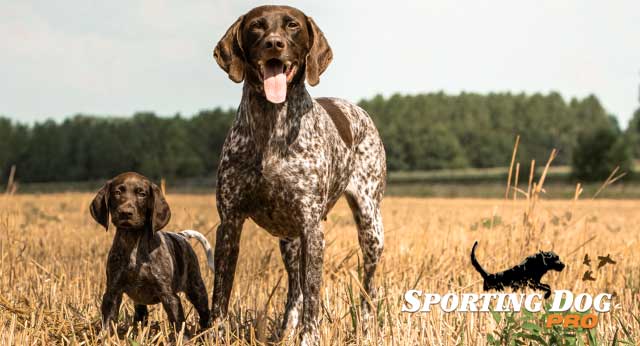
Formal gun dog training has a starting point — a date, a program, a set of tools, a deliberate structure. Casual training doesn’t. It begins the day the puppy comes home and it never really stops. It’s the sum of every interaction, every walk, every meal, every correction and reward that happens outside of a formal training session. And for most hunters who self-train, it’s where more of the real foundation gets built than in any scheduled session.
The original term for this — “come alongside training” — captures it well. You’re not putting the dog through exercises. You’re bringing him into your world, exposing him to your expectations, and letting him learn by living alongside you. Done consistently, it produces a dog that is conditioned to your standards before formal training ever begins.
What casual training actually looks like
It’s the sit before the food bowl goes down. The wait at the door before going outside. The recall practiced in the backyard when he’s distracted by something interesting. The correction when he jumps on someone, delivered calmly and immediately. The praise when he brings something to you instead of running off with it. None of these are training sessions. All of them are training.
Every time you reward a behavior, you make it more likely to recur. Every time you correct a behavior, you make it less likely. This happens whether you intend it to or not — which means every interaction with your dog is either building the dog you want or building the dog you don’t. Casual training is simply the decision to be intentional about those interactions rather than letting them happen randomly.
A puppy that grows up in a household where good behavior gets acknowledged and bad behavior gets corrected consistently — not just sometimes, not just during formal sessions — arrives at formal training with the foundational understanding that there are rules, that you enforce them, and that working with you produces good outcomes. That dog is significantly easier to advance quickly than one who has been allowed to do whatever he wanted for six months and then suddenly has structure imposed on him.
Every interaction with your dog is training whether you intend it to be or not. The question isn’t whether casual training is happening — it’s whether you’re being intentional about what it’s teaching.
Pay attention early — the puppy is showing you who he is
The first few weeks in your home tell you more about your dog than any amount of reading about the breed. Watch how he handles things he picks up — does he bring them toward you or carry them away? Watch how he reacts to novel situations — does he investigate with confidence or hang back? Watch how he responds when you call him — does he orient toward you readily or does his attention lock onto other things first? Watch how he responds to mild correction — does he bounce back quickly or does he shut down?
These observations tell you how to structure the training that follows. A naturally biddable dog who orients easily toward you can be advanced faster and given more responsibility earlier. A confident, independent dog needs more foundation work on attention and recall before field work begins. A sensitive dog needs lighter pressure and more positive reinforcement than a hard-charging dog who shrugs off corrections. None of these is better or worse — they’re different, and knowing which one you have shapes everything about how you train him.
Exposure is training
A puppy that spends his first year in a kennel or a yard and rarely encounters anything new arrives at formal training with a deficit. New environments, new surfaces, new sounds, new people, other dogs, moving vehicles, water, boats, decoys, gunfire at a distance — all of these are things a gun dog will eventually encounter in a hunting context, and a dog who has never been exposed to them will spend energy dealing with the novelty rather than doing his job.
Casual exposure during puppyhood is the cheapest form of socialization and desensitization available. Take the puppy with you when you can. Walk him in different terrain. Let him encounter unfamiliar situations in low-pressure contexts where you can manage his response and reward the confident investigation. A puppy who has been everywhere and seen everything by the time formal training begins is not distracted by the world — he’s comfortable in it.
This is also when you introduce the sounds and tools associated with hunting in a positive context. A retrieving dummy introduced as a play object before it becomes a training tool creates a positive association with the retrieve from the start. A whistle introduced early as a signal that good things happen — a recall that leads to praise and reward — is a dog that comes enthusiastically to the whistle rather than one who learned it as a demand.
Correct it and move on
One of the most practical principles in the original article is worth keeping: correct bad behavior immediately and then move on. Don’t dwell, don’t repeat the correction, don’t carry the emotional weight of it into the next interaction. A dog that gets corrected and then immediately has an opportunity to do something right and get praised for it is learning a complete lesson — that behavior produced a consequence, and this behavior produces a reward. A dog that gets corrected and then receives a cold, withdrawn handler for the next ten minutes just learns that something bad happened and his person is upset, with no clear path forward.
The same applies to bad sessions. Not every training session goes well. Some days the dog is distracted, tired, or just not in a learning state. End it early, put the dog up, and come back tomorrow. A short bad session ended early is better than a long bad session ground through to a frustrated conclusion.
Correct the behavior, not the dog. A calm, immediate correction followed by an opportunity to do something right is more effective than prolonged disapproval. Dogs don’t carry guilt — they respond to what’s happening right now.
Consistency is the whole game
A dog that lives with one set of rules when you feel like enforcing them and another set when you don’t has no consistent framework to operate from. Consistency doesn’t mean perfection — it means the same rules apply every day, enforced by everyone who handles the dog. If the dog isn’t allowed on the furniture, that rule applies when guests are over too. If the dog is expected to sit before meals, that applies every meal, not just when you remember. If the recall command means come immediately, it means that when there’s a distraction too — not just when it’s convenient.
The dog that has been held to consistent standards since puppyhood through casual, everyday interaction doesn’t need as much formal correction in training because the expectation that there are rules and that you enforce them is already established. You’re not starting from scratch — you’re building on a foundation that’s been under construction since day one.
When you’re ready to move from casual foundation work into structured training, browse our training collar guide and training gear lineup — dummies, launchers, check cords, and whistles for building field skills on the foundation you’ve already laid.