You have no items in your shopping cart.
Wirehaired Pointing Griffon
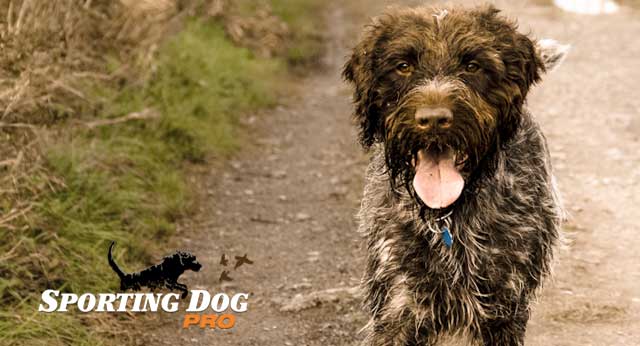
The Wirehaired Pointing Griffon doesn’t have the name recognition of the German Shorthair or the Labrador, but among hunters who have run one, the reputation is remarkably consistent: close-working, biddable, versatile, and durable. The breed handles point, flush, and retrieve in a single dog, works cover that would shred a short-coated breed, and stays in contact with the hunter rather than disappearing over the next ridge. For a walking hunter who wants one dog that does everything, the Griffon makes a strong case.
History and origin
The Wirehaired Pointing Griffon is one of the few sporting breeds with unusually well-documented development history. Eduard Karel Korthals, a Dutch sportsman working in the mid-to-late 1800s, deliberately developed the breed through carefully recorded breeding programs, crossing several European sporting breeds to produce a versatile hunting dog capable of working in harsh conditions. Because Korthals did most of his work while living in France, the breed became strongly associated with French hunting culture, and in most countries outside the United States the dog is still called the Korthals Griffon. The name “Wirehaired Pointing Griffon” was established in France.
The breed was specifically developed for the walking hunter — not the horseback hunter who needed a wide-ranging dog, but the hunter on foot who needed a close-working, methodical dog that would stay in range and work cover thoroughly. That original purpose is still visible in the breed’s working style today.
What the Griffon does in the field
The Griffon is a versatile hunting dog in the truest sense — a dog that points, flushes, and retrieves from land and water, working upland birds, waterfowl, and furred game with equal capability. The AKC classifies him in the Sporting Group, and NAVHDA (North American Versatile Hunting Dog Association) testing is common among serious Griffon owners as a measure of the breed’s all-around hunting ability.
The Griffon’s working range is characteristically close and methodical. Where a wide-ranging pointer might cover a hundred acres, a Griffon tends to work within practical gun range, staying connected to the hunter and checking in regularly. This isn’t a limitation — it’s by design. The breed was developed for dense European cover where a big-running dog would be useless. In heavy pheasant cover, grouse woods, or swampy woodcock habitat, that close-working style is an asset.
The Griffon is a strong retriever on both land and water. The wiry double coat that protects him in upland cover also provides insulation in cold water, making him a practical choice for hunters who work both environments across a season. He will enter cold water willingly and retrieve diligently.
The coat and why it matters
The Griffon’s rough, wiry outer coat with a dense undercoat is the feature that sets him apart from smooth-coated continental breeds and defines what he can do. In heavy cover — briars, cattails, hawthorn, thick brush — that coat is protection that a short-coated dog simply doesn’t have. A Griffon will push through cover that would cut up a pointer or shorthair, which is why the breed excels in grouse and woodcock habitat where the cover is often impenetrable.
The tradeoff is maintenance. The coat needs brushing or combing at least weekly, and more frequently during hunting season when burrs, seeds, and debris collect in it daily. The good news is that the coat doesn’t mat badly, the debris is generally easy to remove, and most Griffons tolerate and even enjoy the grooming process. The ears require specific attention — hair grows inside the ear canal and needs to be plucked regularly to prevent moisture buildup and ear infections. This is the breed’s most common minor health concern and is entirely preventable with routine maintenance.
Exercise and living requirements
The Griffon is a high-energy working breed that needs significant daily exercise. A Griffon that doesn’t get adequate physical activity and mental engagement will find ways to occupy himself that you won’t appreciate. This is not a breed suited to apartment living or to being kenneled inside without substantial outdoor time each day. In a home with yard access, regular training and exercise, and an owner who actually uses the dog for hunting or field work, the Griffon thrives.
The breed does well in outdoor kennels even in cooler climates — the double coat handles cold effectively. Many experienced Griffon owners note that the dog often prefers to be outside rather than inside, which suits a kennel setup well. The Griffon is also an adaptable breed in terms of climate, having been developed to work across European environments that vary considerably.
Trainability and temperament
The Griffon is an eager-to-please, handler-oriented breed that trains well. The close working style that defines the breed in the field reflects a temperament that is attentive to the handler and responsive to direction. Griffons are sensitive dogs — they respond well to consistent, fair training and don’t require heavy-handed handling. A trainer who works with positive reinforcement and clear communication gets excellent results. A trainer who relies on excessive pressure tends to see the Griffon shut down rather than push through.
The breed matures relatively slowly. Griffons often don’t hit their stride in the field until their second or third season, and patience in early training is rewarded in the long run. They are not the dog you take out opening day of their first season and expect a polished performance from. They are the dog that improves steadily year over year and hunts hard well into their later years.
For a close-working versatile breed like the Griffon, a combination beeper and e-collar system gives you both location awareness in heavy cover and training control at distance. The beeper tells you what the dog is doing when you can’t see him; the e-collar keeps you connected for handling and steadiness work.
With other dogs and family
The Griffon is a fundamentally non-dominant breed. In multi-dog households he typically defers to more assertive dogs and is generally reliable around smaller breeds. He tends to be affectionate and loyal with his family, cautious but not aggressive with strangers, and patient with children. His wariness around strangers makes him an effective watchdog without the liability that comes with truly aggressive guarding breeds.
Is the Griffon the right dog for you?
The Griffon is the right dog for a hunter who walks, works heavy cover, wants one dog that handles multiple types of game, and values a close-working partner over a big-running specialist. He is not the right dog for someone who wants to stand back and watch a dog run big country, or for an owner who can’t provide the exercise and engagement the breed requires. For the hunter who fits that profile, few breeds deliver what the Griffon delivers across a full season in a wide variety of terrain and game.