You have no items in your shopping cart.
Brittany Spaniel
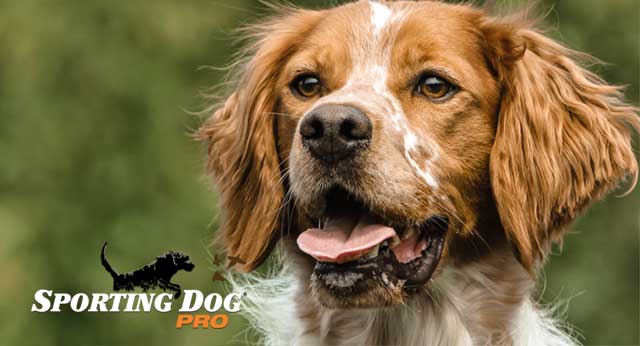
The Brittany was officially called the Brittany Spaniel until 1982, when the AKC dropped “Spaniel” from the name to reflect what the breed actually is: a pointing dog, not a flushing spaniel. Most Brittany owners and many breeders still use the full name out of habit and tradition, and it doesn’t particularly matter what you call them. What matters is that the Brittany has won more AKC dual championships — titles earned in both conformation and field competition — than any other breed. That record tells you something specific about what kind of dog this is: capable in the field, manageable in the house, and trainable enough to do both at a high level.
History and origin
The Brittany takes its name from the historic province in northwest France — a region with a distinct Celtic heritage and a long tradition of outdoor life. Records dating to the mid-1800s show local breeders crossing French Spaniels with English Setters in an attempt to create a dog that surpassed both. The result was unexpected: the Brittany is quite different in character from either ancestor. The French Spaniel was calm and reserved; the Brittany is bold, energetic, and intensely biddable. The English Setter tends to multitask; the Brittany focuses single-mindedly on what’s in front of him, which is a strength in the field and occasionally a liability elsewhere.
The first Brittany to compete in a field trial — a dog named Myrrha D’Amorique — ran in 1902 in a class of French Spaniels and won. That win launched the formal breed development process that produced the first official Brittany Spaniel champion in 1909. The breed arrived in the United States in the 1930s and has built a strong following among upland hunters ever since.
The Brittany in the field
The Brittany is a close-working upland dog. Where a German Shorthair or a larger pointing breed may run wide, the Brittany tends to work within comfortable gun range — typically staying connected to the hunter rather than ranging independently into the next county. For hunters who walk pheasant cover, quail fields, or grouse woods on foot and want a dog that stays in contact, that working range is an asset rather than a limitation.
Point, flush, and retrieve are all within the breed’s natural repertoire. The Brittany’s retrieving instinct is strong and extends to water — the breed will enter cold water without hesitation and retrieves waterfowl effectively, which is unusual for a pointing breed. The athletic build and stamina that comes from the breed’s working heritage means a Brittany can hunt hard through a full day without flagging.
The prey drive is genuine and intense. A Brittany on game is completely focused — this is both the breed’s greatest hunting asset and the trait that requires management. A Brittany that catches sight or scent of a bird may dart after it without registering anything between him and the target, including roads, fences, and other hazards. This isn’t a training failure; it’s the breed doing what it was selected to do for generations. Managing that drive in environments where it creates risk is the handler’s responsibility.
An e-collar and beeper system is the standard tool for Brittany field work. The Brittany responds well to a low stimulation level — typically in the bottom quarter of most collar ranges — which is used to redirect attention and enforce steadiness when the prey drive is running hard. Combination beeper/e-collar units give you both location awareness in cover and the ability to communicate at the moment of a mistake.
Training the Brittany
The Brittany is an eager-to-please, highly trainable breed that responds quickly when training is approached correctly. The key phrase is “approached correctly” — the Brittany is sensitive, and the training approach that produces excellent results is one that uses firm, fair, consistent handling with light pressure rather than heavy correction. Harsh training produces a shut-down Brittany quickly. Patient, methodical training with clear expectations and genuine praise for correct behavior produces one of the most cooperative and capable hunting dogs you can own.
The breed’s single-minded focus is what makes them so effective in the field and what requires specific management in training. A Brittany working through an obedience exercise is fully engaged with the handler. A Brittany that spots a squirrel is fully engaged with the squirrel, and the handler’s commands may as well be coming from another dimension. Training the interrupt — the reliable recall or stop that overrides the prey drive engagement — takes consistent repetition and is one of the areas where an e-collar, used at the right level, earns its place in Brittany training. The correction needs to arrive at the moment the dog begins to break off, not after he’s already two hundred yards into the chase.
Energy and living requirements
The Brittany’s compact build — typically 30 to 40 pounds — misleads people into thinking they’re getting a manageable inside dog. They are manageable inside, but only when their physical and mental needs are being met outside. A Brittany that doesn’t get genuine daily exercise — not a walk around the block, but real running and field time — will redirect that energy into behavior that makes the house difficult. Destructiveness, anxiety, and chronic hyperactivity in Brittanys are almost always energy management problems rather than temperament problems. This is why many Brittanys end up in rescue from owners who didn’t do the research before bringing one home.
For the right owner — someone who hunts regularly, has yard space for the dog to run, or commits to adequate daily exercise — the Brittany is an excellent house dog. They are genuinely affectionate, good with children (the energy level is a match), and socially oriented in a way that makes them pleasant to live with. They are not a good choice for apartment living or for owners whose lifestyle doesn’t include substantial outdoor time.
Sensitivities and temperament
The Brittany’s sensitivity that shows up in training also shows up in its emotional life. The breed reacts strongly to routine changes, loss of a companion animal, household disruption, and loud weather events. Thunderstorms are genuinely distressing for many Brittanys in a way that goes beyond mild discomfort — they need comfort and a secure space rather than being left to manage it alone. If you know a change is coming, introducing it gradually produces a better outcome than abrupt disruption.
This sensitivity is part of the same wiring that makes them so attuned to the handler in the field. A dog that reads your mood and your body language closely is a dog that is going to respond to subtle handling cues naturally — but also a dog that is going to pick up your frustration during a difficult training session and react to it. The Brittany handler who is calm, consistent, and positive in training has a significant advantage over one who isn’t.
Is the Brittany the right dog for you?
The Brittany is an excellent choice for the upland hunter who walks his birds, wants a dog that stays in range, values a retriever who will work land and water, and has the lifestyle to meet significant daily exercise requirements. It is not the right choice for someone who wants a dog that will be content with limited exercise, or who is looking for a breed that is easy to manage off-leash in distraction-rich environments.
Do the research honestly before committing. The Brittany that ends up in rescue almost always got there because an owner chose the breed based on size and personality without accounting for the energy level. The Brittany that hunts hard and lives happily in a family for twelve or fourteen seasons is the one whose owner knew exactly what they were getting into.
References
New Complete Brittany by Maxwell Riddle