You have no items in your shopping cart.
Boosting The Confidence Of A Rescued Dog
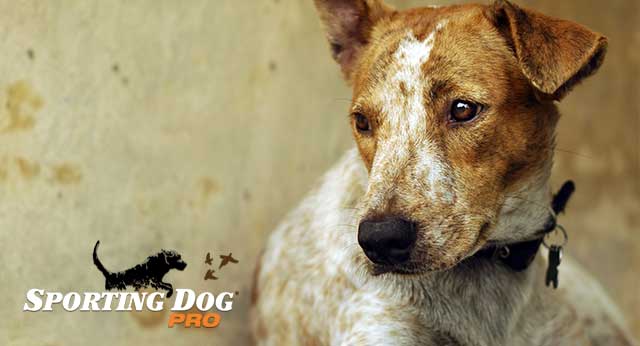
Rescuing a sporting breed is more common than it used to be. Lab rescue organizations, GSP rescues, Brittany rescues, and breed-specific networks have made it genuinely practical to find a quality hunting breed that needs a home. What those dogs come with is variable — some have had good starts and ended up in rescue through no fault of their own, others have genuine gaps in socialization, training, or both. The confidence deficit that shows up in many rescued dogs isn’t a character flaw. It’s a product of their history, and it’s largely reversible with the right approach.
What you’re actually working with
A rescued dog’s behavior in the first days and weeks in your home is not necessarily who he is. Dogs in unfamiliar environments are operating with elevated stress hormones that affect how they process information, how they respond to people, and how they handle correction or pressure. A dog that shuts down completely in week one, that cowers at sudden movements, or that is reactive to things that shouldn’t trigger a reaction — that dog may look completely different at week eight when his baseline anxiety has dropped and he’s learned that this environment is safe and predictable.
The common mistake is to draw permanent conclusions from early behavior. The rescue that snapped when you reached toward him on day three may never do that again once he understands the rules and trusts the handler. The one that wouldn’t eat for the first week may become the most food-motivated dog you’ve owned. Give the dog time to decompress before you assess what you’re actually dealing with.
Set up the environment before he arrives
The clearest gift you can give a rescue dog is arriving into an environment where the rules are already in place and consistently applied. Confusion and inconsistency amplify anxiety. Clarity reduces it. Before you bring him home, decide what the rules are, communicate them to everyone in the household, and enforce them from day one.
A crate set up before he arrives gives him a defined space that is his — a place to go when the world is too much, where he won’t be bothered, where he can regulate himself. Many rescue dogs take to crate training faster than puppies because the enclosed, den-like space feels secure rather than confining. Cover the crate with a blanket to reduce visual stimulation, put something that smells familiar in it, and let him choose to go in rather than forcing it initially. A dog that chooses the crate has found his safe place. That’s a significant step.
Physical boundaries matter too — a fenced yard he can explore safely, clear areas that are his versus areas that aren’t, and a consistent daily routine that makes the structure of his new life predictable. Rescued dogs that know what to expect and when to expect it settle faster than those in chaotic or unpredictable households.
Consistency is the most powerful tool you have with a rescue dog. Not warmth, not patience, not time alone — though all of those matter. The dog that knows the rules and trusts that they won’t change is the dog that relaxes. Inconsistency keeps anxiety elevated because the dog can never fully predict what happens next.
Building confidence through structure and success
Confidence in dogs — rescued or not — comes from successfully navigating challenges. A dog that is never asked to do anything hard never builds the resilience that comes from working through difficulty. The paradox with rescue dogs is that what looks kind in the short term — no demands, no pressure, just warmth and time — often delays the confidence-building that actually helps them.
Basic obedience is therapeutic for an anxious rescue dog. Teaching sit, stay, down, and come gives the dog clear things he can do correctly and be rewarded for. Every successful repetition is a small confidence deposit. A dog that has learned that he can figure out what you want, do it, and receive praise for it is a dog that is building a framework for trusting the handler and trusting himself. That framework transfers to everything else, including field work.
Keep training sessions short and success-weighted. End every session on something the dog did right, even if you have to simplify the ask to get there. The goal in early training with a rescue is not to achieve a behavior standard — it’s to build the association that working with you produces good outcomes. That association is the foundation everything else builds on.
Watch your reactions, not just the dog’s
Rescue dogs are often hypervigilant readers of human body language and emotional state. A dog that has experienced unpredictable humans learns to monitor them constantly as a survival strategy. That hypervigilance means your frustration, tension, or anxiety communicates directly to the dog and affects his behavior in the session. A handler who is relaxed and matter-of-fact gets a different response than a handler who is visibly tense about how the dog will react.
If a rescue dog reacts negatively to a specific command or situation, it may be because of prior association rather than disobedience. The dog that freezes when you raise your arm for a hand signal may have learned to associate that gesture with something bad. Changing the signal, approaching the behavior from a different direction, or breaking the exercise into smaller steps that don’t trigger the association is more productive than repeating the command that’s producing the shutdown.
Rescued sporting breeds as hunting dogs
The original article makes a point worth keeping and expanding: rescued dogs often make excellent hunting dogs. The instincts are there — pointing, flushing, retrieving are hardwired behaviors that prior history doesn’t erase. A rescued Labrador that has never seen a bird in his life will frequently still pick up a dummy and carry it enthusiastically on the first introduction, because that’s who he is genetically. The rescue circumstance affected his history, not his breeding.
Many rescued sporting dogs respond very well to e-collar training once a trust relationship is established, because the clarity of communication — the immediate, consistent consequence that the training collar provides — is actually less ambiguous than the mixed signals many of them received before. A rescue that learned to ignore verbal commands because they were never consistently enforced often responds quickly to an e-collar system because the consequence is reliable and the timing is precise. The key is establishing the relationship and the basic obedience foundation before introducing the collar.
Don’t set a timeline for a rescue dog’s progress. Some dogs decompress and settle in three weeks; others take three months. The dog’s history determines the starting point, not his potential. The ones that take longest to trust are often the ones that, once they do, are the most loyal and committed working dogs you’ll ever own.