You have no items in your shopping cart.
Beagle
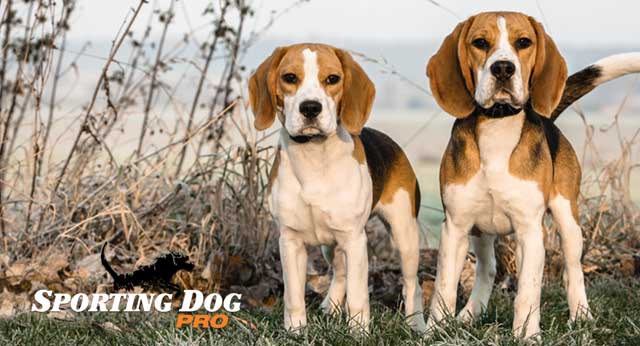
The Beagle is one of the most recognizable dogs in the world and one of the most consistently popular breeds in the United States — the AKC has ranked it among the top ten most popular breeds for decades. That popularity is earned. The Beagle is compact, sturdy, genuinely good-natured, excellent with children, and carries one of the finest noses in the canine world. For rabbit hunters specifically, there is no substitute. For family dog owners who underestimate the breed’s energy and stubbornness, the Beagle can become a handful quickly. Understanding what you’re getting into before you get one is what separates the people who love their Beagle at year ten from the ones who surrender him at year two.
History
The Beagle is among the oldest documented British hound breeds, with records tracing back roughly 500 years. Developed as a scent hound for small game — primarily rabbits and hares — the breed was refined through selective breeding by European farmers who depended on the dog’s hunting ability to supplement food on the table. The best hunters were bred forward, producing the exceptional nose and drive that defines the breed today. The Beagle arrived in the United States in the mid-1800s and quickly found a following among rabbit hunters. The National Beagle Club of America, founded in 1888, is one of the oldest breed clubs in the country, a testament to how seriously working Beagle hunters have taken the breed’s development.
The nose
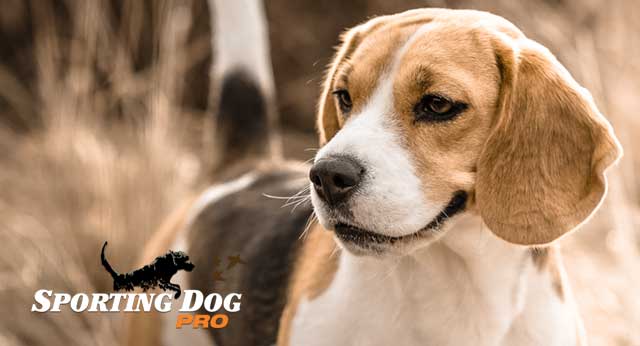
The Beagle’s defining characteristic as a working dog is its scenting ability. Estimated to have roughly 220 million scent receptors compared to a human’s five million, the Beagle is built from the ground up to track and work scent. On a rabbit trail, a Beagle works the track methodically, baying as it goes — the voice communicating the track’s freshness and direction to the hunter. This is exactly what the breed was developed to do, and centuries of selective breeding for it have made the drive extraordinarily strong.
That same nose is also what makes the Beagle a management challenge in any environment that isn’t contained. A Beagle that catches an interesting scent is a Beagle that is going to follow it, and recall commands that work well in the yard may evaporate entirely when there’s a rabbit trail involved. This isn’t a training failure — it’s a breed doing exactly what it was bred to do for five centuries. Managing it requires appropriate containment and, in field work, tools that maintain communication when the dog is on game.
Hunting with a Beagle
Rabbit hunting with Beagles is one of the oldest and most traditional forms of American hunting. The typical approach: jump a rabbit, release the Beagles, and let them work the circle as the rabbit loops back through its home range. The hunter positions himself on likely escape routes and waits for the dogs to push the rabbit back through. The baying tells you where the dogs are, how hot the track is, and which direction the rabbit is running. For hunters who grew up with this tradition, there is nothing else quite like it.
Beagles are typically hunted in packs or braces rather than individually, which suits their pack-oriented social nature and produces more consistent pressure on game. The hound hunting collar systems we carry are designed for exactly this application — tracking multiple dogs in the field, monitoring location when dogs are out of sight in heavy cover, and maintaining communication during the hunt.
A GPS tracking collar is particularly useful for Beagles hunting in areas with broken cover, roads, or property boundaries. A dog working a hot rabbit track doesn’t check for property lines, and knowing where your dogs are in real time gives you the ability to manage the hunt responsibly and recover dogs quickly when the track takes them further than expected.
Training
The Beagle is an intelligent breed that is capable of learning any command — and is also a hound, which means it comes with an independent streak and a strong preference for following its nose over following your instructions. These are not contradictory. A well-trained Beagle obeys reliably in normal circumstances and will still lock onto a rabbit trail and become largely deaf to verbal commands. The goal of training isn’t to suppress the hunting instinct — it’s to build enough foundation obedience that the dog can be recalled, managed, and directed reliably in non-hunting contexts, while the hunting instinct remains fully intact for the field.
Beagles respond well to e-collar training, which is particularly effective for this breed because it extends your communication to the distance at which a Beagle on a trail actually operates. A firm but consistent approach works best; Beagles are sensitive enough that harsh or heavy-handed training produces shutdown, but consistent enough correction for non-compliance produces a reliable dog. The breed’s reputation for stubbornness is usually a handler-consistency problem rather than a breed problem — a Beagle that has learned commands are optional will treat them as optional.
Housebreaking can take longer with Beagles than with many other breeds. Crate training is the most reliable approach and produces the fastest results.
Social needs and boredom
Beagles were developed to work in packs and have strong social needs as a result. A Beagle left alone for long periods without adequate company — human or canine — becomes bored, and a bored Beagle finds outlets for that energy that owners typically don’t enjoy. The most common is vocalization: the Beagle’s baying howl, which is a beautiful sound in the field and a significant nuisance complaint in a neighborhood. Destructive behavior and escape attempts are also common presentations of Beagle boredom.
The solution is not just more exercise, though exercise matters — it’s genuine engagement. A Beagle that hunts regularly, trains regularly, or has canine companionship is a settled, manageable dog. The same dog left in a yard alone all day is a neighbor complaint waiting to happen.
Exercise and weight management
The Beagle has a strong tendency to overeat and a corresponding tendency toward obesity when exercise is inadequate. This is the breed’s primary health concern and it’s entirely preventable through controlled feeding and consistent activity. Measure food portions and resist the Beagle’s considerable talent for looking food-deprived — the breed is gifted at soliciting extra meals. Obesity compounds the joint issues that affect hounds generally and shortens the working career significantly.
Secure fencing is essential. Beagles are escape artists with strong motivation — interesting scent on the other side of any barrier is compelling enough to test most containment solutions. Underground fences can work for Beagles but typically require a higher correction level than other small breeds because a Beagle on a hot trail has a high distraction threshold. A physical fence of adequate height and depth (Beagles dig) is the most reliable containment for this breed.
Is the Beagle right for you?
The Beagle is an excellent choice for the rabbit hunter who wants a willing, capable field partner with centuries of breed development behind it, and for the family owner who has the time, activity level, and secure containment to meet the breed’s genuine needs. It is not the right choice for someone looking for an easily managed, off-leash-reliable companion dog that can be trusted around interesting smells without containment. Know which situation you’re in before you bring one home.