You have no items in your shopping cart.
A Bit About the AKC Sporting Dog Group
The AKC Sporting group is the group most directly connected to what we do here at Sporting Dog Pro. These are the dogs developed to work alongside hunters in the field — to locate, flush, point, and retrieve upland birds and waterfowl. They are, as a group, among the most trainable, most biddable, and most physically capable dogs in the AKC’s seven recognized groups. Understanding the subgroups within the Sporting group — what distinguishes a retriever from a spaniel from a pointer from a setter — helps hunters and dog owners make better decisions about which breed fits their hunting style and their life.
The four subgroups
The Sporting group is organized around four functional subgroups, each developed for a distinct role in the hunting partnership.
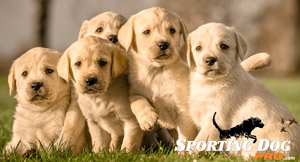
Retrievers are bred to mark falling birds, remember multiple falls, and return game undamaged to hand — the “soft mouth” that preserves the bird. They are the dominant waterfowl dog in North America and among the most popular breeds overall. The Labrador Retriever, Golden Retriever, Chesapeake Bay Retriever, Flat-Coated Retriever, Curly-Coated Retriever, and Nova Scotia Duck Tolling Retriever are the AKC-recognized retriever breeds. Labs and Goldens are also among the most common family dogs in the country, which reflects the combination of trainability, temperament, and physical soundness the group is known for.
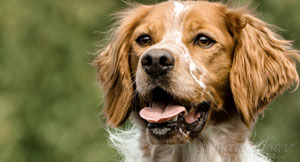
Spaniels work close to the hunter, quartering methodically through cover to flush birds within shotgun range. They are versatile dogs — capable of working upland birds, flushing waterfowl from heavy cover, and retrieving. The Cocker Spaniel, English Springer Spaniel, Welsh Springer Spaniel, American Water Spaniel, Clumber Spaniel, Field Spaniel, Irish Water Spaniel, and Sussex Spaniel are among the recognized AKC spaniel breeds. The English Springer Spaniel is the most widely used spaniel in upland hunting work in the United States.
Pointers locate birds by air scent and signal their location to the hunter by freezing into a point rather than flushing. The hunter walks in, the flush is controlled, and the pointing dog’s job is to hold position through the shot. The Pointer (English Pointer) and the German Shorthaired Pointer are the two most common pointing breeds in American upland hunting, with the German Wirehaired Pointer, Vizsla, Weimaraner, and other Continental versatile breeds also carrying strong followings. Pointing dogs require training to hold steadily at point and to be steady to wing and shot — the natural instinct to freeze is there; the self-control to hold it while birds flush and guns go off is trained.
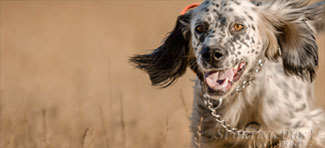
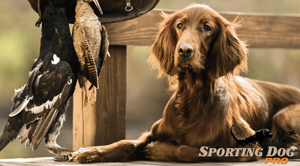
Setters are the oldest of the four subgroups in terms of documented development, with origins in Europe well before the development of modern firearms. Like pointers, setters locate birds by air scent and indicate their position — historically by crouching or “setting” rather than pointing in the modern upright stance. The Irish Setter, English Setter, Gordon Setter, and Irish Red and White Setter are the AKC-recognized setter breeds. English Setters are the most common setter breed in American bird hunting. The Gordon Setter, the heaviest of the setters, is known for its stamina in difficult terrain and cold conditions.
What Sporting dogs share
Across all four subgroups, certain traits appear consistently in well-bred Sporting dogs. High trainability and biddability — the desire to work with and please the handler — are the defining temperament qualities of the group. Sporting dogs were developed to take direction in the field, to respond to commands under high-distraction conditions, and to maintain a working relationship with the hunter through a full day. That orientation toward the handler, built through generations of selection, makes them among the most rewarding dogs to train and work with.
Physical activity is not optional for Sporting dogs — it’s a requirement. A Sporting dog that doesn’t get adequate daily exercise will find other outlets for the energy, usually in ways the owner doesn’t appreciate. These are athletic dogs built for sustained field work, and their mental and physical wellbeing depends on getting enough of it. An active hunter who works a Sporting dog through the season and maintains conditioning through the off-season has a dog living the life it was designed for.
Field trials and hunt tests
The AKC and several breed-specific organizations run field trials and hunt tests that allow Sporting dogs to demonstrate and develop the working abilities the breeds were created for. Hunt tests evaluate dogs against a performance standard — pass or fail — across titles from Junior Hunter through Master Hunter. Field trials place dogs against each other competitively and identify the best working dogs within a breed. Both serve the important purpose of maintaining working ability in breeds that might otherwise drift toward conformation or companion breeding at the expense of their hunting instincts.
For hunters who don’t compete formally, training toward hunt test standards is a practical way to develop a well-rounded working dog with documented, standardized skills.
Whatever Sporting breed you hunt over, the right training tools make the difference between a dog that performs reliably under pressure and one that only performs when conditions are easy. Browse our training collar guide to find the right system for your application — upland, waterfowl, or all-around. Call us at 1 (800) 524-2428 with questions.